Alpine GTA V6 Turbo
The Alpine GTA V6 Turbo combined Alpine’s grand-touring body with turbocharged PRV power. Its rarity needs a defined count: Alpine reports 4,660 Turbo versions, while the model register separates ordinary D501 and D502 cars from competition and special derivatives.
The Alpine GTA V6 Turbo combined Alpine’s grand-touring body with turbocharged PRV power. Its rarity needs a defined count: Alpine reports 4,660 Turbo versions, while the model register separates ordinary D501 and D502 cars from competition and special derivatives.
Alpine GTA V6 Turbo at a glance
| Manufacturer | Alpine |
|---|---|
| Model family | GTA |
| Profile scope | Historic road-model variant |
| Inventory reference | ALP-047 |
| Completed production | 4660 — Manufacturer broad V6 Turbo series, 1985–1990; includes related derivatives |
| Engine reference | Turbocharged PRV V6 — market and emissions specification varies |
| Displacement | 2458 cc — scoped heritage specification |
The Turbo’s place in the GTA range
The GTA moved Alpine toward a more modern grand-touring offer, and the V6 Turbo supplied the range’s turbocharged identity. Alpine’s manufacturer account connects the project with Renault leadership and development support in Dieppe. This profile covers the broad Turbo road-model story and explains the related count categories. It is not a substitute for a dedicated Mille Miles, Le Mans or Europa Cup profile. Those derivatives may share the GTA silhouette, but their identities and allocations deserve their own records when a collector is assessing a particular car.
D501 and D502 are useful distinctions
The GTA/A610 register separates D501 V6 Turbo cars from D502 V6 Turbo cars and lists special derivatives alongside them. Club Alpine Dieppe identifies D502 with the catalytic version. These labels help a collector match a car with the appropriate specification and production scope. Check them against build records and identification details, especially for a car that has crossed markets or received engine changes. A year and a Turbo badge alone do not establish the emissions configuration, original equipment or a claimed limited-edition identity.
Turbo engine specifications need a market label
The Dieppe club gives the Turbo engine as 2,458 cc and quotes 200 horsepower, with 185 horsepower for the emissions-controlled version. Those are variant references, not a universal output for every GTA Turbo. The naturally aspirated GT’s 2,849 cc engine belongs to a different specification. During inspection, identify the installed engine, turbo and induction equipment and compare them with the car’s original type and market. If tuning or replacement components have changed the specification, document those changes rather than retaining a factory performance number without qualification.
Production and rarity: a scoped 4,660
Alpine’s 2017 heritage release reports 4,660 V6 Turbo versions for 1985–1990. This profile uses that manufacturer total with its broad scope stated. The register separately lists 3,982 ordinary D501s and 488 D502s, plus competition and special categories; those two ordinary-road totals alone are 4,470. The broad manufacturer figure should not be presented as the ordinary D501 count. The later Le Mans allocation is separately listed. Whatever level of detail is used, retain the source definition and avoid adding overlapping categories or treating production as a survivor census.
Limited editions and ordinary Turbo cars
A standard GTA Turbo can acquire bodywork, paint or badges resembling a special edition. That does not establish a factory derivative. For any such claim, request build evidence, identification records and an explanation of the edition-specific equipment. Compare the car with the relevant derivative’s own documentation. A modified ordinary Turbo can be appealing on its own terms if the work is disclosed. The difficulty arises when cosmetic similarity is used to borrow a smaller production allocation or a stronger provenance claim than the underlying car can support.
The Europa Cup connection
Alpine’s A110 Cup announcement recalls the earlier Europa Cup run with GTA V6 Turbo cars from 1985 to 1988. That is a competition connection within the wider family, not proof that an ordinary road Turbo raced in the series. A claimed Europa Cup car needs its own identification and competition file. Keep race preparation, entrant history and subsequent conversion records together. A road car modified for track use later in life should be described that way unless the evidence connects it to the original competition programme.
Structure before cosmetic appeal
Inspect the supporting structure and its accessible mounting points alongside the composite body. Ask for restoration photographs that show concealed work, especially where repairs were later covered by paint or trim. Exterior appearance can be reassuring without answering structural questions. Assess panel fit and finish as a separate part of the inspection. A car with honest, well-documented repair work can be easier to evaluate than one described as perfect but accompanied by very little evidence. The inspection should explain what is known, what is hidden and what further access is needed.
Assessing the installed turbo system
Review engine rebuild invoices, turbo service records and changes to fuel, ignition, boost and cooling arrangements. A specialist should assess the system as a whole rather than approving one replacement component in isolation. Record how the car runs under appropriate test conditions and whether the present setup matches its documentation. For a tuned example, ask who established the specification and how it was checked. Extra performance claims require evidence; they should not displace the more basic questions of reliability, driveline condition and suitability for the owner’s intended use.
Storage and recommissioning
A GTA Turbo that has spent years standing needs an assessment appropriate to that history. Review fuel-system work, hoses, lubrication, cooling, brakes and tires before planning regular use. Ask what was actually replaced or tested during recommissioning and whether the car has since completed sustained running. A brief startup video is limited evidence. Keep invoices and operating notes together so that the next service decision can be based on recorded work. The resulting file is more useful than an undated assertion that everything has been done.
Cabin equipment and the grand-touring brief
Check instruments, lighting, windows, switches and the comfort equipment fitted to the particular car. Compare trim and seats with its documented market and build specification. Note repairs and replacements rather than assuming a fresh-looking interior is factory original. The GTA’s appeal includes its everyday usability, so working equipment and completeness matter alongside performance. An interior inventory can reveal the scope of a restoration project more clearly than a few exterior photographs. Photograph difficult-to-source fittings before removal and retain their identification in the work file.
Choosing the right Turbo example
Start with a clear factory identity and coherent history, then assess structure, mechanical condition and the completeness of equipment. Compare a standard road Turbo with a documented special edition as different propositions. A larger list of modifications is not automatically an improvement for a collection focused on original specification; an untouched car is not automatically ready for use. Decide how the car will be displayed or driven and what historical story it should tell. That makes inspection findings and restoration costs easier to weigh without relying on an unsourced current price forecast.
Photography and the ordinary road-car scope
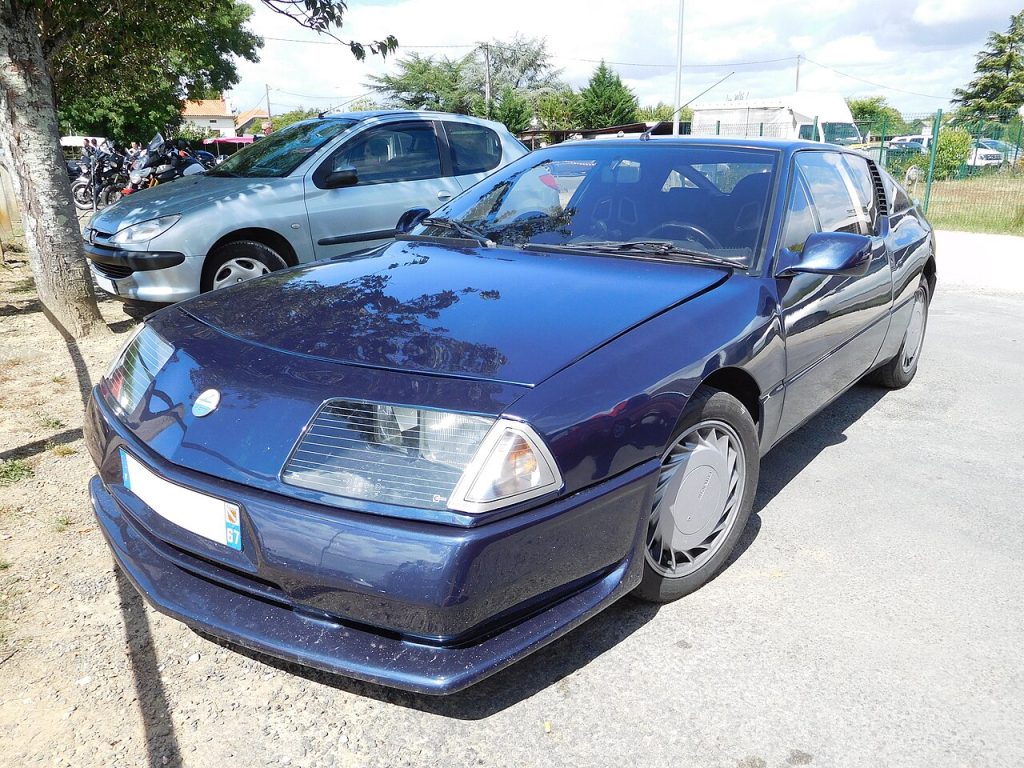
The bundled photograph is identified as a GTA V6 Turbo and was taken in 2016. It illustrates the ordinary road-car subject without claiming a Mille Miles, Le Mans or Europa Cup identity. Its linked credit includes the photographer, source and reuse licence. For an individual vehicle feature, add photographs of identification, engine installation, interior and repair evidence. These can support a more precise discussion of type and condition; the general model photograph should not be asked to prove an edition allocation or a particular competition history.
Frequently asked questions
How many GTA V6 Turbo versions were made?
Alpine reports 4,660 for its broad 1985–1990 Turbo scope. The register divides ordinary D501, D502, competition and special derivatives into separate categories.
How many ordinary D501 Turbos does the register list?
The register lists 3,982 D501 V6 Turbo cars. That is a narrower category than the manufacturer’s broad 4,660 Turbo figure.
Did every Turbo produce 200 horsepower?
No. The club distinguishes 200 horsepower and 185 horsepower emissions-controlled references. The actual market and engine configuration must be checked.
Does a body kit make a Turbo a Le Mans edition?
No. A factory edition claim needs build and identification evidence. Later cosmetic modifications should be documented as modifications.
Explore related Alpine profiles
Sources
- Alpine: GTA history and V6 production totals, 2017
- GTA/A610 register: production categories and identification
- Club Alpine Dieppe: GTA versions and construction
- Alpine: A110 Cup and the earlier GTA Europa Cup
Historical statements follow the linked manufacturer, club, register and game-project records. Inspection and collecting guidance is editorial analysis. Individual catalogue claims remain attributed to the relevant car and source.
Photography and credit
Alpine GTA V6 Turbo photographed in 2016; representative road car, not a numbered special edition. Photo: Cjp24 / Wikimedia Commons · CC BY-SA 4.0. Wikimedia thumbnail resized from the original; no cropping or colour changes.
Why this machine matters
The Alpine GTA V6 Turbo combined Alpine’s grand-touring body with turbocharged PRV power. Its rarity needs a defined count: Alpine reports 4,660 Turbo versions, while the model register separates ordinary D501 and D502 cars from competition and special derivatives.
Built in limited numbers
Alpine’s 2017 heritage release reports 4,660 V6 Turbo versions for 1985–1990. This profile uses that manufacturer total with its broad scope stated. The register separately lists 3,982 ordinary D501s and 488 D502s, plus competition and special categories; those two ordinary-road totals alone are 4,470. The broad manufacturer figure should not be presented as the ordinary D501 count. The later Le Mans allocation is separately listed. Whatever level of detail is used, retain the source definition and avoid adding overlapping categories or treating production as a survivor census.
Gallery
Specifications
Factory specifications may vary by model year, market and configuration.
Identity & production
- Official model
- Alpine GTA V6 Turbo
- Base model
- GTA
- Worldwide production
- 4660
- Country of manufacture
- France
Powertrain & performance
- Engine
- Turbocharged PRV V6 — market and emissions specification varies