Alpine GTA V6 GT
The Alpine GTA V6 GT brought Alpine into a more refined grand-touring era with a naturally aspirated PRV V6. A manufacturer-supported total of 1,509 distinguishes this D500 road model from the Turbo, competition cars and later GTA special editions.
The Alpine GTA V6 GT brought Alpine into a more refined grand-touring era with a naturally aspirated PRV V6. A manufacturer-supported total of 1,509 distinguishes this D500 road model from the Turbo, competition cars and later GTA special editions.
Alpine GTA V6 GT at a glance
| Manufacturer | Alpine |
|---|---|
| Model family | GTA |
| Profile scope | Historic road-model variant |
| Inventory reference | ALP-044 |
| Completed production | 1509 — Naturally aspirated V6 GT / D500, 1984–1990 |
| Engine reference | Naturally aspirated PRV V6 — club specification reference |
| Displacement | 2849 cc — scoped heritage specification |
A different kind of Alpine
The GTA expanded the Alpine story beyond the compact original Berlinette. Alpine’s own heritage account identifies it as the first model designed entirely under Renault’s leadership, supported by Berex in Dieppe. The V6 GT belongs to that grand-touring direction: a road car whose significance rests in a complete design rather than an added anniversary badge. For a collection, it demonstrates how the marque addressed comfort, everyday use and a broader sales network while retaining a distinctive sports-car identity. The naturally aspirated version deserves a profile separate from its better-known Turbo sibling.
1984 production and 1985 introduction
The supplied inventory uses 1984 for this entry, and the GTA/A610 register records D500 production in that year. Alpine’s heritage narrative places the GTA’s arrival in 1985. These dates describe different milestones, not necessarily a contradiction. A production year, public introduction and first registration can differ. Keep the actual car’s build documentation and registration record together when dating an early example. Advertising it solely by the later registration year can hide its place in the production sequence, while relying only on a model launch date can obscure its own history.
The D500 identity
The naturally aspirated GTA V6 GT is identified as D500 in the register. That type distinction is useful when separating it from D501 and D502 Turbo cars, but it should be checked against the individual vehicle’s identification documents. Exterior resemblance is not enough. A badge can be changed, and a modified engine installation may differ from the original build specification. Record the factory type first, then describe the present equipment. A clear identity makes production figures, specifications and comparisons meaningful rather than allowing the broad GTA name to blur several variants.
Engine and induction reference
Club Alpine Dieppe describes the GT’s PRV V6 as a 2,849 cc naturally aspirated engine with carburettor induction and a quoted 160 horsepower. Those figures are a model reference, not a measurement of the pictured car. The larger displacement does not make the GT a Turbo: the related turbocharged variant uses a different capacity and induction arrangement. During inspection, check engine identification, induction and any rebuild documentation. A conversion should be described as a modification to the original model identity, not quietly promoted as proof that the car was born a different variant.
Production and rarity: 1,509 V6 GTs
Alpine’s 2017 heritage release reports 1,509 naturally aspirated V6 GTs. The GTA/A610 register agrees and breaks its D500 total into 1,297 left-hand-drive and 212 right-hand-drive cars, covering 1984–1990. This is the completed-model count used in the profile. It is not a worldwide survivor count or a numbered commemorative allocation. Nor is it the total for every GTA variant. The figure places the V6 GT below the collection’s 7,500-car threshold while retaining the exact naturally aspirated scope that makes the count useful.
The body is only part of the structure
The Dieppe club describes a change to molded and bonded body construction while retaining a backbone chassis. This means exterior corrosion checks alone cannot establish structural condition. Arrange an inspection of accessible metalwork, mounting points and repair areas as well as the composite panels. Ask for photographs and invoices from previous structural work. Compare panel fit, surface condition and the quality of repairs without assuming that a shiny body proves a sound chassis. The relationship between the visible body and the supporting structure deserves its own assessment.
What an ownership file should contain
Collect build and registration records, engine and gearbox service information, restoration photographs and a dated ownership timeline. Include changes to wheels, trim, paint and equipment. A complete file need not imply that the car is untouched; it should explain what changed and why. For an early GT, the relationship between its production date and registration date is particularly useful. Avoid allowing an unreferenced forum claim or a seller’s repeated description to outweigh original documents. If a detail remains uncertain, record the uncertainty so that a future custodian can pursue it.
Mechanical assessment of a naturally aspirated GT
A pre-purchase inspection should evaluate the actual installed engine and induction, cold and warm operation, cooling behavior and signs of leakage. Review the gearbox and clutch with attention to service history and road-test findings. Check brakes, steering and suspension before deciding whether the car is ready for regular use. These are inspection tasks rather than a prediction that every GT suffers the same faults. For a car that has been stored, ask what recommissioning was performed and how it was verified; a running engine alone does not answer the question.
Interior, electrics and completeness
The GTA’s grand-touring identity makes cabin completeness part of its collecting appeal. Test instruments, lighting, switches, windows and fitted comfort equipment, and compare the interior with the documented build specification. Photograph trim before replacing it, particularly when a restoration introduces new materials. Missing small parts can affect both presentation and the practical scope of a project. A detailed inventory of what is present, working, repaired or absent is more useful than a broad claim of excellent condition. It also helps compare cars that look similar in exterior photographs.
GT versus Turbo for a collection
Choose between the naturally aspirated GT and Turbo according to the story and specification you want to preserve. The GT offers the D500 identity and a clearly supported 1,509-car production scope. The Turbo adds a different engine arrangement and performance history. Do not assume that the variant with the larger reputation is automatically the stronger historical example. A complete, well-documented GT can be more informative than a heavily altered Turbo with an uncertain file. Compare identity, structure, originality and intended use before considering cosmetic preferences or period performance headlines.
Restoration choices and model character
A GTA restoration can preserve the factory grand-touring presentation or pursue a modified aesthetic. Both approaches require honest documentation. Retain photographs of the original trim and equipment and list changes in the finished history file. An added body kit does not create a factory special edition, while replacing worn material need not erase the car’s identity if the work is properly recorded. Decide early what the project is intended to conserve. That decision should guide parts selection and prevent successive cosmetic changes from leaving the final car difficult to explain.
The photograph in this profile
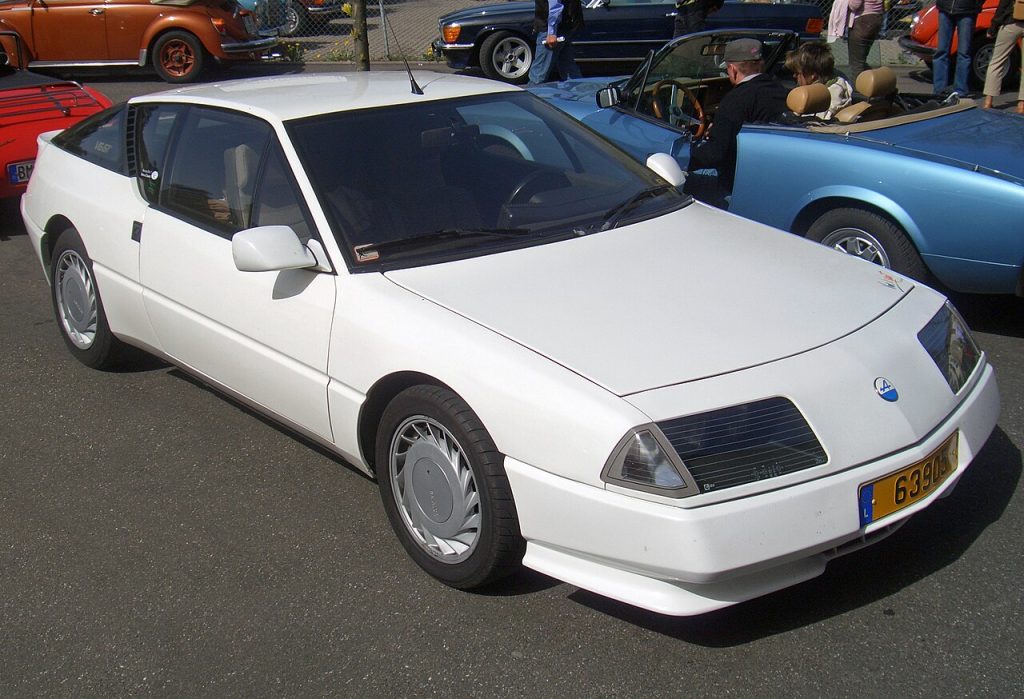
The supplied image is identified as a D500 V6 GT photographed at Classic Remise Düsseldorf in 2011. It is a representative naturally aspirated GTA, not an assertion about the car’s production position or ownership history. The source and licence are linked in the visible credit. For a chassis-specific feature, supplement it with identification, interior, engine and underside photographs. Those views can support an individual condition and authenticity discussion, while the credited general image continues to serve the more limited purpose of showing the model.
Frequently asked questions
How many Alpine GTA V6 GTs were built?
Alpine reports 1,509 naturally aspirated V6 GTs. The register gives the same D500 total, divided into 1,297 left-hand-drive and 212 right-hand-drive cars.
Why does this entry use 1984 when the GTA arrived in 1985?
The register records production in 1984, while manufacturer histories describe the public model arrival in 1985. Build, launch and registration dates should remain distinct.
Is the V6 GT a Turbo?
No. D500 identifies the naturally aspirated V6 GT. Turbo variants have separate type and production categories.
Does 1,509 mean that many survive?
No. It is the cited completed-production total. Current survivors, complete cars and running examples require separate censuses.
Explore related Alpine profiles
Sources
- Alpine: GTA history and V6 production totals, 2017
- GTA/A610 register: production categories and identification
- Club Alpine Dieppe: GTA versions and construction
Historical statements follow the linked manufacturer, club, register and game-project records. Inspection and collecting guidance is editorial analysis. Individual catalogue claims remain attributed to the relevant car and source.
Photography and credit
Renault-Alpine V6 GT D500 at Classic Remise Düsseldorf in 2011; representative naturally aspirated GTA. Photo: Detectandpreserve / Wikimedia Commons · CC BY-SA 3.0. Wikimedia thumbnail resized from the original; no cropping or colour changes.
Why this machine matters
The Alpine GTA V6 GT brought Alpine into a more refined grand-touring era with a naturally aspirated PRV V6. A manufacturer-supported total of 1,509 distinguishes this D500 road model from the Turbo, competition cars and later GTA special editions.
Built in limited numbers
Alpine’s 2017 heritage release reports 1,509 naturally aspirated V6 GTs. The GTA/A610 register agrees and breaks its D500 total into 1,297 left-hand-drive and 212 right-hand-drive cars, covering 1984–1990. This is the completed-model count used in the profile. It is not a worldwide survivor count or a numbered commemorative allocation. Nor is it the total for every GTA variant. The figure places the V6 GT below the collection’s 7,500-car threshold while retaining the exact naturally aspirated scope that makes the count useful.
Gallery
Specifications
Factory specifications may vary by model year, market and configuration.
Identity & production
- Official model
- Alpine GTA V6 GT
- Base model
- GTA
- Worldwide production
- 1509
- Country of manufacture
- France
Powertrain & performance
- Engine
- Naturally aspirated PRV V6 — club specification reference