Audi TTS Roadster Concept
The Audi TTS Roadster concept was the open companion to the original TT Coupe study. Audi dates its premiere to the Tokyo Motor Show in November 1995. It belongs to the TT’s design origins, not the later production TTS performance range. The current photograph is explicitly a Coupe-concept reference pending an authenticated image of the open study.
The Audi TTS Roadster concept was the open companion to the original TT Coupe study. Audi dates its premiere to the Tokyo Motor Show in November 1995. It belongs to the TT’s design origins, not the later production TTS performance range. The current photograph is explicitly a Coupe-concept reference pending an authenticated image of the open study.
Audi TTS Roadster Concept at a glance
| Manufacturer | Audi |
|---|---|
| Model / programme | TTS Roadster concept |
| Profile scope | Physical concept archive |
| Historical reference year | 1995 |
| Inventory reference | AUDI-019 |
| Engine reference | Exact original show-car installation not independently confirmed |
| Exact original object count | Unresolved; no numeric production badge populated |
| Object scope | Open 1995 TTS study; not later production TTS |
An open concept with its own identity
The factory TT history names the Roadster study TTS and dates its Tokyo premiere to November 1995. The wording matters because TTS later became a production-model designation. A reader searching for a 1995 TTS should arrive at an open concept, not a specification sheet for a much later turbocharged performance car. This profile keeps the historical title and its date together wherever the name appears. That simple distinction prevents an early design object from being absorbed into the more familiar road-car lineup.
How removing the roof changes the reading
A Roadster study exposes the cabin as part of the exterior composition. Seats, trim and the line around the occupants become prominent in a way that a closed roof can conceal. This is a general design observation rather than a claim about an unverified feature on a particular photograph. To analyze the TTS properly, researchers need views of the open object itself. The supplied Coupe reference is useful only for shared design-family context. It cannot demonstrate the Roadster’s rear deck, seating details or roof arrangement.
The interior detail that reached production
Audi’s TT anniversary account identifies the baseball-glove style of leather seating as a show-car detail that reached the production Roadster. That provides a documented connection between concept and customer equipment. It does not mean that every production car with that upholstery is a special edition or original concept. For a collector of early road TTs, the relevant evidence is a factory specification record. For the concept archive, the relevant evidence is the original interior design and its presentation. Similar material can have different meanings in those two records.
TTS concept versus the later TTS road car
The repeated name can mislead a search result or a catalogue. Use the date and body description first. A later TTS engine rating, transmission specification or acceleration time belongs to that later model. None should be copied into this 1995 object merely because the title matches. If an archive eventually supplies the Roadster study’s technical sheet, identify the presentation version to which it applies. Until then, the safest useful specification is the documented scope: an open TT-family concept with a physical presentation history.
The Coupe companion is a comparison, not proof
Audi presented the closed study earlier in 1995. The two concepts allow a researcher to examine how a design language works with and without a roof. The comparison should be made using matched dates and angles when possible. A modern production Roadster and a period Coupe photograph answer different questions. The former illustrates a finished road product; the latter records the original closed proposal. Neither substitutes for a photograph of the open Tokyo study. This profile makes that image gap explicit rather than hiding it behind a broad TT caption.
Rarity in an archive of concepts
No retail production series is claimed for the TTS study. The workbook’s one-car figure is not converted into a certified exact build total because the primary material reviewed does not enumerate every development object. Physical concepts, styling models and later tribute vehicles should remain separate. The profile is therefore a concept archive entry, with a blank numeric total and a documented presentation year. Its significance comes from the design and its relation to the TT lineage, not from an unsupported assertion that every visible example is the same uniquely numbered chassis.
Why the current photo is on hold
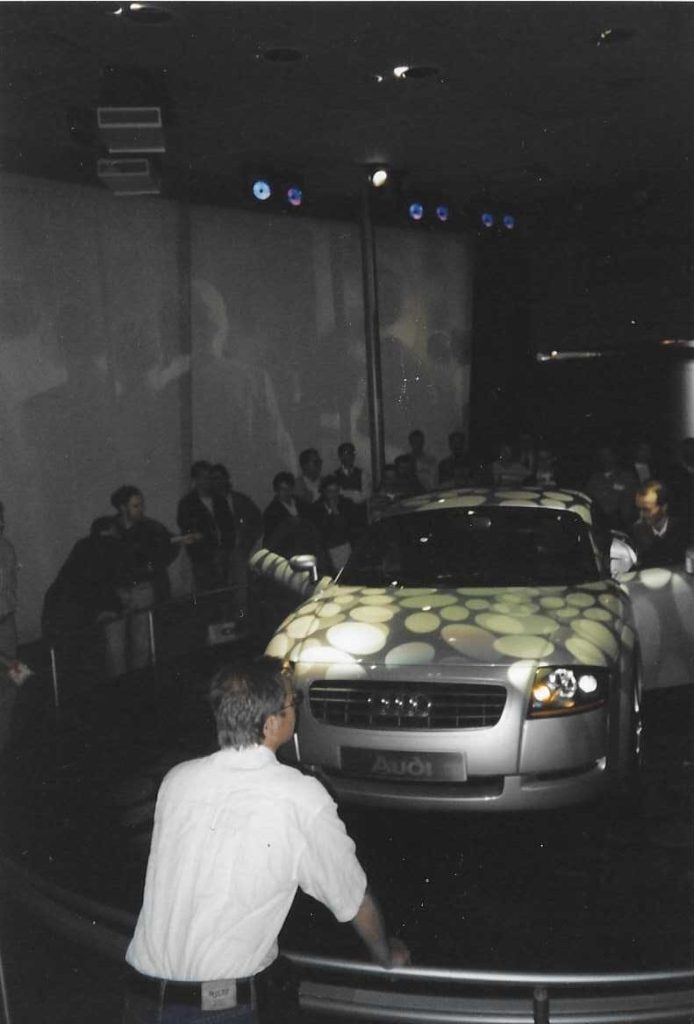
The bundled image shows the closed TT Coupe at the 1995 Frankfurt IAA. Its visible caption, alt text and review note all identify it as a design-family reference. It is not presented as the Tokyo Roadster. Before publication as a fully illustrated exact-subject profile, replace it with a photograph whose source identifies the open study and whose reuse terms are confirmed. The current credit belongs to the actual supplied photo. It must not be reassigned to a future replacement or used as permission for an unrelated image.
What to request from an archive
Ask for an object identifier, presentation record and dated exterior and interior views. Request any technical description with its version date. If the object is photographed today, note whether it is in launch specification and whether conservation has changed visible details. These questions are proposed research steps, not claims about the car’s condition. A factory photo with a general TT filename still needs a matching caption. Precise identity is especially important when the archive includes both body styles and later production derivatives that resemble the original concepts.
Reading the later tribute correctly
Audi’s TT 20 years material explicitly recalls the 1995 Roadster concept in its interior treatment. That makes the later edition a useful historical comparison, but its allocation is a count of customer cars, not a count of original concepts. A tribute acknowledges an earlier object while remaining a separate model. Readers can follow that relationship without conflating rarity. The same approach applies to a production TT with similar trim: explain the visual or material reference, then verify the actual car’s specification independently.
Why this study belongs beside the Coupe
The TTS completes the original TT concept story. An archive covering only the Coupe would leave out the open-body proposal and the interior theme that Audi later referenced explicitly. The strongest next step is an authenticated photograph of that object. Meanwhile, the written guide gives readers the correct date, naming distinction and path into the related Coupe history. The profile remains a review draft so the missing visual evidence is addressed before readers are invited to treat it as a complete exact-subject presentation.
Frequently asked questions
When was the TTS Roadster concept shown?
Audi dates its debut to the Tokyo Motor Show in November 1995.
Is it the same as a modern Audi TTS?
No. The historical TTS Roadster study is distinct from later production performance models using the TTS name.
Does the bundled picture show the Roadster concept?
No. It shows the 1995 Coupe concept and is clearly labelled as a design-family reference.
What is needed before the image hold is cleared?
A source-identified photograph of the open concept with confirmed reuse terms, accompanied by the correct caption and credit.
Explore related vehicle profiles
Sources
- Audi — TT history, including the 1995 Coupe and TTS Roadster studies
- Audi — The TT turns 25, design origins and production transition
- Audi — TT special models and the Roadster-concept interior reference
History and published specifications follow the linked manufacturer records. Visual comparisons, documentation questions and inspection priorities are editorial analysis. Photographs retain their original subject descriptions and separate rights records.
Photography and credit
DESIGN-FAMILY REFERENCE: the closed TT Coupe concept at the 1995 Frankfurt IAA, not the open TTS Roadster concept. An authenticated reusable Roadster-concept photo remains required. Photo: Stiv94410 / Wikimedia Commons · CC BY-SA 4.0. Original image supplied without visual changes.
Why this machine matters
The Audi TTS Roadster concept was the open companion to the original TT Coupe study. Audi dates its premiere to the Tokyo Motor Show in November 1995. It belongs to the TT’s design origins, not the later production TTS performance range. The current photograph is explicitly a Coupe-concept reference pending an authenticated image of the open study.
Built in limited numbers
No retail production series is claimed for the TTS study. The workbook’s one-car figure is not converted into a certified exact build total because the primary material reviewed does not enumerate every development object. Physical concepts, styling models and later tribute vehicles should remain separate. The profile is therefore a concept archive entry, with a blank numeric total and a documented presentation year. Its significance comes from the design and its relation to the TT lineage, not from an unsupported assertion that every visible example is the same uniquely numbered chassis.
Gallery
Specifications
Factory specifications may vary by model year, market and configuration.
Identity & production
- Official model
- Audi TTS Roadster Concept
- Base model
- TTS Roadster concept
Powertrain & performance
- Engine
- Exact original show-car installation not independently confirmed