Audi TT Coupe Concept
The 1995 Audi TT Coupe concept introduced a compact sports-car design that survived unusually clearly into production. Its circular motifs and restrained surfaces gave the TT an identity of its own. This archive profile covers the Frankfurt show car, with a period photograph, rather than applying the later mass-production TT’s specifications or totals to the study.
The 1995 Audi TT Coupe concept introduced a compact sports-car design that survived unusually clearly into production. Its circular motifs and restrained surfaces gave the TT an identity of its own. This archive profile covers the Frankfurt show car, with a period photograph, rather than applying the later mass-production TT’s specifications or totals to the study.
Audi TT Coupe Concept at a glance
| Manufacturer | Audi |
|---|---|
| Model / programme | TT concept |
| Profile scope | Physical concept archive |
| Historical reference year | 1995 |
| Inventory reference | AUDI-018 |
| Engine reference | Exact show-car installation not populated without object-specific technical record |
| Exact original object count | Unresolved; no numeric production badge populated |
| Object scope | 1995 Coupe show-car subject, separate from production TT |
The original TT, before the road car
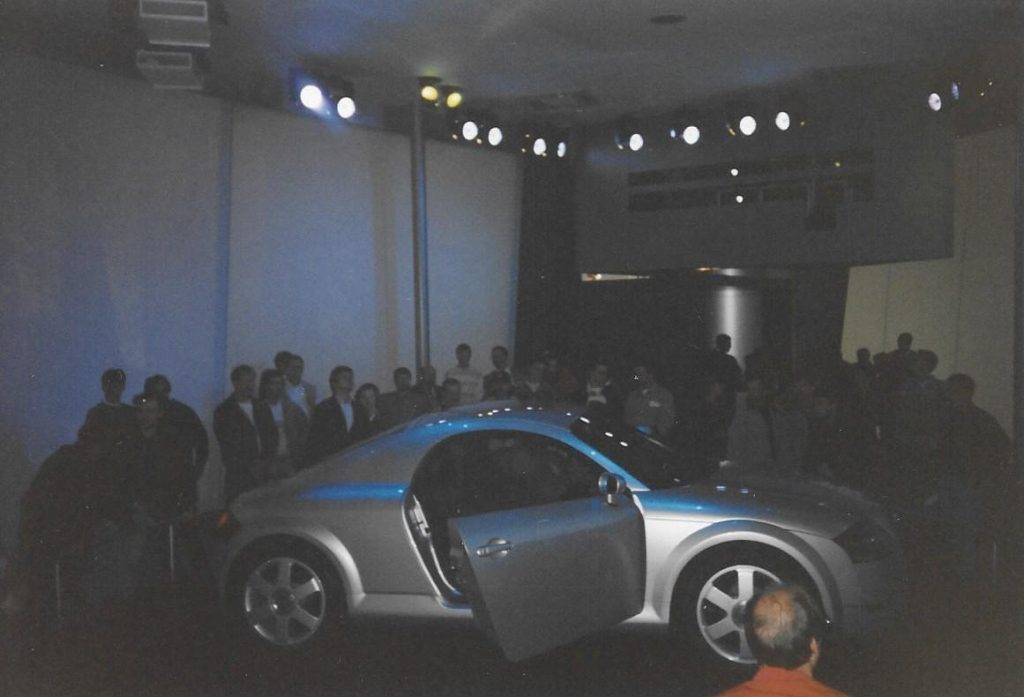
Audi places the Coupe study at the Frankfurt IAA in September 1995. Its retrospective credits Freeman Thomas working under design chief Peter Schreyer, and describes the later transition into series production. Those facts establish the concept’s place in the timeline. The photograph included here is identified with the original show. This makes the profile useful for anyone trying to distinguish the first design proposal from a familiar first-generation TT encountered on the road. Similarity is part of the story, but it should not erase the distinction.
Why the shape is worth studying
In the supplied period image, the body reads as a compact arrangement of strong curves and relatively quiet surfaces. The visual interest comes from the relationship among roof, wheel openings and the ends of the car. This is editorial design analysis, not a claim about aerodynamic efficiency. A reader can compare the concept’s side profile with a later production photograph and see where the silhouette changes. Looking at the whole shape first is more revealing than treating every visible feature as a piece of equipment that must have reached production.
From a show-car idea to a production brief
Audi identifies the addition of a rear side window as an important visible change in the transition. That is a useful reminder that faithful-looking production requires adaptation. A design study can prioritize a statement; a customer vehicle must satisfy a broader set of packaging, manufacturing and regulatory requirements. This guide does not assign a particular change to a regulation without documentation. Instead, it encourages a comparison of the evidence: dated concept photographs, drawings where available and the production car’s final form. The work lies in the details, not in a claim that nothing changed.
TT heritage without invented racing results
Audi connects the name to Tourist Trophy history and NSU’s earlier TT identity. This is a naming and heritage relationship. The Coupe concept did not acquire an Isle of Man race result by using the letters TT. In an encyclopedia, that distinction helps a visitor follow the connection without confusing a design reference with competition provenance. A useful historical label explains the reason for the name, then returns to the actual object: the 1995 study, its presentation and its documented design development.
The Coupe and the TTS Roadster study
The open TTS concept followed the closed car in the same year. Read the pair together to understand how one design language accommodates two different bodies. Roof treatment changes the way the cabin and rear body are perceived, and an open cabin makes interior design more visible. Neither study should inherit the other’s photo simply because the front end looks similar. The Roadster profile in this batch clearly flags its reference image. That honest distinction is more useful than pretending an attractive photograph proves the exact object.
Why production numbers do not belong here
The later TT was a mass-produced model across several generations. Those totals describe customer cars, not the original concept. The inventory labels the study as one car, but this review does not establish a complete census of full-size prototypes, display objects and development models. Accordingly the numeric production field remains empty. The rare archive category follows the documented show-car identity. A replica or modified production TT that resembles the concept is not another original study and should have its own clearly described record.
Mechanical specifications need a dated source
A concept can have different specifications in an initial proposal, press presentation and later maintenance record. This profile avoids importing a production TT engine range into the 1995 show car’s fields. A curator or researcher should seek a technical sheet tied to the actual presentation, then identify whether it describes the physical object or an intended production configuration. This preserves the distinction between a design that could be built and the equipment installed in a particular exhibit. It also prevents later TTS and TT RS specifications from appearing in an earlier study.
What the period photograph establishes
The source identifies this photo with the 1995 IAA and the TT. Its date and subject provide a valuable contemporary visual record. The image cannot reveal a hidden engine number, construction method or later conservation history. Its credit links to the photographer’s record, so the original context remains available. When replacing it with a modern museum view, retain both dates: the concept’s historical date and the photograph’s date. A later image may show the same design more clearly without being evidence of how every detail appeared at the original presentation.
A useful research file for the study
Collect dated front, side, rear and interior views, retaining the photographer and occasion for each. Include factory descriptions, design credits, object identifiers and records of restoration or reconfiguration where available. Compare changes over time rather than assuming an exhibit is frozen at its launch specification. This is proposed archive practice, not an assertion that the TT concept has undergone a particular intervention. A well-organized file can explain the transition to production while preserving the concept’s identity as a separate vehicle-history subject.
The concept’s lasting collector relevance
The original study helps explain why early production TTs appeal to design-focused enthusiasts, even when those road cars are outside a rare-production threshold. It provides a reference against which factory special editions and later reinterpretations can be understood. For this collection, follow the open TTS study for the companion design and Avus for an earlier Audi sports-car proposal. The relationship is visual and historical. It gives the TT concept a meaningful place in a connected archive without inventing ownership advice for a factory show car.
Frequently asked questions
When did the Audi TT Coupe concept debut?
Audi dates the study to the Frankfurt IAA in September 1995.
Is this the 1998 production TT?
No. This profile covers the original show car; the production Coupe followed in 1998.
Who designed the TT study?
Audi credits Freeman Thomas working under then design chief Peter Schreyer.
Was only one concept built?
The inventory says one, but this review does not establish a complete primary census of development and exhibition objects.
Explore related vehicle profiles
Sources
- Audi — TT history, including the 1995 Coupe and TTS Roadster studies
- Audi — The TT turns 25, design origins and production transition
- Audi — TT brand-history retrospective
- Audi Tradition — Design Legends exhibition and dated concepts
History and published specifications follow the linked manufacturer records. Visual comparisons, documentation questions and inspection priorities are editorial analysis. Photographs retain their original subject descriptions and separate rights records.
Photography and credit
Audi TT Coupe concept photographed at the 1995 Frankfurt IAA, as identified in the original photograph record. Photo: Stiv94410 / Wikimedia Commons · CC BY-SA 4.0. Original image supplied without visual changes.
Why this machine matters
The 1995 Audi TT Coupe concept introduced a compact sports-car design that survived unusually clearly into production. Its circular motifs and restrained surfaces gave the TT an identity of its own. This archive profile covers the Frankfurt show car, with a period photograph, rather than applying the later mass-production TT’s specifications or totals to the study.
Built in limited numbers
The later TT was a mass-produced model across several generations. Those totals describe customer cars, not the original concept. The inventory labels the study as one car, but this review does not establish a complete census of full-size prototypes, display objects and development models. Accordingly the numeric production field remains empty. The rare archive category follows the documented show-car identity. A replica or modified production TT that resembles the concept is not another original study and should have its own clearly described record.
Gallery
Specifications
Factory specifications may vary by model year, market and configuration.
Identity & production
- Official model
- Audi TT Coupe Concept
- Base model
- TT concept
Powertrain & performance
- Engine
- Exact show-car installation not populated without object-specific technical record