Audi Sport quattro concept — 2013
The 2013 Audi Sport quattro concept reinterpreted the historic Sport quattro as a plug-in hybrid coupe. Its published 515 kW system output came from a twin-turbo V8 and electric motor rather than the five-cylinder arrangement of the 2010 quattro concept. The yellow Frankfurt show car is a distinct physical study with its own design and technology story.
The 2013 Audi Sport quattro concept reinterpreted the historic Sport quattro as a plug-in hybrid coupe. Its published 515 kW system output came from a twin-turbo V8 and electric motor rather than the five-cylinder arrangement of the 2010 quattro concept. The yellow Frankfurt show car is a distinct physical study with its own design and technology story.
Audi Sport quattro concept — 2013 at a glance
| Manufacturer | Audi |
|---|---|
| Model / programme | Sport quattro concept |
| Profile scope | Physical concept archive |
| Historical reference year | 2013 |
| Inventory reference | AUDI-044 |
| Engine reference | Published 4.0-litre twin-turbo V8 plus electric motor |
| Exact original object count | Unresolved; no numeric production badge populated |
| Manufacturer power reference | 515 kW |
| Manufacturer power reference | 700 PS; concept rating where applicable |
| Manufacturer torque reference | 800 Nm; concept rating where applicable |
| Object scope | Physical plug-in hybrid study; no numbered retail edition |
A heritage concept with a different technical brief
The manufacturer’s 2013 presentation describes a plug-in hybrid combining a four-litre twin-turbo V8 with an electric motor and an eight-speed tiptronic transmission. Published system figures are 515 kW or 700 PS and 800 Nm. Keep the word system attached: the combined rating should not be mislabelled as the V8’s output alone. These specifications belong to the announced concept and do not certify an exhibit’s present running condition. The study’s interest is in the way it places a familiar heritage reference beside a substantially different engineering proposal, rather than merely increasing the numbers associated with the earlier car.
The hybrid proposal in its period context
The factory material gives a 14.1 kWh battery reference, up to 50 kilometres of electric running and three operating modes: EV, Hybrid and Sport. It quotes 3.7 seconds from zero to 100 km/h and a 305 km/h maximum. These are period concept references, not a modern range test or a promise about a surviving object today. For an archive, preserve the original units and scope rather than mixing them with measurements from unrelated production hybrids. A battery capacity, an electric range and a performance figure each describe a different aspect of the proposed system; none should stand in for the others.
Reading the yellow Frankfurt show car
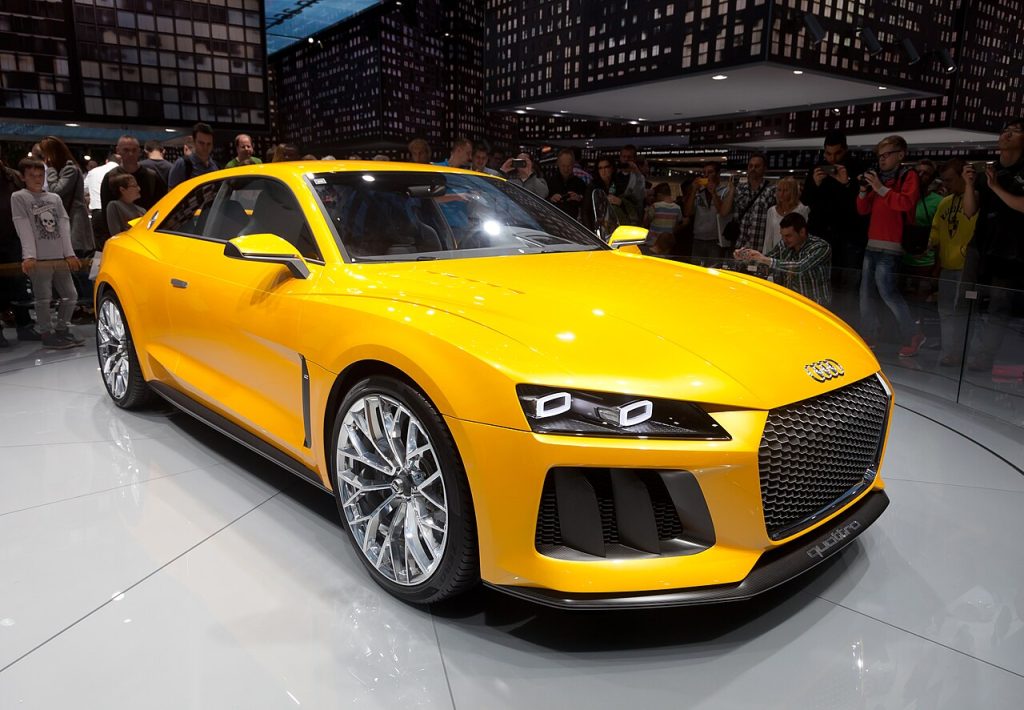
The bundled photograph is source-identified as the Sport quattro concept at the 2013 Frankfurt motor show. Its colour makes changes in the body’s broad surfaces particularly visible against the dark show background. Look at the relationship between the front lighting, wheel arches and passenger compartment before turning to the specification sheet. The design can be analysed as an arrangement of shapes without inventing a road test. A second view from the side would make the proportions easier to compare with the original Sport quattro. The photograph provides a physical reference for the study, while the launch record explains its intended engineering.
Why the 2010 and 2013 studies need separate profiles
The earlier quattro concept and this Sport quattro concept are linked by heritage language but are different proposals. The 2010 car’s published five-cylinder and manual gearbox should not appear in the 2013 hybrid table. Likewise, the later study’s system rating should not be used to describe the earlier one. Retaining the year in the title, image alt text and related links helps readers navigate that distinction. For a comparative article, the interesting question is how the same historical reference can support different technical ambitions. The answer does not require treating the two objects as consecutive versions of a single retail model.
Combined power needs careful language
A hybrid’s system output is not established by casually adding every headline component rating. Operating conditions, control strategy and the way the components deliver their output matter. This article retains the manufacturer’s quoted combined figure and does not recalculate it from unrelated descriptions. When documenting a physical concept, keep original technical sheets with the object record, including the definitions used at launch. If later workshop measurements exist, date them and describe the installed configuration. That keeps the engineering proposal legible without allowing a contemporary conservation or demonstration setup to overwrite the original historical specification.
Rarity and the inventory’s one-car label
The workbook describes one concept, but the reviewed primary material does not provide a complete census of development vehicles, models and presentation objects. The exact numeric production field remains empty. This is an archive concept entry, not a numbered road edition. A known show-car presentation is evidence of a physical subject, but it is not a complete answer to how many objects were created during development. Nor should repeated motor-show photographs be counted as separate cars. If a factory object inventory becomes available, its definitions and exclusions should accompany any number added later.
Conservation questions for a hybrid demonstrator
A curator should record the status of the battery, electrical systems, combustion engine, controls and display equipment separately. The object can retain design significance even if it is conserved for static presentation. For any planned operation, specialist assessment should establish the actual installed equipment and its condition rather than relying on a decade-old launch figure. Preserve records of substitutions and later software or hardware work. These are recommended documentation priorities, not claims that this concept has been altered. The aim is to explain what survives and how it relates to the originally announced proposal.
Heritage styling is not inherited race provenance
The name and body references invite comparison with the original Sport quattro, but the historic car’s production context and competition achievements remain separate. A modern homage does not inherit rally entries, homologation status or original road-car eligibility. The most useful comparison studies the visible design vocabulary and then reads each car’s own documentation. In a display, give both objects their dates and identities before discussing the connection. That approach allows the heritage reference to be meaningful while avoiding the misleading implication that a concept was a continuation chassis or a new factory-built example of the older model.
The photograph and its linked attribution
Thomas Wolf’s Frankfurt image supplies a dated record of the physical study. Its visible credit includes the photographer’s attribution, source page and Creative Commons licence. Retain all three when preparing the Vehicle Profile image. A later museum photograph could complement it, provided its date and subject are clearly identified. Do not silently relabel the 2013 yellow car as the subsequent laserlight concept or treat a shared silhouette as proof of an unchanged object. Image selection should support the exact subject of the article, especially where several related concepts share similar names and proportions.
Why the Sport quattro concept belongs in a rare-car archive
The study opens a useful discussion about how a performance brand translates its past into a changing technical landscape. It can be compared with the compact 2010 quattro concept, the original Sport quattro and the much later all-electric Vision Gran Turismo demonstrator. Those comparisons trace different proposals for performance and presentation without implying a direct mechanical lineage. The strongest archive profile keeps the physical subject, engineering intention and unresolved object census visible together. The concept does not need a fabricated retail price or a guaranteed performance test to justify its place in the collection.
Frequently asked questions
What powered the 2013 Sport quattro concept?
Audi described a four-litre twin-turbo V8 and electric motor in a plug-in hybrid system with an eight-speed tiptronic transmission.
Was 700 PS the V8’s individual rating?
No. The published 515 kW or 700 PS figure is the combined system reference.
Is this the 2010 Audi quattro concept?
No. The 2013 Sport quattro hybrid study is a separate concept; the earlier car used a different published powertrain arrangement.
Was exactly one original development car made?
The inventory labels one, but the reviewed sources do not establish a complete object census. This profile leaves the exact numeric production field unset.
Explore related vehicle profiles
Sources
- Volkswagen Group Sweden — Audi Sport quattro concept launch, September 2013
- Audi Swiss media archive — Sport quattro concept presentation
History and published specifications follow the linked manufacturer records. Visual comparisons, documentation questions and inspection priorities are editorial analysis. Photographs retain their original subject descriptions and separate rights records.
Photography and credit
Audi Sport quattro concept at the 2013 Frankfurt motor show, as identified by the photographer. This is the hybrid study, distinct from the 2010 concept. Photo: Thomas Wolf, www.foto-tw.de / Wikimedia Commons · CC BY-SA 3.0 de. Wikimedia thumbnail resized from original; no cropping or color changes.
Why this machine matters
The 2013 Audi Sport quattro concept reinterpreted the historic Sport quattro as a plug-in hybrid coupe. Its published 515 kW system output came from a twin-turbo V8 and electric motor rather than the five-cylinder arrangement of the 2010 quattro concept. The yellow Frankfurt show car is a distinct physical study with its own design and technology story.
Built in limited numbers
The workbook describes one concept, but the reviewed primary material does not provide a complete census of development vehicles, models and presentation objects. The exact numeric production field remains empty. This is an archive concept entry, not a numbered road edition. A known show-car presentation is evidence of a physical subject, but it is not a complete answer to how many objects were created during development. Nor should repeated motor-show photographs be counted as separate cars. If a factory object inventory becomes available, its definitions and exclusions should accompany any number added later.
Gallery
Specifications
Factory specifications may vary by model year, market and configuration.
Identity & production
- Official model
- Audi Sport quattro concept — 2013
- Base model
- Sport quattro concept
Powertrain & performance
- Engine
- Published 4.0-litre twin-turbo V8 plus electric motor