Audi Nuvolari quattro
The Audi Nuvolari quattro is a 2003 GT concept, named for Tazio Nuvolari and documented by Audi at Geneva and in its planned Le Mans presentation. Its 2+2 layout and manufacturer-described V10 biturbo distinguish it from the contemporary mid-engine Le Mans quattro. This profile keeps announced concept specifications separate from production-car and race-result claims.
The Audi Nuvolari quattro is a 2003 GT concept, named for Tazio Nuvolari and documented by Audi at Geneva and in its planned Le Mans presentation. Its 2+2 layout and manufacturer-described V10 biturbo distinguish it from the contemporary mid-engine Le Mans quattro. This profile keeps announced concept specifications separate from production-car and race-result claims.
Audi Nuvolari quattro at a glance
| Manufacturer | Audi |
|---|---|
| Model / programme | Nuvolari quattro |
| Profile scope | Physical concept archive |
| Historical reference year | 2003 |
| Inventory reference | AUDI-026 |
| Engine reference | Manufacturer-described 5.0-liter V10 biturbo concept specification |
| Exact original object count | Unresolved; no numeric production badge populated |
| Manufacturer power reference | 441 kW |
| Manufacturer power reference | 600 PS; concept rating where applicable |
| Manufacturer torque reference | 750 Nm; concept rating where applicable |
| Object scope | 2003 2+2 GT study; no customer series |
A GT study with a precise historical identity
Audi’s June 2003 release identifies the Nuvolari as a Geneva-debuted 2+2 concept and describes a planned appearance before the Le Mans race. The factory technical account gives a five-liter V10 biturbo with 441 kW, 600 PS and 750 Nm. Those figures describe the concept as published by its manufacturer. They do not make it a production coupe or an entrant in the endurance race. The name and event context can be explained clearly while the profile remains centered on the physical GT study.
Why 2+2 changes the design brief
A 2+2 concept asks a different question from a strictly two-seat sports car. Even limited rear accommodation affects the relationship between cabin and body. For an editorial comparison, examine the concept’s side view and the placement of the occupants rather than assuming more seats mean a particular level of usability. A show-car layout is a proposal, not a customer practicality test. The interesting design problem is the balance between a grand-touring identity and a visually sporting silhouette. That makes Nuvolari a useful companion to Le Mans quattro.
The name is historical, the study is contemporary
Tazio Nuvolari’s motorsport history provides the commemorative context. The 2003 car is not an original Auto Union racer, and its use of the name does not assign a competition result to the study. The factory release presents a tribute through a modern GT. In this archive, the Auto Union Type D offers a separate route into the older racing history. A reader can follow the human and brand connection while understanding that engine design, vehicle purpose and physical identity belong to different periods.
An event announcement is not a race entry
The June release describes a demonstration programme around Le Mans. That is distinct from entering the 24-hour race or achieving a race classification. It was published before the scheduled appearance, so this guide does not turn every planned detail into a completed result. When later event records become available, they can establish what occurred and who participated. This approach is especially useful for concepts because press previews often describe intentions that are then repeated as if they were official competition results.
Reading the manufacturer specification
The factory account describes a GT with aluminum Space Frame construction, a six-speed automatic and quattro. These details should retain the concept context. A preserved exhibit may need its own record to establish installed parts and operational condition. Do not import them into a later A5 specification simply because Audi links the concept to that model direction. Published acceleration is a manufacturer claim, not a test performed for this guide, and it is not needed to understand why the object matters historically.
Nuvolari versus Le Mans quattro
The two 2003 studies can look related in a catalogue because both carry quattro and ambitious V10 descriptions. Their packaging and briefs are different. Le Mans quattro serves the mid-engine sports-car story; Nuvolari addresses a GT concept. A useful comparison should show photographs from matching angles and describe the layout before quoting output. Similar headline power does not imply identical engines, bodies or driving behavior. The connected profiles give readers enough context to recognize the difference instead of flattening Audi’s 2003 ideas into a single supercar narrative.
Rarity and the inventory’s one-car figure
The inventory labels Nuvolari as one physical concept. The reviewed sources support the study’s existence and date but do not establish a complete original-object census. The exact numeric build field stays blank. This avoids equating a photographed exhibit with every development model used to create it. A customer allocation is not applicable because no retail series is claimed. Future archive evidence should distinguish the full-size vehicle from styling models, replacement display structures and any later reproductions before a count is certified.
A museum photograph with a limited role
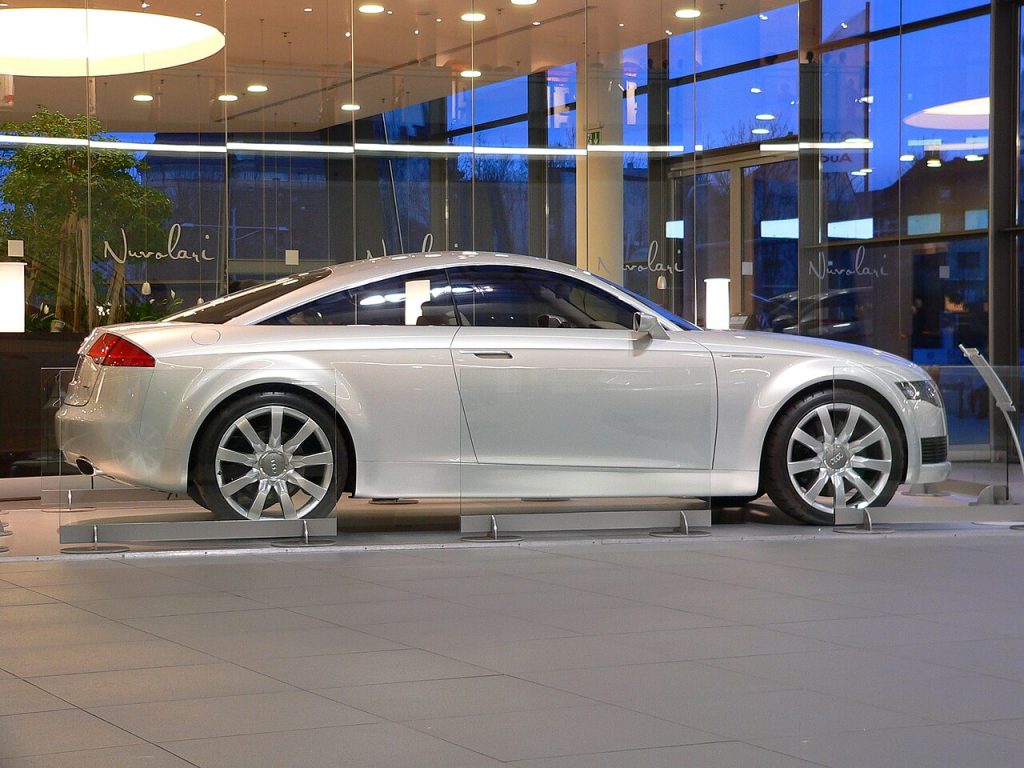
The bundled image is source-identified as Nuvolari at Audi Forum Neckarsulm. It is useful for examining the design and placing the study in a real exhibition context. It does not document the announced Le Mans appearance or prove a particular operational state. The caption retains the venue and photographer’s identification. A later image replacement should preserve source and license information and avoid describing a museum photo as a launch photograph merely because the concept date is known.
How to build a stronger concept record
A complete object file would combine launch material, event documentation and dated conservation records. Ask which technical description applies to the displayed version. Retain original-language units, and record any translation decisions that change a technical term. The proposed research should also identify whether equipment is functional or representational. These are documentation questions rather than allegations about the exhibit. They help a curator explain the object’s development and condition while giving engineering readers a way to distinguish supported specifications from later retellings.
Why it remains a useful archive subject
Nuvolari gives the collection a GT branch alongside Audi’s more obvious supercar concepts. Its significance is the specific design problem it explored, not just the size of a power figure. Compare it with the 1995 TT studies for a compact sports-car approach, and Le Mans quattro for a contemporary alternative. This creates a route through the archive based on vehicle purpose. It also explains why a physical study can deserve a detailed profile even when its exact chassis count and present operational condition remain unconfirmed.
Frequently asked questions
What is the Audi Nuvolari quattro?
A 2003 2+2 GT concept, identified in Audi’s period release.
What engine rating did Audi publish?
The period concept description gives 441 kW or 600 PS and 750 Nm from a five-liter V10 biturbo.
Did it compete in the Le Mans 24 Hours?
This guide claims no race entry. Audi’s June release describes a planned demonstration and presentation around the event.
Is the exact one-off count certified?
No. The source supports the physical study but not a complete census of all development objects.
Explore related vehicle profiles
Sources
- Audi — Nuvolari quattro at Le Mans, June 2003
- Audi Tradition — Design Legends exhibition and dated concepts
- Audi Tradition — Forty years of quattro, historical show-car section
History and published specifications follow the linked manufacturer records. Visual comparisons, documentation questions and inspection priorities are editorial analysis. Photographs retain their original subject descriptions and separate rights records.
Photography and credit
Audi Nuvolari quattro concept exhibited at Audi Forum Neckarsulm, as identified by the photograph source. Photo: Joachim Köhler / Wikimedia Commons · CC BY 3.0. Wikimedia thumbnail resized from original; no cropping or color changes.
Why this machine matters
The Audi Nuvolari quattro is a 2003 GT concept, named for Tazio Nuvolari and documented by Audi at Geneva and in its planned Le Mans presentation. Its 2+2 layout and manufacturer-described V10 biturbo distinguish it from the contemporary mid-engine Le Mans quattro. This profile keeps announced concept specifications separate from production-car and race-result claims.
Built in limited numbers
The inventory labels Nuvolari as one physical concept. The reviewed sources support the study’s existence and date but do not establish a complete original-object census. The exact numeric build field stays blank. This avoids equating a photographed exhibit with every development model used to create it. A customer allocation is not applicable because no retail series is claimed. Future archive evidence should distinguish the full-size vehicle from styling models, replacement display structures and any later reproductions before a count is certified.
Gallery
Specifications
Factory specifications may vary by model year, market and configuration.
Identity & production
- Official model
- Audi Nuvolari quattro
- Base model
- Nuvolari quattro
Powertrain & performance
- Engine
- Manufacturer-described 5.0-liter V10 biturbo concept specification