Audi RS 6 plus Avant (C5)
The C5 Audi RS 6 plus Avant is the limited final performance derivative of the first RS 6 wagon. Audi’s own chronology places it in 2004, with 353 kW and a 999-car limit. It is distinct from a standard C5 RS 6, later plus derivatives and subsequent performance models. A numbered plaque supports the story only when it matches the car’s identity records.
The C5 Audi RS 6 plus Avant is the limited final performance derivative of the first RS 6 wagon. Audi’s own chronology places it in 2004, with 353 kW and a 999-car limit. It is distinct from a standard C5 RS 6, later plus derivatives and subsequent performance models. A numbered plaque supports the story only when it matches the car’s identity records.
Audi RS 6 plus Avant (C5) at a glance
| Manufacturer | Audi |
|---|---|
| Model / programme | RS 6 C5 |
| Profile scope | Limited performance wagon |
| Historical reference year | 2004 |
| Inventory reference | AUDI-027 |
| Engine reference | 4.2-liter V8 biturbo |
| Published edition limit | 999; exact completed-production census not certified here |
| Manufacturer power reference | 353 kW |
The correct model and year
Audi’s RS chronology lists the first RS 6 sedan and Avant in 2002, followed by the RS 6 plus in 2004. It gives a 4.2-liter V8 biturbo family and a 353 kW rating for the plus, with a 999-car limit. The inventory’s 2003 reference is corrected here. This profile specifically covers the C5 Avant plus. The ordinary RS 6 range and later generations remain separate. A precise title is essential because plus has been used in more than one historical context.
A limited series, not the whole RS 6 population
The 999 figure is a factory-published series limit. This package stores it as an edition limit rather than asserting a reconciled exact completed-production census. It is not the production total for every C5 RS 6. Nor can it be used to count cars surviving today or examples delivered to an individual market. This distinction keeps the rarity statement useful and within the collection’s threshold. A future factory completion record could strengthen the total, but the guide should not silently change a limit into a survivor number.
Why a higher output does not authenticate a plus
Audi’s 353 kW reference describes the factory model. A standard RS 6 with revised software can have a different measured output without becoming a factory plus. The reverse also applies: an authentic plus may have been modified later. Start with the vehicle identity and original specification, then describe its current equipment separately. A dyno graph can explain performance in a tested configuration, but it does not prove original allocation. Keeping the two questions separate prevents a collector from treating an impressive headline figure as the primary authenticity test.
The final-derivative appeal
A late performance derivative can appeal to collectors because it represents a concentrated version of an established model. That is an interpretive reason to study the plus, not a guarantee about desirability or future value. The actual example matters. A documented, maintained vehicle and an undocumented project with the same badge can create very different ownership demands. The limited-series identity should open the inspection, not replace it. In a guide, explain the scope first and let the condition and records determine how an individual car is described.
RS2 versus RS 6 plus
Both belong to Audi’s fast-wagon history, but they offer different mechanical and collector stories. The RS2’s five-cylinder and Porsche collaboration contrast with the C5’s V8 performance derivative. Comparing their scoped production figures is useful only after establishing that both numbers count the intended subjects. The RS2 figure is a reported model production total; the plus figure here is an edition limit. Those are not identical evidence types. A meaningful comparison also considers the service history, original specification and evidence of modifications on the particular vehicles under consideration.
Identity checks before an inspection
Request a factory build record, VIN photographs and original documentation tied to the same vehicle. Compare the numbered plaque or edition references with that evidence. Inspect the way identification is recorded rather than accepting a detached plaque photograph as proof. This is a proposed verification sequence, not a claim about any pictured car. If a record identifies a standard RS 6, a later collection of plus-style components should be described as modifications. If a factory plus has replacement trim, record that accurately rather than discarding its original identity.
Service records should explain the work
Ask for dated records covering the engine, turbochargers, cooling, transmission, brakes and chassis systems. Where a suspension system has been changed, identify the installed parts and keep the reason and date. These are inspection priorities rather than a diagnosis or a universal failure prediction. A complete invoice is more useful than a seller’s broad assurance that the car has been maintained. A specialist should assess the vehicle itself and explain the scope of any additional work. The ownership decision depends on that evidence, not on the rarity number alone.
Originality and modification can coexist
An authentic limited-series car can carry later software, exhaust, wheel or suspension changes. Describe the factory identity and current configuration separately. Ask whether original parts remain and whether changes are documented and reversible. Avoid treating every replacement as a defect: wear items and necessary repairs are part of a car’s life. The important question is whether the description accurately accounts for them. A collector file should make it possible to reconstruct the vehicle’s specification over time rather than presenting an idealized snapshot with no supporting history.
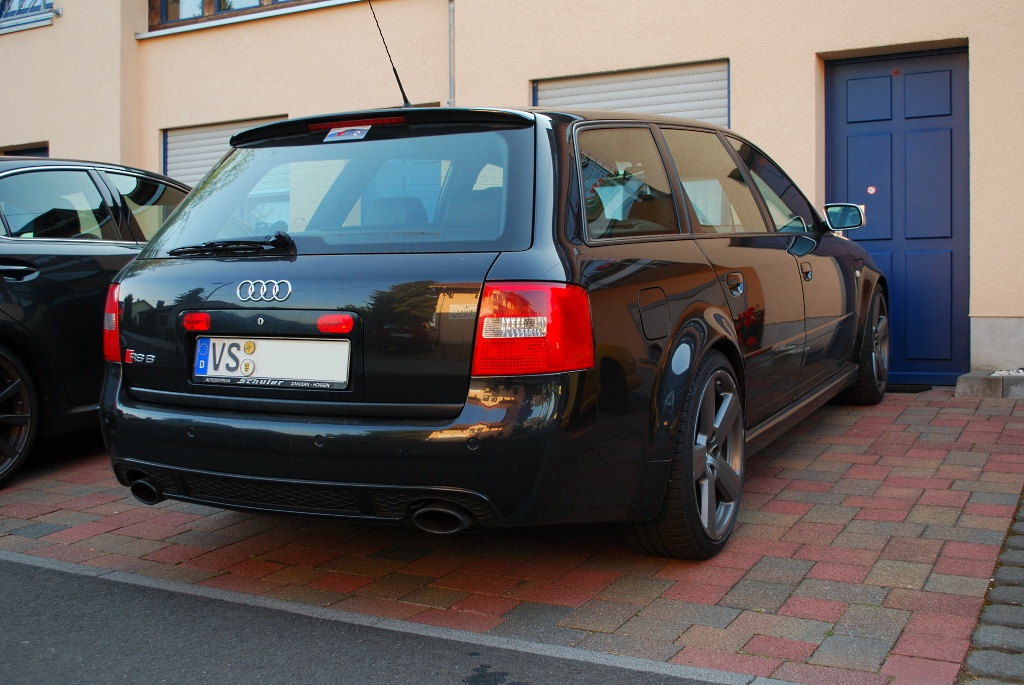
How to use the supplied rear-view photograph
The image source calls the car a C5 RS 6 Avant plus. Its rear angle illustrates the wagon body and published subject identity, but it does not reveal the build record or authenticate the plaque. The image is supplied at 1,024 pixels wide without upscaling. Its caption keeps those limits visible. A future full gallery should include clear exterior, interior and documentation views, with sensitive identifiers handled appropriately. Each photo needs its own permission and accurate credit; a model caption is not a mechanical inspection report.
Keeping later plus and performance models separate
When comparing an advertisement or source, identify the generation before quoting engine or equipment details. Later RS 6 derivatives use different powertrains and different allocation structures. A description attached to C6 or C8 cannot be copied into this C5 profile. That precision also improves navigation: readers searching the original limited wagon should receive its own guide and then links to related history. The RS2 and the broader concept programme show other aspects of Audi’s performance development without dissolving this edition into a general RS 6 overview.
Frequently asked questions
What year is the C5 RS 6 plus?
Audi’s chronology places the limited plus derivative in 2004, correcting this inventory’s 2003 reference.
What is the edition limit?
Audi publishes a 999-car limit. This package keeps the limit separate from a reconciled completed-production total.
What power does Audi list?
Audi’s model chronology gives 353 kW for the C5 RS 6 plus.
Can a tuned standard RS 6 be called a factory plus?
Not on the basis of tuning alone. Verify the original factory identity and describe later changes separately.
Explore related vehicle profiles
Sources
History and published specifications follow the linked manufacturer records. Visual comparisons, documentation questions and inspection priorities are editorial analysis. Photographs retain their original subject descriptions and separate rights records.
Photography and credit
Source-identified C5 Audi RS 6 Avant plus, rear view. The image does not establish the pictured vehicle original build record or numbered plaque. Photo: Maujak / Wikimedia Commons · CC BY-SA 3.0. Original image supplied without visual changes.
Why this machine matters
The C5 Audi RS 6 plus Avant is the limited final performance derivative of the first RS 6 wagon. Audi’s own chronology places it in 2004, with 353 kW and a 999-car limit. It is distinct from a standard C5 RS 6, later plus derivatives and subsequent performance models. A numbered plaque supports the story only when it matches the car’s identity records.
Built in limited numbers
The 999 figure is a factory-published series limit. This package stores it as an edition limit rather than asserting a reconciled exact completed-production census. It is not the production total for every C5 RS 6. Nor can it be used to count cars surviving today or examples delivered to an individual market. This distinction keeps the rarity statement useful and within the collection’s threshold. A future factory completion record could strengthen the total, but the guide should not silently change a limit into a survivor number.
Gallery
Specifications
Factory specifications may vary by model year, market and configuration.
Identity & production
- Official model
- Audi RS 6 plus Avant (C5)
- Base model
- RS 6 C5
Powertrain & performance
- Engine
- 4.2-liter V8 biturbo