Audi RS2 Avant
The Audi RS2 Avant combines a practical wagon body with a Porsche-developed performance package and a documented 2,891-car production run. Launched in 1994, it established the RS identity around a turbocharged five-cylinder and quattro drivetrain. Its collector appeal rests on the complete factory car, not simply a blue finish or Porsche-branded parts.
The Audi RS2 Avant combines a practical wagon body with a Porsche-developed performance package and a documented 2,891-car production run. Launched in 1994, it established the RS identity around a turbocharged five-cylinder and quattro drivetrain. Its collector appeal rests on the complete factory car, not simply a blue finish or Porsche-branded parts.
Audi RS2 Avant at a glance
| Manufacturer | Audi |
|---|---|
| Model / programme | RS2 Avant |
| Profile scope | Finite-production performance wagon |
| Historical reference year | 1994 |
| Inventory reference | AUDI-017 |
| Engine reference | 2.2-liter turbocharged inline five-cylinder |
| Reported model production | 2891 — RS2 model production run reported by Porsche |
| Manufacturer power reference | 232 kW |
| Manufacturer power reference | 315 PS; concept rating where applicable |
Why the RS2 Avant matters
Porsche’s development account confirms the joint project, its March 1994 launch, Zuffenhausen assembly and 2,891-car total. Audi’s five-cylinder history identifies the RS2 with 232 kW and 315 PS. Those points establish the model’s identity and rarity without relying on an advertisement. The resulting wagon gives collectors two histories to explore: the Audi RS lineage and Porsche’s customer engineering work. The interest is in their integration. A badge alone cannot explain how a family-shaped car became a distinctive performance product.
A production total with a clear scope
The 2,891 figure refers to the RS2 production run, not all Audi 80 Avants and not every modified five-cylinder wagon. It is comfortably below this archive’s 7,500-car ceiling. That total does not reveal how many survive, how many remain standard or how many were allocated to a particular country. A market-specific claim needs its own record. For a reader comparing listings, the first question is whether the car belongs to the factory RS2 series. Only then do color, steering position and local history become meaningful ways to narrow the population.
Five cylinders, with units kept straight
The historical Audi rating of 315 PS should not be silently rewritten as 315 mechanical horsepower. Power figures expressed in different units can look like a dispute when they are simply conversions or rounding. Keep the original unit beside the number. The same care applies to later tuning claims: a dynamometer result describes the tested configuration and method, not the factory specification. In a collector file, identify the engine and management configuration before using an output figure as evidence of originality. A faster modified RS2 is a different description from an unmodified example.
The value of the Porsche connection
Porsche describes the engineering and assembly relationship directly. That makes the partnership a documented part of the car’s history, rather than an ownership rumor. In physical inspection, however, Porsche-related components are evidence to compare with a build record, not a substitute for one. Parts can be replaced, transferred or reproduced. A complete car should be assessed as a system: body identity, drivetrain, brakes, trim and records. The partnership also gives researchers a second manufacturer archive to consult when an Audi document does not answer a specific component or development question.
RS2 versus Sport quattro
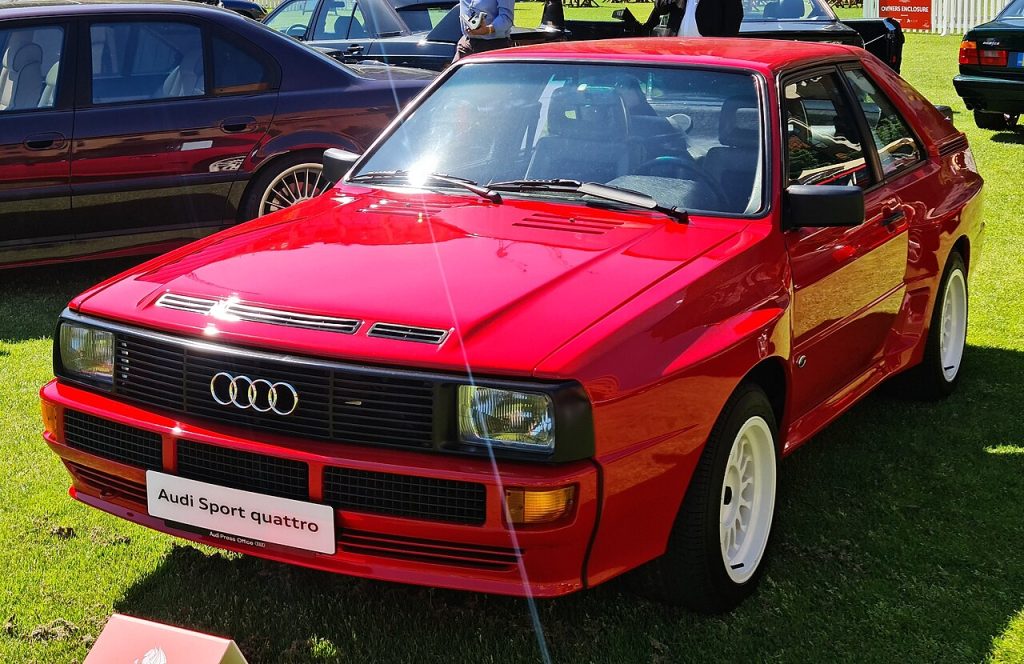
The Sport quattro and RS2 both reward a careful reading of Audi’s five-cylinder history, but their purposes differ. The short-wheelbase homologation car belongs to a motorsport-driven development story. The RS2 turns high performance into a road-going wagon proposition. Compare body layout, intended use, documented production scope and maintenance records rather than assuming shared engine architecture means shared collector priorities. Someone drawn to the RS2’s practicality may value a well-documented usable car differently from an exhibit-oriented homologation example. Neither perspective requires inventing a universal ranking.
RS2 versus the C5 RS 6 plus
The RS 6 plus offers a later interpretation of the fast-wagon idea, with a V8 and a distinct limited series. The RS2’s historical advantage is its foundational place and collaboration story. The comparison becomes useful when it addresses what a collector will actually examine: identity evidence, mechanical complexity, service access and the consequences of past modifications. A shorter build run alone cannot establish better condition or a stronger example. Each profile therefore gives its own production scope and directs the reader toward model-specific documents instead of comparing vague rarity adjectives.
Verifying an RS2 before discussing condition
Begin with the VIN, registration identity and a manufacturer-supported build record. Compare those with the body and the car’s documented life. A coherent chain should connect the original specification to later ownership and work. Photographs are useful for identifying changes, but they cannot establish every hidden repair. Treat a converted Audi 80, an RS2 with replacement components and a largely preserved RS2 as different cases. All can be interesting, yet their descriptions should say exactly what the evidence supports. This avoids letting visual familiarity become a certificate.
Maintenance evidence a collector should request
Ask for dated invoices covering the engine, cooling system, turbocharger, transmission, brakes and suspension, with mileage readings that form a coherent sequence. This is an inspection framework, not a diagnosis of a particular car. Request the identity of replacement parts and the reason for each major intervention. A note saying “fully serviced” is less informative than a documented scope of work. If the car has been tuned, retain the software, hardware and test records. Reversibility depends on what was changed and which original pieces remain.
Body, cabin and originality
A collector inspection should combine paint measurements, underside photographs and professional assessment of repairs. Look for consistency between panels, trim, interior fittings and the recorded specification. Do not assume every deviation is evidence of fraud: wear, accident repair and a previous owner’s choices may explain it. The useful outcome is a clear account of what has changed. A restored car can be accurately represented when its work is documented. Claims about original paint or untouched construction require stronger evidence than a clean appearance in a sale photograph.
How to read the supplied photo
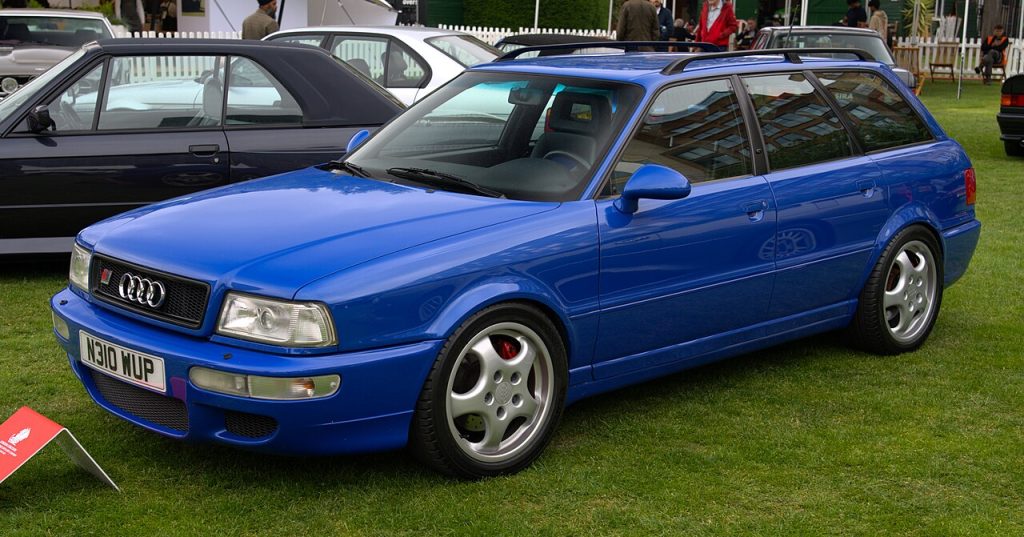
The image source identifies the pictured car as a 1995 RS2 Avant at London Concours 2025. Its modern setting is stated in the caption. The photo illustrates the model and its wagon form; it does not establish an individual production sequence or authenticate every part. Retaining that caption keeps the photograph useful without asking it to prove more than it can. Readers can move from this profile to the Sport quattro for homologation context or to the RS 6 plus for the later RS wagon story.
Frequently asked questions
How many Audi RS2 Avants were built?
Porsche’s project retrospective reports 2,891 vehicles. That is a model production total, not a survivor count.
Was the RS2 developed with Porsche?
Yes. Porsche documents its role in the joint development and Zuffenhausen assembly project.
What is the factory power reference?
Audi gives 232 kW or 315 PS for the turbocharged five-cylinder RS2. Units should be retained when comparing figures.
Does an RS2 badge prove a car is genuine?
No. Verify the VIN, build documentation and physical specification. Badges and individual components can be changed.
Explore related vehicle profiles
Sources
- Porsche Newsroom — Audi Avant RS2 development and production
- Audi — History of five-cylinder engines
- Audi Magazine Australia — RS chronology and C5 plus limit
History and published specifications follow the linked manufacturer records. Visual comparisons, documentation questions and inspection priorities are editorial analysis. Photographs retain their original subject descriptions and separate rights records.
Photography and credit
Source-identified 1995 Audi RS2 Avant at London Concours 2025. No individual production number or original specification certified by this photograph. Photo: MrWalkr / Wikimedia Commons · CC BY-SA 4.0. Wikimedia thumbnail resized from original; no cropping or color changes.
Why this machine matters
The Audi RS2 Avant combines a practical wagon body with a Porsche-developed performance package and a documented 2,891-car production run. Launched in 1994, it established the RS identity around a turbocharged five-cylinder and quattro drivetrain. Its collector appeal rests on the complete factory car, not simply a blue finish or Porsche-branded parts.
Built in limited numbers
Porsche-supported 2,891-car model total; no survivor or national allocation total inferred. Photo is a modern model illustration.
Gallery
Specifications
Factory specifications may vary by model year, market and configuration.
Identity & production
- Official model
- Audi RS2 Avant
- Base model
- RS2 Avant
- Worldwide production
- 2891
Powertrain & performance
- Engine
- 2.2-liter turbocharged inline five-cylinder