Audi RS 3 Sportback performance edition
The five-door Sportback within the shared 300-car RS 3 performance edition programme, combining a published uprated five-cylinder specification with a distinctive factory interior and chassis brief.
The five-door Sportback within the shared 300-car RS 3 performance edition programme, combining a published uprated five-cylinder specification with a distinctive factory interior and chassis brief.
Audi RS 3 Sportback performance edition at a glance
| Manufacturer | Audi |
|---|---|
| Model / programme | RS 3 |
| Profile scope | Limited road edition — shared body allocation |
| Historical reference year | 2022 |
| Inventory reference | AUDI-080 |
| Engine reference | 2.5-litre turbocharged five-cylinder petrol |
| Published edition limit | 300 — Combined RS 3 performance edition Sedan and Sportback; body split unresolved |
| Manufacturer power reference | 299 kW |
| Manufacturer power reference | 407 PS; concept rating where applicable |
| Manufacturer torque reference | 500 Nm; concept rating where applicable |
The Sportback within one performance programme
The Sportback gives Audi’s October 2022 performance edition announcement a five-door form. It is one body choice within the same programme as the Sedan, rather than a second 300-car series. That identity is central to this profile. It allows readers to explore the shape and use of the Sportback without losing sight of the allocation that the manufacturer actually published. For a candidate car, the task is to establish both its body style and its membership of the named edition. A general RS 3 order, a performance badge or a description of improved acceleration does not by itself answer the second question.
Rarity: use the combined population
Audi’s stated limit is 300 cars across Sportback and Sedan. A Sportback-only build count has not been established by the reviewed records, so this page does not estimate a percentage or invent a regional distribution. The allocation appears in both body profiles with the same shared scope. This is deliberate: two catalogue entries provide different ways to understand the programme, but should not be summed as two production runs. Any future body split needs a dated, properly scoped source. An enthusiast register could help research surviving examples, while still remaining a different measure from the number originally completed at the factory.
The factory power reference
The programme’s published five-cylinder rating is 299 kW, 407 PS and 500 Nm. The performance edition name must be kept distinct from later specifications or modifications to an individual car. When comparing listings, check whether the quoted output is factory, claimed after tuning or measured on a particular test apparatus. Those categories are not interchangeable. Correctly labelled units also matter, because metric PS and mechanical horsepower are not identical. The profile’s specification table records the manufacturer’s reference; an individual vehicle’s installed software and mechanical state need the original order, workshop documentation and inspection evidence.
What five-door form contributes to the profile
The Sportback’s hatch and roofline make it visually and practically different from the Sedan even where the limited programme is shared. A collector can reasonably prefer one form because of proportions, access or intended use. Those are useful considerations to explain directly rather than turn into an unsupported hierarchy of desirability. Compare side and rear views, then examine the actual example’s load area and cabin condition. A versatile body can be used in many ways, but neither the body style nor the mileage alone tells us how this car was treated. Documentation and inspection still need to describe the individual history.
The interior as part of the edition record
Audi’s presentation connects the special model with a specific cabin treatment as well as its power reference. When reviewing a car, take photographs that show the seats, trim, steering controls and edition identification clearly enough to compare with its factory order. Colour accents can be an immediate visual clue, but the useful question is whether that particular arrangement was original to the vehicle. A replacement seat or retrim should be documented as a change rather than allowed to disappear into a general claim of originality. Well-kept records can explain a genuine edition whose present appearance no longer matches every detail of the launch photograph.
Tyres, brakes and the original intended use
Audi’s announcement gives the performance edition a deliberately performance-oriented equipment brief. The collector’s practical question is how the delivered specification compares with the car today. Record tyre type, age and condition, wheel replacements, brake assessment and any changes to the suspension. A consumable replacement does not automatically damage the factory identity, but it may change the car’s behaviour and the completeness of its preserved specification. Keep maintenance decisions visible in the file. A promotional description of the original equipment cannot establish remaining service life or suitability of a particular used component; those matters require direct assessment of the example.
Reading the “1 of 300” inscription
An inscription using “1 of 300” communicates membership of a limited group. It should not be silently rewritten as “number 1” or used to promise an individually sequential number. Photograph the inscription and preserve the exact wording in the vehicle file. Then connect it to the factory record rather than asking the inscription to do all the authentication work. This care is useful when comparing auction catalogues, because abbreviated captions can change the meaning of a number without changing its typography very much. The archive should make that distinction easy to understand for a reader seeing the edition for the first time.
A body-specific inspection file
The Sportback’s condition record should include its hatch, cargo space, door apertures and cabin as well as the drivetrain and exterior panels. Ask for a written account of accident repair, diagnostic findings, servicing and modifications. Compare current images with delivery material where available, especially if the car has changed wheels, seats or trim. These are research and inspection priorities, not a claim that every Sportback has a recurring defect. The purpose is to explain what the particular car is, how it has been used and what work has been done. A strong file allows future reviewers to follow the evidence without relying on an adjective such as immaculate.
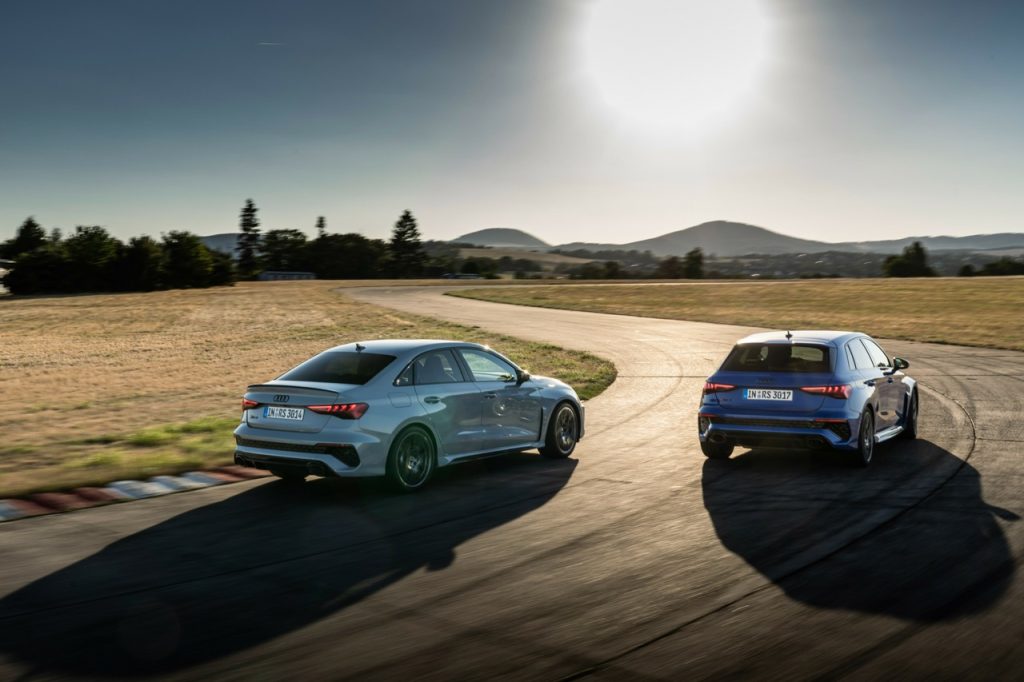
The official photo and the neighbouring Sedan
The credited Audi image shows the Nogaro Blue Sportback alongside the Arrow Gray Sedan. The caption deliberately names both, making the photograph useful for understanding the programme’s two body choices. It does not represent two Sportbacks or demonstrate the numerical body split. For an advertised example, use this factory image as a comparison reference and obtain separate photographs of the car actually offered. An official launch photograph explains design and specification; current photographs explain visible condition. Linking each image to the question it can answer prevents a polished illustration from being mistaken for evidence about an unrelated vehicle’s provenance.
Collecting the Sportback without doubling the edition
The Sportback performance edition offers a clear collecting theme through its five-cylinder character, hatchback form and limited factory programme. Its rarity statement becomes stronger when it remains precise: a member of a shared 300-car allocation, with the Sportback share unresolved. Discuss condition, documentation and completeness alongside that identity, rather than projecting future value from the cap. The related Sedan profile makes the allocation easier to understand, while other compact Audi editions provide wider context. If new records clarify numbers or equipment, preserve their market and date. That allows the profile to grow in accuracy without changing a qualified original statement into an unsupported certainty.
Frequently asked questions
How many Sportbacks belong to the 300-car programme?
The reviewed Audi announcement does not establish the Sportback share. The total limit of 300 covers Sportback and Sedan together.
Is this the same edition as the Sedan?
They are two body choices in the same RS 3 performance edition programme. Separate profiles do not imply separate allocations.
Does “1 of 300” mean the first car built?
Not on its own. It is treated here as a series-membership inscription, not proof of sequential build position.
What records should accompany a genuine example?
A VIN-linked factory specification naming the performance edition, the original order and delivery evidence, plus records describing servicing, repairs and later changes.
Explore related vehicle profiles
Sources
- Audi — RS 3 performance edition, 18 October 2022
- Audi Switzerland — RS 3 performance edition
- Audi — Performance is an attitude: special models, November 2022
History and published specifications follow the linked manufacturer records. Visual comparisons, documentation questions and inspection priorities are editorial analysis. Photographs retain their original subject descriptions and separate rights records.
Photography and credit
Audi RS 3 Sportback performance edition in Nogaro Blue alongside the Sedan performance edition in Arrow Gray; official photograph A225590. Photo: AUDI AG / Audi Media Center · Audi Media Center: editorial use free of charge. Resized without cropping or color alteration.
Why this machine matters
The five-door Sportback within the shared 300-car RS 3 performance edition programme, combining a published uprated five-cylinder specification with a distinctive factory interior and chassis brief.
Built in limited numbers
Audi’s stated limit is 300 cars across Sportback and Sedan. A Sportback-only build count has not been established by the reviewed records, so this page does not estimate a percentage or invent a regional distribution. The allocation appears in both body profiles with the same shared scope. This is deliberate: two catalogue entries provide different ways to understand the programme, but should not be summed as two production runs. Any future body split needs a dated, properly scoped source. An enthusiast register could help research surviving examples, while still remaining a different measure from the number originally completed at the factory.
Gallery
Specifications
Factory specifications may vary by model year, market and configuration.
Identity & production
- Official model
- Audi RS 3 Sportback performance edition
- Base model
- RS 3
Powertrain & performance
- Engine
- 2.5-litre turbocharged five-cylinder petrol