Alpine A526 Formula One
The Alpine A526 is the team’s 2026 Formula One car, introduced under a new technical framework and a Mercedes power-unit and gearbox supply arrangement. Its archive belongs to a competition programme and individual chassis histories, not a customer limited edition.
The Alpine A526 is the team’s 2026 Formula One car, introduced under a new technical framework and a Mercedes power-unit and gearbox supply arrangement. Its archive belongs to a competition programme and individual chassis histories, not a customer limited edition.
Alpine A526 Formula One at a glance
| Manufacturer | Alpine |
|---|---|
| Model family | A526 |
| Profile scope | Competition archive |
| Inventory reference | ALP-114 |
| Propulsion | Hybrid competition programme |
| Engine reference | Mercedes-AMG HPP supplied hybrid Formula One power unit — 2026 programme |
A new regulations-era Alpine
The A526 designation identifies Alpine’s 2026 Formula One programme. The team’s January launch places the car in a new technical era, with changes to the chassis and power-unit framework. A model profile should establish that season and programme before discussing a surviving object. A launch display, running chassis and spare structure can have different physical histories even when all carry team branding. The historical account therefore starts with the documented programme. It leaves the identity, configuration and custody of any particular machine to a separate chassis file rather than imply that the designation describes one universally identical object.
The Barcelona launch aboard MSC World Europa
Alpine presented its 2026 livery on 23 January aboard MSC World Europa, docked in Barcelona. The event gives the archive a specific public launch setting and date. It should not be read as proof that every displayed component was the final specification used at every Grand Prix. Launch presentations establish programme identity and visual direction; later running evidence establishes race configuration. Preserve the contemporary release alongside dated photographs. A collecting description becomes clearer when it distinguishes the publicity object, the engineering programme and the individual competition vehicle rather than allowing a memorable presentation venue to answer all three questions.
Mercedes supply and the Renault transition
The team’s launch account confirms Mercedes-AMG High Performance Powertrains supply for the power unit and gearbox from 2026. That changes the technical relationship from the A525 programme, whose final-season preview described the farewell to Renault Formula One power units. Do not carry a Renault engine entry forward simply because the constructor retains the Alpine name. The car’s constructor identity and its supplied propulsion technology answer different questions. Store both with their dates and source scope. For a surviving chassis, installed equipment and subsequent removal or replacement still require object-specific documentation beyond the model-level supply announcement.
Gasly and Colapinto at the season launch
The 2026 announcement identifies Pierre Gasly and Franco Colapinto as the team’s drivers. This is a dated programme statement, not a claim that every chassis was driven by both or that every later session had an unchanged assignment. An individual history should record driver, event, session and chassis evidence together. A driver name in a caption can help identify a photographed appearance without proving the physical chassis number. Keep these layers distinct. The result is a more useful archive because readers can follow the team’s announced line-up while still asking precise questions about the machine they are researching.
Active aerodynamics and evolving configuration
Alpine’s launch material describes active aerodynamic elements in the new regulations context. Such a programme-level statement is useful for explaining the technical transition, but it does not establish a complete installed specification for a privately held or later displayed car. Race configurations evolve and display conversions may remove functional systems. Document the object’s actual wings, bodywork, controls and associated hardware with dates. Avoid filling exact dimensions, weight, output or setup fields from broad expectations. A technical account should identify the evidence behind each claim rather than make a launch description appear to be a permanent inspection report.
Rarity: chassis-specific, without an invented cap
The sources reviewed here establish the A526 programme, not a complete census of built chassis, spare monocoques, replacements or surviving assembled cars. Leave edition and completed-production fields unset. A small competition population is plausible context, but a numerical catalogue claim needs a defined population and an auditable register. An individual chassis number should be tied to team records rather than inferred from a race number or launch image. This approach preserves the car’s collecting interest while avoiding a numbered road-edition treatment that does not match how a Formula One programme builds, modifies and deploys equipment.
Race history needs session-level evidence
Build a chronology from reliable entry, timing and team records, with the chassis connection separately supported. A team’s result is not automatically the result of the particular object later offered for collection. Components can move between chassis, and the car presented today may differ from a recorded race configuration. Describe these limitations alongside the evidence. As reviewed on 1 October 2026, this guide does not present a completed full-season result or final championship position. The remaining season should be incorporated only after dated records establish what happened, rather than turn an ongoing campaign into retrospective certainty.
Authentication beyond an attractive livery
Request identification, team provenance, transfer records, build and repair history, competition documentation and a current component inventory. Establish which structure survives and what equipment accompanies it. A correct-looking livery or plausible race number does not establish the full chassis identity. If the object is a show car, stripped chassis or reconstructed display, state that role plainly. Those objects can have legitimate historical interest when described accurately. The collecting file should explain what connects the object to the A526 programme and which claimed appearances can be linked to its physical history, not merely to the wider team.
Preservation and operational support
A suitable specialist should assess the structure, systems, condition and available support before any work or operation. The model’s original technical programme does not promise continued access to supplied hardware, software or team procedures. A static collection and a running demonstration may require very different resources. Record removed systems, replacements and associated equipment so later custodians understand the preservation choices. Keep sensitive operational detail separate from public catalogue prose where appropriate. The aim is a practical condition and support account that complements the historical file, rather than imply that a complete-looking Formula One display is ready to run.
The licensed Austria photograph
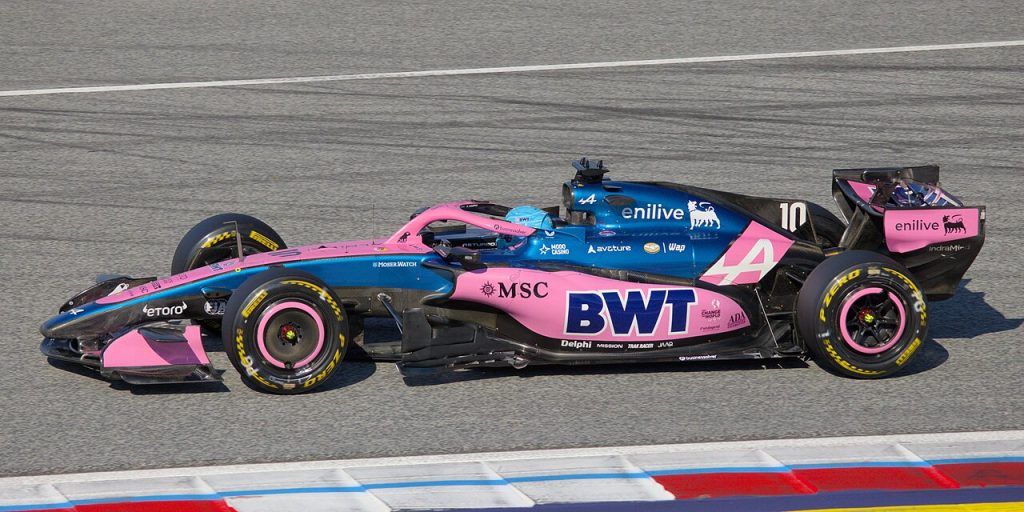
The bundled image records Gasly’s number 10 Alpine during the 2026 Austrian Formula One event. It is a period A526 model photograph, with author, source, licence and resizing information supplied. The image supports visual programme context; it does not disclose or independently authenticate the physical chassis serial. Keep the event and model identification in the caption without expanding it into a particular car’s ownership or race-history claim. Additional detail photographs would be needed for an individual object catalogue. The visible credit and linked licence remain part of the image wherever it is reused in the profile.
Comparing A526 with adjacent Alpine programmes
The A525 comparison explains the power-unit transition, while earlier Formula One guides provide the season-by-season constructor context. The A424 belongs to a separate endurance programme with a different technical and sporting purpose. Related links should help readers understand those relationships without merging their production populations or performance claims. Compare dated rules, suppliers, programme purpose and documented individual histories. A simple power ranking is not a substitute for those distinctions. The archive becomes more informative when it shows how Alpine’s competition activities developed while preserving the identity and evidence requirements of each distinct machine.
A dated archive for an ongoing season
Retain the launch sources, image rights record and the review date alongside later additions. New results, technical changes or factory transfers should update the relevant part of the guide with their own evidence. They should not silently overwrite the launch configuration or create a chassis count by implication. A future individual vehicle record can link to this programme profile while carrying its own provenance and condition material. This keeps the historical account usable during an evolving season and after it ends. The model guide explains the programme; the object file establishes what a collector actually has.
Frequently asked questions
Which season does A526 identify?
Alpine’s 2026 Formula One programme.
Does A526 retain the A525 Renault power-unit arrangement?
No. Alpine confirms Mercedes power-unit and gearbox supply from 2026.
Is a completed chassis census verified?
No. Numerical production and edition fields remain unset pending a defined register.
Does the supplied photo identify a chassis serial?
No. It is a licensed period A526 photograph of Gasly’s number 10 at Austria in 2026, without a verified physical serial.
Explore related Alpine profiles
Sources
- Alpine: A526, Mercedes supply and 2026 launch, January 2026
- Alpine: A526 livery presented aboard MSC World Europa
- Alpine: A525 final-season preview and Renault power-unit farewell, December 2025
Historical statements follow the linked manufacturer and competition-programme records. Inspection and collecting guidance is editorial analysis. Individual catalogue claims remain attributed to the relevant car and source.
Photography and credit
Pierre Gasly’s number 10 Alpine A526 at the 2026 Austrian Formula One event; no individual chassis serial or season-end result is inferred. Photo: Lukas Raich / Wikimedia Commons · CC BY-SA 4.0. Wikimedia thumbnail resized from the original; no cropping or colour changes.
Why this machine matters
The Alpine A526 is the team’s 2026 Formula One car, introduced under a new technical framework and a Mercedes power-unit and gearbox supply arrangement. Its archive belongs to a competition programme and individual chassis histories, not a customer limited edition.
Built in limited numbers
The sources reviewed here establish the A526 programme, not a complete census of built chassis, spare monocoques, replacements or surviving assembled cars. Leave edition and completed-production fields unset. A small competition population is plausible context, but a numerical catalogue claim needs a defined population and an auditable register. An individual chassis number should be tied to team records rather than inferred from a race number or launch image. This approach preserves the car’s collecting interest while avoiding a numbered road-edition treatment that does not match how a Formula One programme builds, modifies and deploys equipment.
Gallery
Specifications
Factory specifications may vary by model year, market and configuration.
Identity & production
- Official model
- Alpine A526 Formula One
- Base model
- A526
Powertrain & performance
- Engine
- Mercedes-AMG HPP supplied hybrid Formula One power unit — 2026 programme