Alpine A290 Rallye
The Alpine A290 Rallye is the battery-electric customer competition version introduced in 2025. Factory preparation and a dedicated Trophy distinguish it from the production road hatchback. The first ten delivered cars are a documented initial batch, not the programme’s final production total.
The Alpine A290 Rallye is the battery-electric customer competition version introduced in 2025. Factory preparation and a dedicated Trophy distinguish it from the production road hatchback. The first ten delivered cars are a documented initial batch, not the programme’s final production total.
Alpine A290 Rallye at a glance
| Manufacturer | Alpine |
|---|---|
| Model family | A290 |
| Profile scope | Competition archive |
| Inventory reference | ALP-106 |
| Documented initial batch | 10 delivered for inaugural event; not lifetime total |
| Programme technology | Battery-electric competition programme |
| Engine reference | Battery-electric front-drive competition system — July 2025 programme reference |
A customer competition car introduced in 2025
Alpine revealed A290 Rallye in July 2025, identifying development by the Viry-Châtillon teams and assembly at the Dieppe competition workshop. The car belongs to customer racing rather than a cosmetic road-car launch edition. That distinction should be visible in the title, classification and technical description. An individual vehicle’s competition identity needs its own factory and sporting documents. A familiar hatchback body or a rally-themed livery does not establish that it received the factory preparation. The programme announcement supplies context; the build record connects the specific machine to it.
The dated electric specification
The launch data lists 220 hp, 300 Nm and a 52 kWh battery, with drive through the front axle and a limited-slip differential. Those are manufacturer programme references, not an independent test of every customer chassis. Keep battery capacity separate from any remaining-capacity assessment of a used car. Later technical updates should retain their own dates. A useful collecting guide explains the propulsion architecture without promising an undated range or a universal charging performance. The actual machine’s condition, operating records and installed configuration require their own technical assessment.
Racing preparation beyond the road shell
The manufacturer describes a welded cage, competition seats, specialised suspension and braking preparation. For an individual car, establish the fitted specification through the build file, technical passport and dated inspection. Competition equipment can change through maintenance or regulation updates, and the present configuration must be recorded accordingly. A catalogue should explain what was factory supplied, what was replaced and what was subsequently altered. This is more useful than calling a vehicle race ready without identifying the standard to which it is prepared and the documents that support its current use.
Rarity: the first ten are not a final total
Alpine’s November 2025 debut report confirms ten cars produced and delivered for the inaugural Trophy event. That is a documented initial batch and does not cap all future customer production. Store it as a dated batch milestone rather than enter ten as the verified worldwide total. The exact cumulative programme count and numerical eligibility remain open. A later entry list can indicate participation but cannot alone reconcile every built or spare chassis. A rare-vehicle archive should preserve what the first-batch statement proves without extending it into an unsupported lifetime census.
The inaugural Trophy result
The November 2025 manufacturer report identifies Melvin Rabilloud and Enzo Mahinc as the first Trophy winners, finishing eighth overall at the inaugural event. The Trophy win and overall rally classification are different scopes and should be described that way. Assigning the result to a surviving chassis requires its own event and identity records. A customer car cannot inherit the winner’s history through a shared model designation. The model guide can explain the programme milestone, while an individual collecting account must show which car competed, who used it and what evidence connects it to that result.
A build and event history for each chassis
Seek factory identification, delivery documents, technical passport, preparation sheets and a chronology of entries, results, repairs and transfers. Correlate event photographs with those records instead of relying on a race number alone. A number or livery may change, and components can move between machines. Record replacement structures or major assemblies explicitly. A strong provenance file establishes the physical object and its actual competition life. That is particularly helpful in a developing customer programme, where new cars and subsequent updates can make an early appearance look more distinctive than its documentary history supports.
Battery condition and specialised servicing
Have appropriately qualified personnel assess the actual battery system, electrical isolation, diagnostics and operating history. A brochure capacity does not establish present condition, and a low-distance record does not answer every question about charging, storage or competition load. Preserve service and repair information with the chassis. Determine the support, tools and documentation available for the intended use. Static collection and active competition need different plans. The useful ownership account describes verified condition and practical support rather than allowing the electric identity to imply either negligible maintenance or a standard road-car service process.
Charging is part of the competition programme
The launch describes event support with charging infrastructure, while later Trophy accounts document the programme’s continuation. Treat support arrangements as dated provisions, not permanent entitlements attached to every chassis. Before entering an event, check current regulations, eligibility, technical requirements and the support actually offered. A collecting guide can identify the importance of these arrangements without inventing a universal operating range. The practical question is how the particular vehicle would be maintained, transported, prepared and used in its intended setting. Keep that assessment separate from a manufacturer’s early promotion of the customer-racing concept.
Environmental language with a defined scope
A battery-electric competition car has a specific propulsion architecture; that does not independently establish a full lifecycle carbon-neutral result. Attribute the manufacturer’s environmental ambitions and keep them separate from measured evidence. Electricity supply, transport, manufacturing and operating boundaries would need a defined assessment for broader comparisons. This guide therefore uses battery-electric classification without turning a promotional phrase into a universal environmental conclusion. Readers can understand why the programme is technically distinct while recognising that its wider impact is a separate research question requiring its own sources and assumptions.
The road-car reference photograph
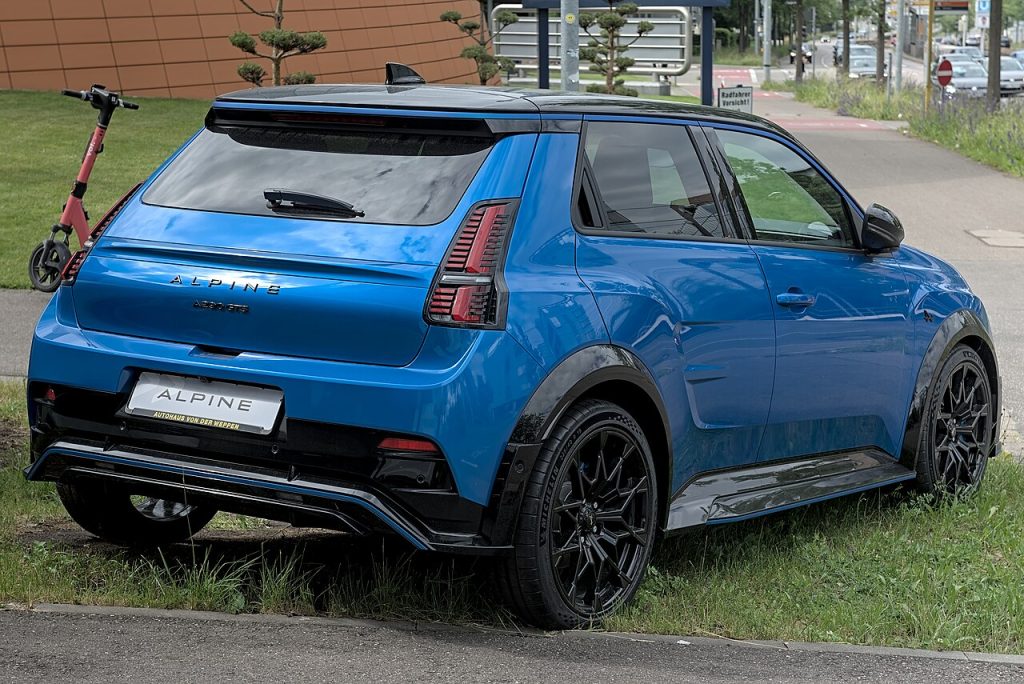
The bundled licensed picture shows a road A290 GTS, not the Rallye competition version. It is family context only and carries a publication hold for a licensed authenticated Rallye image. The road car’s appearance cannot demonstrate a welded cage, competition drivetrain or an event history. Keep the caption explicit and preserve the photographer, source, licence and resizing note. A future individual profile should add verified exterior, cockpit, identification and condition images under their own rights records. The visual material then supports the specific car rather than simply illustrate a related model name.
Comparison with A110 customer rally cars
Compare programme role, propulsion, preparation and the documentation of the actual vehicles. An older competition car and a newer electric one can be linked through the marque’s customer-racing story without sharing a technical identity or class. Avoid rankings assembled from incompatible regulations or promotional performance figures. A useful comparison explains what each machine was designed to do and what a custodian would need to establish before operating it. The strongest collecting example depends on provenance, completeness, condition and support, not solely on the newest technology or an early Trophy result.
A record that can grow with the programme
Maintain the initial batch, later deliveries, technical updates and individual competition histories as separate dated records. Keep cumulative totals unset until a scoped reliable source reconciles them. A new entry list or event report can strengthen a particular account without automatically resolving production. The archive should make that distinction easy to preserve. This lets A290 Rallye remain a useful research profile as customer racing develops, while preventing the first ten cars from becoming a misleading permanent rarity claim. The model history and individual chassis file should continue to support different, clearly stated questions.
Frequently asked questions
Is A290 Rallye the production road hatchback?
No. It is the factory customer competition version with its own preparation and programme.
Were only ten built?
The manufacturer confirms the first ten delivered for the inaugural event, not a lifetime production cap.
What was the first Trophy winner’s overall result?
The debut report records eighth overall for the Trophy-winning crew; those classifications have different scopes.
Does the supplied image show the Rallye version?
No. It is a labelled road A290 GTS reference pending an authenticated licensed competition-car image.
Explore related Alpine profiles
Sources
- Alpine: A290 Rallye launch and technical data, July 2025
- Alpine: A290 Rallye press kit, October 2025
- Alpine: first ten cars delivered and inaugural Trophy result, November 2025
- Alpine: 2026 Trophy programme and competitors
Historical statements follow the linked manufacturer and competition-programme records. Inspection and collecting guidance is editorial analysis. Individual catalogue claims remain attributed to the relevant car and source.
Photography and credit
Production road A290 GTS reference only, not an A290 Rallye competition car. Authenticated licensed Rallye photograph remains a publication hold. Photo: Alexander Migl / Wikimedia Commons · CC BY-SA 4.0. Wikimedia thumbnail resized from the original; no cropping or colour changes.
Why this machine matters
The Alpine A290 Rallye is the battery-electric customer competition version introduced in 2025. Factory preparation and a dedicated Trophy distinguish it from the production road hatchback. The first ten delivered cars are a documented initial batch, not the programme’s final production total.
Built in limited numbers
Alpine’s November 2025 debut report confirms ten cars produced and delivered for the inaugural Trophy event. That is a documented initial batch and does not cap all future customer production. Store it as a dated batch milestone rather than enter ten as the verified worldwide total. The exact cumulative programme count and numerical eligibility remain open. A later entry list can indicate participation but cannot alone reconcile every built or spare chassis. A rare-vehicle archive should preserve what the first-batch statement proves without extending it into an unsupported lifetime census.
Gallery
Specifications
Factory specifications may vary by model year, market and configuration.
Identity & production
- Official model
- Alpine A290 Rallye
- Base model
- A290
Powertrain & performance
- Engine
- Battery-electric front-drive competition system — July 2025 programme reference