Alpine A110 Rally R-GT
The Alpine A110 Rally R-GT returned the modern A110 to special stages as a customer competition car. Presented in 2019, it adapted the road platform and customer-racing architecture to rally suspension, a sequential gearbox and event-specific safety equipment.
The Alpine A110 Rally R-GT returned the modern A110 to special stages as a customer competition car. Presented in 2019, it adapted the road platform and customer-racing architecture to rally suspension, a sequential gearbox and event-specific safety equipment.
Alpine A110 Rally R-GT at a glance
| Manufacturer | Alpine |
|---|---|
| Model family | A110 II |
| Profile scope | Competition archive |
| Inventory reference | ALP-067 |
| Engine reference | Rear-mid-mounted 1.8-litre turbocharged rally four-cylinder |
A return to the special stages
Alpine officially presented the A110 Rally during Rallye Mont-Blanc Morzine on 5–7 September 2019. It followed the Cup and GT4 branches of the revived A110’s customer-racing programme. This chronology matters because the rally car was a deliberate competition product, not simply a road A110 entered privately under a familiar historic name. For a collector, it connects the marque’s rally identity with a new platform and a new technical context. Keep the original Berlinette’s championship record separate from what the modern Rally actually achieved.
Signatech’s rally adaptation
The manufacturer describes Signatech developing the Rally from Alpine’s framework and the aluminium chassis architecture shared with the Cup and GT4. Rallying imposed its own demands, so the car received suspension, braking and safety changes tailored to that use. A general resemblance to the road coupé does not establish mechanical identity. A serious catalogue should identify the rally specification and document the components actually installed. That is particularly important for a car later rebuilt or altered for another form of competition.
The 2019 technical reference
Alpine’s reveal lists a turbocharged 1.8-litre four-cylinder engine producing more than 300 horsepower, a six-speed sequential gearbox and a limited-slip differential. It also describes three-way hydraulic suspension, Brembo brakes, a homologated cage and Sabelt seat and harness equipment. These are introductory programme references. They are not a present-day measurement or a guarantee that every later example retains the same settings. Use the correct technical documents for the car’s year and configuration when making a specific performance or equipment claim.
Introduction before completed homologation
The September 2019 announcement explicitly said FIA R-GT homologation was still being pursued and anticipated initial customer deliveries and competition use in early 2020. This is a useful distinction between revealing a product and completing the approval process. Do not backdate completed approval merely because the car appeared publicly. Later competition records can establish its sporting use at their own dates. Keeping the original announcement’s status intact makes the development timeline more accurate and prevents a planned milestone from being described as already achieved.
The Monte Carlo connection needs its class label
Alpine’s 2021 Le Mans parade account identifies Manu Guigou as the two-wheel-drive French champion and the R-GT class winner at that year’s Monte Carlo Rally, with an A110 Rally in the display programme. The class label is essential. It is not an overall modern Monte Carlo victory and should not be merged with the original Berlinette’s famous results. A model history can record the success while an individual chassis claim still needs the relevant entry and identification evidence.
Production and rarity
No complete A110 Rally manufacturing total is supplied by the reviewed programme announcements. Customer-racing production is different from a finite numbered road edition, and entry lists can repeat cars across events or teams. The exact completed count therefore remains unset. This is a competition archive profile with verified model identity, not a claim that an unspecified number of road A110s were built. A future census should identify individual rally chassis, their build dates, repairs and replacements before drawing conclusions about manufacture or surviving examples.
What makes a rally history persuasive
Assemble build identification, technical records, entries, driver and co-driver names, dated photographs and repair documentation. Include changes in livery and ownership, and distinguish testing from competition starts. A rally number is tied to an event rather than a permanent identity. If a car is associated with a notable class result, verify the chassis link rather than relying on matching paint. The strongest history file lets another researcher follow the same physical car through the stages of its career and identify where the evidence is incomplete.
Structure and damage evidence
Rally inspection should examine the aluminium structure, cage, suspension attachment points and the quality of repairs with a specialist familiar with the model. Ask for photographs taken during work and records explaining which assemblies were replaced. A car can have a significant history and still require substantial preparation. Conversely, recorded repair work can make its condition easier to evaluate than an apparently pristine car with a sparse file. Treat visible finish as one part of the assessment rather than using it to infer the condition of concealed structure.
Engine, transmission and suspension records
Review engine builds, turbo work, gearbox service, differential records and suspension specification together. Ask how operating hours or stage use were tracked and what maintenance followed major events. A replacement assembly may be entirely appropriate for competition while changing the originality story. Document both suitability for use and relationship to the car’s earlier configuration. A road-car service history cannot substitute for a racing maintenance file, because the operating conditions and component service requirements are different.
Safety and intended use
Assess fuel containment, seat, harness, fire equipment and cage documentation against the intended event’s requirements. A car suitable for a parade or test session is not automatically ready for a competitive rally. Discuss eligibility and preparation with the organizer and a qualified preparer using the actual current specification. Keep the resulting records with the car. These checks concern its proposed activity; they do not establish its original identity or historic result. A sound collector assessment needs the provenance and preparation questions answered separately.
Comparing Rally with Cup and GT4
The three cars provide a useful study of adapting one lightweight road-car family to different competition environments. Cup centers on a one-make series, GT4 on circuit competition with other manufacturers, and Rally on special stages. Their equipment and histories should remain distinct even where components or architecture are related. Choose a collecting example for its documented purpose and career. A more dramatic livery or a larger power claim is less informative than a coherent record showing how the car was built, used and maintained.
The 2022 Bohemia Rally photograph
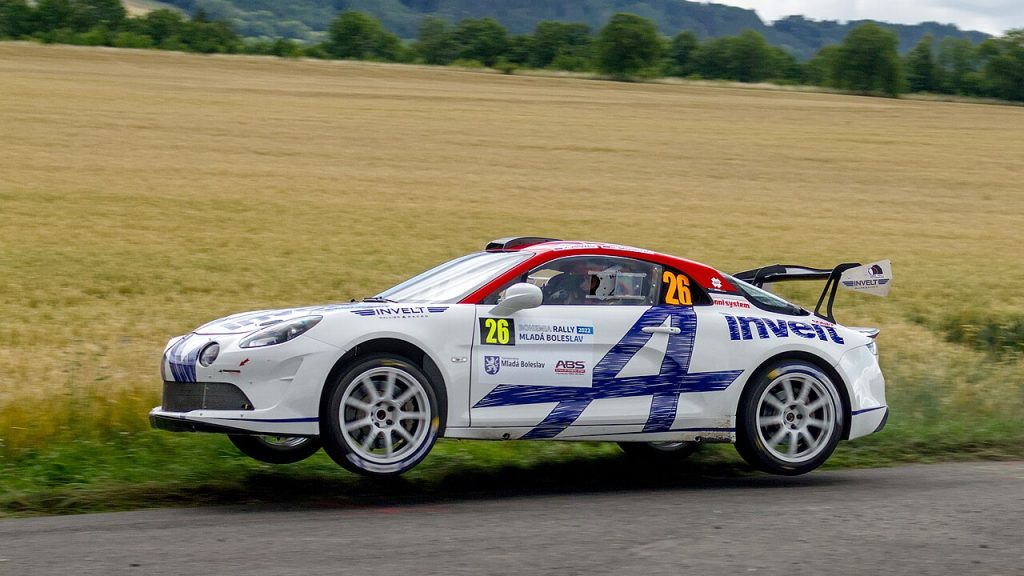
The bundled image identifies Jakub Jírovec’s A110 RGT at the 2022 Bohemia Rally. It illustrates a later competition example of the model introduced in 2019. The caption does not assign Manu Guigou’s Monte Carlo result to the pictured car or imply that the image records the original reveal. Photographer, source and licence remain linked visibly. A separate chassis feature would need identifying photographs and supporting competition records to connect the particular car with a claimed race history.
Frequently asked questions
Was the A110 Rally already homologated at its 2019 reveal?
Alpine’s September announcement said the FIA R-GT process was still ongoing. The reveal and later competition approval should be dated separately.
What gearbox did the introductory Rally specification use?
The manufacturer listed a six-speed sequential gearbox with a limited-slip differential, separate from the road-car transmission.
Did the modern Rally win Monte Carlo overall in 2021?
The cited Alpine account identifies an R-GT class win, not overall victory. The class scope must remain in the claim.
How many A110 Rally cars were built?
A complete customer-racer manufacturing census is not established here. Race entries are not substituted for completed production.
Explore related Alpine profiles
Sources
- Alpine: A110 Rally launch and intended R-GT homologation, September 2019
- Alpine: customer racing development, May 2019
- Alpine: A110 Rally and the 2021 Monte Carlo R-GT result
Historical statements follow the linked manufacturer and competition-programme records. Inspection and collecting guidance is editorial analysis. Individual catalogue claims remain attributed to the relevant car and source.
Photography and credit
Jakub Jírovec’s Alpine A110 RGT at the 2022 Bohemia Rally; a later competition example illustrating the 2019-introduced model. Photo: Miloslav Rejha / Wikimedia Commons · CC BY 4.0. Wikimedia thumbnail resized from the original; no cropping or colour changes.
Why this machine matters
The Alpine A110 Rally R-GT returned the modern A110 to special stages as a customer competition car. Presented in 2019, it adapted the road platform and customer-racing architecture to rally suspension, a sequential gearbox and event-specific safety equipment.
Built in limited numbers
No complete A110 Rally manufacturing total is supplied by the reviewed programme announcements. Customer-racing production is different from a finite numbered road edition, and entry lists can repeat cars across events or teams. The exact completed count therefore remains unset. This is a competition archive profile with verified model identity, not a claim that an unspecified number of road A110s were built. A future census should identify individual rally chassis, their build dates, repairs and replacements before drawing conclusions about manufacture or surviving examples.
Gallery
Specifications
Factory specifications may vary by model year, market and configuration.
Identity & production
- Official model
- Alpine A110 Rally R-GT
- Base model
- A110 II
Powertrain & performance
- Engine
- Rear-mid-mounted 1.8-litre turbocharged rally four-cylinder