Alpine A110 Tour de Corse 75
The Alpine A110 Tour de Corse 75 is the 2022 numbered road edition inspired by the yellow-and-black Berlinette from the 1975 Corsican rally. Announced with a worldwide limit of 150, it combines a contemporary 300 hp A110 with a specific heritage presentation.
The Alpine A110 Tour de Corse 75 is the 2022 numbered road edition inspired by the yellow-and-black Berlinette from the 1975 Corsican rally. Announced with a worldwide limit of 150, it combines a contemporary 300 hp A110 with a specific heritage presentation.
Alpine A110 Tour de Corse 75 at a glance
| Manufacturer | Alpine |
|---|---|
| Model family | A110 II |
| Profile scope | Historic road-model variant |
| Inventory reference | ALP-079 |
| Announced edition limit | 150 worldwide; completed total unconfirmed |
| Engine reference | Contemporary turbocharged A110 four-cylinder — 300 hp announcement reference |
A modern road-car tribute to a particular rally
Alpine revealed the Tour de Corse 75 edition on 16 June 2022. The name refers to the 1975 rally appearance of the original Berlinette, while the physical car belongs to the modern A110 family. Keeping those two dates visible is the first requirement of a useful catalogue. The edition commemorates a competition story; it is not a restored seventies car or proof that a customer example has a rally history. Its value as a collecting subject comes from a defined factory offering and an identifiable historical reference.
The original result should remain accurate
Alpine’s heritage account describes the original A110 and Lancia Stratos contesting the 1975 event, with the Alpine finishing 32 seconds behind the winner. The tribute should therefore not be described as a celebration of an Alpine overall victory in that rally. The model can honour a memorable performance without changing the result. When adding historic photographs or captions, identify the actual period car, crew and event through their own records. The modern edition’s name and number motif do not provide that individual competition provenance.
Rarity: the announced worldwide 150-car edition
The official announcement states a worldwide limit of 150 and plaques numbered through that series. Later sales material reports strong demand for the special editions. An allocation being sold is different from a final account of completed manufacture, so the database stores an announced edition limit rather than a verified completed total. This preserves a clear rarity claim comfortably below the site’s numerical ceiling. It also avoids using the much larger modern A110 family total as though it counted this specific heritage edition.
The yellow-and-black factory presentation
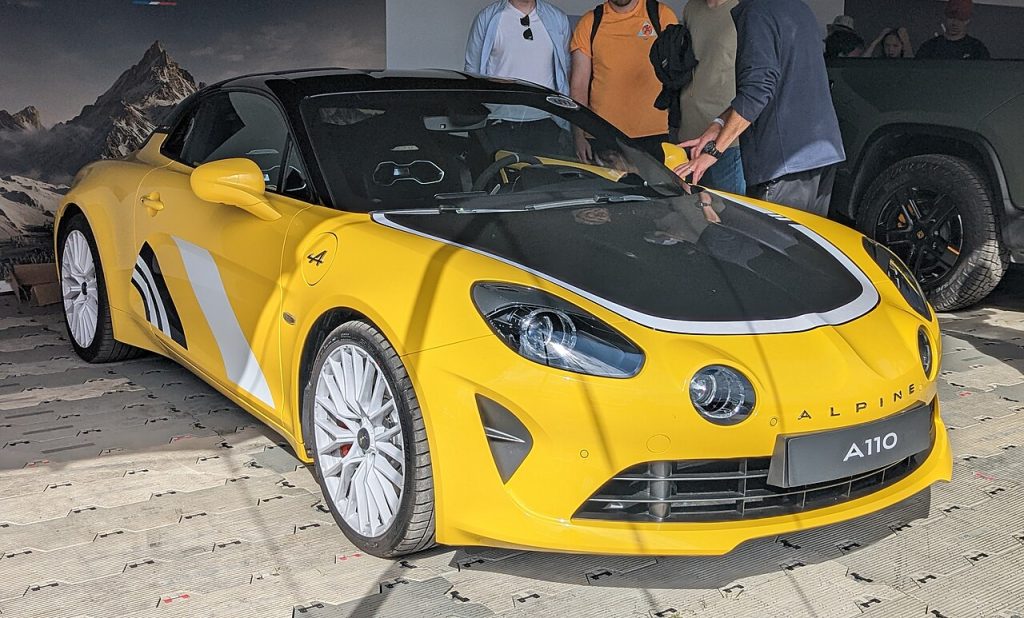
The release identifies yellow bodywork with a black bonnet and roof, black-and-white graphics and a number 7 reference at the rear. Gloss-white 18-inch Grand Prix wheels and orange Brembo callipers complete the exterior theme. These details explain how the historical reference is translated into a modern car. They are not a substitute for factory identification. A repainted ordinary A110 can resemble the tribute, while a repaired genuine edition may have replaced graphics or panels. Documentation should explain which car was built and what subsequently changed.
The 300 hp reference and cockpit
Alpine quotes a 300 hp engine for the edition and describes Sabelt Racing bucket seats carrying its embroidered identity. The announcement also lists the contemporary multimedia system with smartphone connectivity. These features place the car in its own introduction period rather than in the specification of a later special edition. Inspect the actual equipment and service history when considering an example. A heritage livery does not establish an installed engine calibration, and manufacturer performance language should not be presented as a measured result for every surviving car.
Goodwood put the two generations together
Alpine’s Goodwood 2022 announcement placed the new edition alongside the original A110 that competed in the 1975 event. This is useful exhibition context because it connects the contemporary factory tribute with a physical historical reference. It does not mean that every modern Tour de Corse 75 shared the original’s hardware or event history. A collection display can use the same comparison honestly: explain the different generations, identify the actual period object and describe which visual ideas were carried into the modern edition.
Authentication starts with the factory file
Match the plaque to the order, invoice, delivery specification and available build information. Retain dated early photographs showing the original presentation. Registration paperwork establishes important legal identity but may omit the edition or detailed equipment. Check any later catalogue claims against the original file. If an identification part, plaque or trim assembly was replaced, record why and when. The purpose is to establish the car’s factory identity through connected evidence rather than making a single decorative feature carry the entire authentication claim.
Graphics, paint and repair history
Inspect the livery under consistent lighting and review any refinishing or replacement graphics. Document panel work and the condition of the underlying structure with a specialist. The black and yellow theme can make small colour or alignment differences noticeable, but visible differences should be investigated rather than automatically treated as proof of an imitation. Retain invoices and before-and-after photographs for repair work. A catalogue should explain what survives from delivery and what was renewed, giving readers an accurate account of condition without concealing ordinary ownership history.
Mechanical condition and real use
Review maintenance, transmission behaviour, cooling, braking and suspension alongside the car’s mileage and documented use. Inspect wheels and tyres for condition and correct specification. A limited edition may have been driven on roads, displayed or used at track events; its history should establish which activities occurred. None of those roles is inherently a substitute for another in a condition assessment. A clean presentation and a numbered plaque can attract attention, but a collecting decision needs a report on the actual mechanical and structural car.
Preserving the edition as a complete presentation
Keep delivery material, original trim, factory graphics information and records of replaced components where practical. If the car acquires aftermarket equipment, identify it separately from the original edition features. This lets future owners understand both its factory story and the choices made during use. Completeness should be described concretely rather than reduced to the word original. A car with a documented replacement part may retain a persuasive edition identity, while an apparently complete display without build evidence may leave important questions unanswered.
Comparison with San Remo 73
Tour de Corse 75 and San Remo 73 both translate rally heritage into modern road editions, but they commemorate different events and results. Their colours, plaque ranges and introduction dates should stay separate. Compare the source history as carefully as the physical specification: one recalls the 1975 Corsican performance, while the other celebrates a 1973 victory and championship milestone. That difference gives a collection more depth than a generic grouping of retro liveries. Choose examples for their documented identity, condition and intended place in the collection.
The modern edition photograph
The licensed photograph is identified as a 2022 A110 Tour de Corse 75. It illustrates the modern tribute rather than the original rally Berlinette. Its caption keeps that distinction, with linked photographer and licence information beside the image. It does not establish a particular plaque number or a complete owner history. An individual car feature should supplement the model photograph with identification, cabin and condition views linked to the factory file. A period rally image would need its own independent caption and rights record.
Frequently asked questions
How many Tour de Corse 75 cars were announced?
Alpine announced 150 worldwide, with numbered plaques. A reconciled final completed-build total is not separately established here.
Did Alpine win the 1975 Tour de Corse overall?
The cited heritage account describes the Alpine finishing behind the winning Stratos. The modern edition honours that performance without changing the result.
Is this a competition Rally R-GT?
No. This profile covers the 2022 heritage road edition, separate from Alpine’s customer rally competition model.
What supports authentic edition identity?
Correlate its plaque and specification with factory ordering, build and delivery records; matching paint alone is insufficient.
Explore related Alpine profiles
Sources
- Alpine: A110 Tour de Corse 75 reveal, June 2022
- Alpine: original and modern Tour de Corse cars at Goodwood 2022
- Alpine: 2022 sales results and sold-out editions
Historical statements follow the linked manufacturer and competition-programme records. Inspection and collecting guidance is editorial analysis. Individual catalogue claims remain attributed to the relevant car and source.
Photography and credit
Alpine A110 Tour de Corse 75, the modern 2022 road-car tribute; not the original 1975 competition Berlinette. Photo: Calreyn88 / Wikimedia Commons · CC BY-SA 4.0. Wikimedia thumbnail resized from the original; no cropping or colour changes.
Why this machine matters
The Alpine A110 Tour de Corse 75 is the 2022 numbered road edition inspired by the yellow-and-black Berlinette from the 1975 Corsican rally. Announced with a worldwide limit of 150, it combines a contemporary 300 hp A110 with a specific heritage presentation.
Built in limited numbers
The official announcement states a worldwide limit of 150 and plaques numbered through that series. Later sales material reports strong demand for the special editions. An allocation being sold is different from a final account of completed manufacture, so the database stores an announced edition limit rather than a verified completed total. This preserves a clear rarity claim comfortably below the site’s numerical ceiling. It also avoids using the much larger modern A110 family total as though it counted this specific heritage edition.
Gallery
Specifications
Factory specifications may vary by model year, market and configuration.
Identity & production
- Official model
- Alpine A110 Tour de Corse 75
- Base model
- A110 II
- Country of manufacture
- France
Powertrain & performance
- Engine
- Contemporary turbocharged A110 four-cylinder — 300 hp announcement reference