Alpine A110 R Ultime La Bleue
The Alpine A110 R Ultime La Bleue is the handcrafted blue-gradient configuration within the Ultime series. Alpine announced fifteen La Bleue cars, included in the parent limit of 110. Its collecting identity depends on the factory specification as well as the striking exterior finish.
The Alpine A110 R Ultime La Bleue is the handcrafted blue-gradient configuration within the Ultime series. Alpine announced fifteen La Bleue cars, included in the parent limit of 110. Its collecting identity depends on the factory specification as well as the striking exterior finish.
Alpine A110 R Ultime La Bleue at a glance
| Manufacturer | Alpine |
|---|---|
| Model family | A110 II |
| Profile scope | Numbered road edition |
| Inventory reference | ALP-089 |
| Announced edition limit | 15 worldwide; completed total unconfirmed |
| Parent-series announced limit | 110 A110 R Ultime cars; subset included |
| Engine reference | Reworked turbocharged Ultime four-cylinder; dated maximum-power fuel qualification retained |
A Paris debut with a distinct identity
La Bleue appeared with the A110 R Ultime at the October 2024 Paris Motor Show. Alpine paired a hand-worked transition between Alpine Vision Blue and Abysse Blue with a coordinated blue cabin involving Poltrona Frau and Sabelt. This was a defined factory configuration within the wider Ultime offering. For an archive, the useful distinction is between a model’s mechanical platform and a particular commissioned presentation. The blue paint tells part of the story, while the original specification explains why this particular configuration has its own record.
Rarity: fifteen within the Ultime allocation
The November 2025 press kit explicitly places fifteen La Bleue examples inside the 110-car Ultime series. Alpine’s March 2026 account reports that the La Bleue allocation sold out. An allocation report does not reconcile every completed chassis, delivery or surviving example. Preserve both levels of the numbering structure and label them as announced limits. When comparing editions, counting a subset again as an additional production run would distort the picture. The exact completion history should be recorded only when supported by a scoped factory statement or an appropriately documented chassis register.
The Ultime platform behind the finish
The parent car’s announcement describes substantial work to the turbo, transmission, suspension, brakes and aerodynamics; its maximum 345 hp claim carries a RON 102 fuel qualification. Those references belong to the dated Ultime specification, rather than a measurement of the photographed display. A useful mechanical comparison identifies what is shared with the parent model before discussing what makes the sub-series distinctive. Individual factory documents should establish the delivered hardware and settings. Paint choice does not independently prove a particular engine calibration, nor does a brochure performance figure describe every operating condition.
What a gradient adds to the collecting story
A continuous change of colour can make the body read as a single object rather than separate painted panels. From a collecting perspective, that makes the delivery finish an unusually important part of the record. Photograph the car in controlled lighting from overlapping angles and preserve the originals. This creates a usable baseline for later condition reviews. Avoid judging paint by a single phone image or by comparing photographs taken under different lamps. A well-documented finish is more informative than a catalogue adjective, particularly when a repair has to reproduce a transition across several neighbouring surfaces.
Authenticating the complete factory specification
Build a file linking the VIN, order, invoice, delivery specification and any factory correspondence about the La Bleue configuration. The documents should agree on the car’s identity and explain the intended presentation. Add contextual photographs of identification marks and the cabin, without exposing unnecessary personal information publicly. A later repaint into similar blues is a different history from an original factory commission. If records are incomplete, describe the gap directly and seek clarification from the supplying network. The guide’s edition label should never become a substitute for evidence about an individual car.
Inspecting paint and carbon components
An appropriate specialist should examine the finish, structure and visible carbon components together. Ask for repair documentation and compare adjoining areas in consistent light. Cosmetic work, component replacement and structural repair are separate questions and deserve separate answers. Record what was done, when and by whom, including any factory involvement. A repair need not erase a genuine edition identity, but it changes the condition narrative. Good descriptions let a future custodian understand which surfaces are from delivery, which have been refinished and whether the gradient was restored as a coordinated whole.
Preserving a bespoke cabin
Document upholstery, stitching, trim and fitted equipment before routine work or storage. Keep invoices for cleaning, conservation and replacement, particularly where special material or colour matching is involved. Avoid assuming a familiar part can be substituted without affecting the original configuration. Speak with a suitable specialist about methods appropriate to the actual materials. A detailed cabin record is useful because a bespoke appearance can be difficult to reconstruct from a broad model brochure. It also provides a practical bridge between the factory commission and the car’s current condition, rather than relying on the word original alone.
A road car with a track-oriented specification
The intended use should shape inspection and preparation. Review service history, tyres, brake condition, suspension work and cooling alongside the car’s legal road documentation. Track activity should be recorded by date and available evidence; a distinctive edition name does not imply either a competition career or a sheltered life. Ask a specialist to assess the actual configuration before use. The most useful ownership account explains preparation and maintenance in concrete terms. It gives a reader enough information to separate factory capability, subsequent modifications and the current condition of an individual machine.
Comparison with R 70 and other blue Alpines
A shared colour theme does not make two editions equivalent. Compare the model platform, the factory ordering scope, the physical presentation and the documentary trail. Parent-series totals and sub-series limits should appear in separate labelled columns whenever several cars are compared. A blue anniversary car may celebrate a different idea from a bespoke Ultime. The collecting question is therefore broader than which paint looks similar. Explain what each car represents and how its identity is established, while allowing condition, usability and the quality of the individual file to influence a considered choice.
How to catalogue the nested series
Use one individual vehicle record with both its parent model and its La Bleue designation. Link this guide to the Ultime parent guide so readers can understand the relationship without creating duplicate chassis entries. Store the parent allocation and subset limit in separate fields with explicit scope. Where a register cannot establish completion, leave the completed-production field blank. This makes later corrections easier and prevents a reader from mistaking a market allocation for a manufacturing census. An archive is strongest when its classification remains stable while new evidence can refine the story.
The Paris photograph and its limits
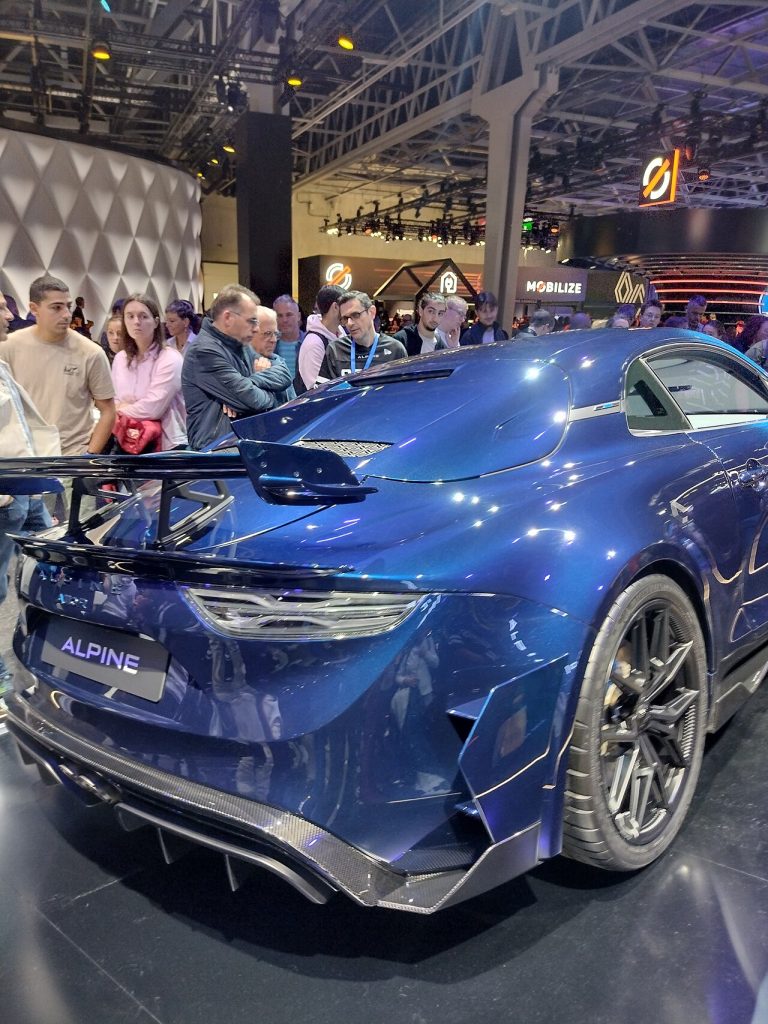
The bundled image is a rear detail of the blue Paris presentation, matched to Alpine’s official identification of its stand car. The Commons filename uses a broader A110 R label, so the caption records the identification method. It illustrates the displayed configuration without claiming a customer VIN or plaque number. Keep the original source, photographer and licence linked beneath it. A future individual-car feature should add authenticated detail photographs and its own rights records. Display photography is useful evidence of presentation, but it cannot prove the completed-production total or a later delivery history.
The file to keep for future custodians
Preserve delivery records, photographs, service invoices, repair descriptions and documentation of any changes as one dated file. Back it up in more than one place and distinguish originals from annotated copies. Record the source of every major claim so later owners can check it rather than inherit an unsupported description. This is especially valuable for a visually distinctive configuration whose appearance could be imitated. A careful file connects the factory idea to the actual vehicle and its subsequent life. It supports collecting decisions through evidence, without promising a future market value or a particular resale result.
Frequently asked questions
How many La Bleue cars were announced?
Fifteen, within the Ultime parent-series limit of 110; they are not an additional run.
Does sold out mean all cars were completed?
No. The reviewed allocation announcement does not provide a reconciled completed-build census.
What makes an individual car authentic?
Its physical specification should agree with original factory ordering, build and delivery records.
Does the photograph identify a customer car?
No. It illustrates the Paris presentation, without establishing a customer VIN or numbered plaque.
Explore related Alpine profiles
Sources
- Alpine: Ultime and La Bleue reveal, 14 October 2024
- Alpine: Ultime press kit and nested La Bleue limit, November 2025
- Alpine: La Bleue allocation sold out, March 2026
Historical statements follow the linked manufacturer and competition-programme records. Inspection and collecting guidance is editorial analysis. Individual catalogue claims remain attributed to the relevant car and source.
Photography and credit
A110 R Ultime La Bleue display at Paris 2024; rear detail matched to Alpine’s official presentation. Source filename uses the broader A110 R label. Photo: Mathious Ier / Wikimedia Commons · CC0. Wikimedia thumbnail resized from the original; no cropping or colour changes.
Why this machine matters
The Alpine A110 R Ultime La Bleue is the handcrafted blue-gradient configuration within the Ultime series. Alpine announced fifteen La Bleue cars, included in the parent limit of 110. Its collecting identity depends on the factory specification as well as the striking exterior finish.
Built in limited numbers
The November 2025 press kit explicitly places fifteen La Bleue examples inside the 110-car Ultime series. Alpine’s March 2026 account reports that the La Bleue allocation sold out. An allocation report does not reconcile every completed chassis, delivery or surviving example. Preserve both levels of the numbering structure and label them as announced limits. When comparing editions, counting a subset again as an additional production run would distort the picture. The exact completion history should be recorded only when supported by a scoped factory statement or an appropriately documented chassis register.
Gallery
Specifications
Factory specifications may vary by model year, market and configuration.
Identity & production
- Official model
- Alpine A110 R Ultime La Bleue
- Base model
- A110 II
- Country of manufacture
- France
Powertrain & performance
- Engine
- Reworked turbocharged Ultime four-cylinder; dated maximum-power fuel qualification retained