Alpine A110 1600 S
The Alpine A110 1600 S is one of the defining roadgoing Berlinettes of the classic Alpine era. Its collector appeal rests on a compact rear-engined package and the need to distinguish the road model from competition cars, later SC versions and decades of engine changes.
The Alpine A110 1600 S is one of the defining roadgoing Berlinettes of the classic Alpine era. Its collector appeal rests on a compact rear-engined package and the need to distinguish the road model from competition cars, later SC versions and decades of engine changes.
Alpine A110 1600 S at a glance
| Manufacturer | Alpine |
|---|---|
| Model family | A110 |
| Profile scope | Historic road-model family |
| Inventory reference | ALP-024 |
What the 1600 S name means
The name identifies a performance derivative within the original A110 family. It does not describe the modern A110, and it does not prove that an individual car was prepared or raced by the works team. A useful profile starts with the road model and then records any competition or restoration history separately. That keeps the car’s actual identity visible beneath the reputation of the Berlinette as a whole. A famous family name is context; a dated chassis record is evidence.
Chronology: keep the 1600 and 1600 S distinct
The inventory uses 1969 for this entry. Club Alpine Dieppe places the initial 1600 version in 1969 and the change to the 1600 S in its 1970 chronology. This profile keeps the source-row year in the research record while avoiding a false universal start date. For a particular vehicle, determine the build and delivery dates from its own records. A registration date can differ from construction, and a later engine or badge cannot settle that difference.
Specifications need their own source
The rounded 1600 designation cannot replace an engine identification. FIA’s form 3035 records a 1565 cc base capacity for an A110 1600, while an RM Sotheby’s catalogue for chassis 18358 describes a 1595 cc engine and restoration history. These are different records with different scopes. The profile therefore does not assign one displacement or horsepower figure to every 1600 S. Record the factory variant, installed engine and any capacity change separately; keep the units and measurement convention with every output claim.
Why the road car is interesting in its own right
A roadgoing 1600 S does not need a rally victory attached to it to be collectible. It offers a way to examine the relationship between a compact body, a performance-oriented mechanical package and everyday vehicle identity. A well-preserved interior or a coherent original specification can be as revealing as competition equipment. Decide whether the car is being collected as a road derivative, a period-modified vehicle or a later historic-rally preparation. Each is a different proposition with a different inspection brief.
1600 S versus 1600 SC
The later SC is more than another badge to interchange in a sales description. The checked club chronology associates the SC with a revised mechanical package and rear suspension derived from the A310. A 1600 S fitted with later components should have those changes explained. It does not become a documented factory SC simply because it carries similar parts. Compare the chassis identity, build records and major assemblies before choosing the title under which the car is presented.
Production and the rarity question
A precise 1600 S-only production total is not established in this research batch. Broad A110 family totals, regional licensed manufacture and subtype figures can have different scopes. None should be copied into a variant field without explanation. The numeric production field remains blank and strict ceiling eligibility is held for review. That is an editorial data decision, not a statement that the model lacks collector importance. Rarity can be discussed accurately while the exact completed-build total remains unresolved.
Body and structure inspection
Have the supporting structure and body assessed together by a specialist familiar with classic A110s. Review panel fit, door operation, repair areas and mounting points alongside photographs from any major restoration. Ask whether the body was repaired locally, extensively rebuilt or replaced. Check that the proposed history explains the visible work. A clean paint finish can conceal both careful restoration and poorly documented reconstruction; neither conclusion should be drawn from gloss alone.
Engine, transmission and conversions
Request engine identification and invoices covering rebuilds or replacements. Record the induction system and gearbox now installed, then compare them with the claimed original specification. Ask whether the changes were made in period or during recent restoration. A conversion may be well engineered and enjoyable, but its value as a collector specification depends on how honestly it is described. Keep removed original components documented if they remain with the car, including any evidence that connects them to the chassis.
Road equipment and interior
For a road-model collection, inspect the interior, instrumentation, trim and electrical installation with the same care as the engine bay. Ask which pieces are original, restored or reproduced. Confirm that lighting, switches, ventilation and instruments operate as expected for the proposed use. A competition-style interior can be attractive while making road use less convenient. The important choice is whether the present configuration fits the buyer’s purpose and whether returning it to another state would require scarce parts or substantial work.
Choosing the right kind of 1600 S
A buyer seeking originality should place more weight on a coherent build file and preserved specification. A buyer seeking historic events may prefer a documented preparation with suitable current equipment. Neither objective is satisfied by an unexplained mix of claims. List the car’s original identity, major changes and intended use in plain language before discussing condition. This creates a better comparison between candidates and helps avoid paying for a period competition story that belongs only to the livery.
Ownership records worth preserving
Keep old registrations, dated photographs, specialist inspections and maintenance invoices in chronological order. Add a current specification sheet whenever substantial work is completed. Retain the reason for each change, including reliability, availability or the wish to reproduce a particular period appearance. Future owners will then be able to distinguish what the car was from what it has become. That continuity is especially useful in an A110 family where visually similar cars may have very different mechanical and documentary identities.
Frequently asked questions
Is every 1600 S a works rally car?
No. Works provenance requires chassis-specific evidence, not simply a rally livery or competition equipment.
Is the inventory year a confirmed start date?
No. The 1969 source row and the club’s later 1600 S chronology are retained separately for review.
Can an S be described as an SC after suspension changes?
The parts should be disclosed, but a factory SC identity needs its own build evidence.
How many 1600 S cars were built?
An exact scoped total is not verified here, so the numeric field remains blank.
Explore related Alpine profiles
Sources
- Club Alpine Dieppe: A110 chronology
- RM Sotheby’s: 1973 A110 1600 S, chassis 18358
- FIA Historic Database: A110 1600, form 3035 and extensions
Historical statements follow the linked manufacturer, club, homologation and vehicle records. Inspection and collecting guidance is editorial analysis. Individual catalogue claims remain attributed to the relevant car and source.
Photography and credit
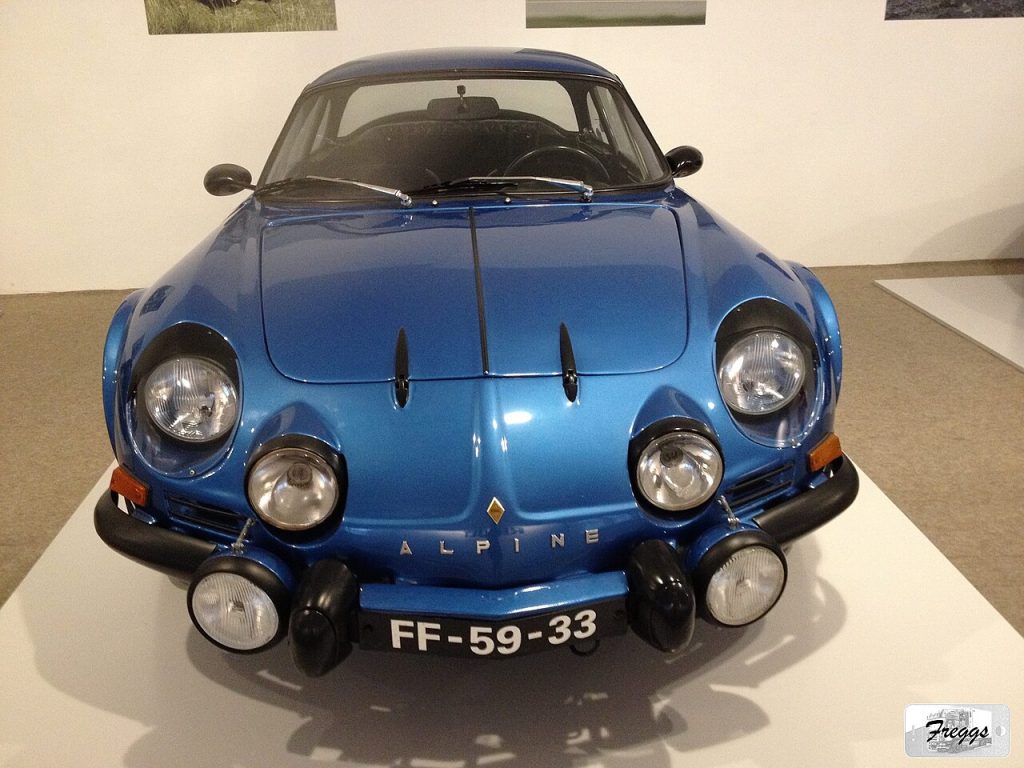
Source-described Alpine A110 1600 S at Caramulo in January 2019. This display image does not establish the car’s original engine or build date. Photo: Freggs / Wikimedia Commons · CC BY-SA 2.0. Wikimedia display copy; no content retouching. WordPress may resize further and website layouts may crop the image.
Why this machine matters
The Alpine A110 1600 S is one of the defining roadgoing Berlinettes of the classic Alpine era. Its collector appeal rests on a compact rear-engined package and the need to distinguish the road model from competition cars, later SC versions and decades of engine changes.
Built in limited numbers
A precise 1600 S-only production total is not established in this research batch. Broad A110 family totals, regional licensed manufacture and subtype figures can have different scopes. None should be copied into a variant field without explanation. The numeric production field remains blank and strict ceiling eligibility is held for review. That is an editorial data decision, not a statement that the model lacks collector importance. Rarity can be discussed accurately while the exact completed-build total remains unresolved.
Gallery
Specifications
Factory specifications may vary by model year, market and configuration.
Identity & production
- Official model
- Alpine A110 1600 S
- Base model
- A110
- Country of manufacture
- France