Alpine A110 1600 SC
The Alpine A110 1600 SC is a late Berlinette evolution distinguished by a revised mechanical package and rear suspension linked to the A310. It rewards careful identification: the SC road model, a later competition preparation and an earlier S fitted with newer parts are different collector propositions.
The Alpine A110 1600 SC is a late Berlinette evolution distinguished by a revised mechanical package and rear suspension linked to the A310. It rewards careful identification: the SC road model, a later competition preparation and an earlier S fitted with newer parts are different collector propositions.
Alpine A110 1600 SC at a glance
| Manufacturer | Alpine |
|---|---|
| Model family | A110 |
| Profile scope | Historic road-model family |
| Inventory reference | ALP-028 |
| Engine reference | Renault 12 Gordini-derived inline-four, carbureted SC specification |
| Displacement | 1605 cc — cited SC specification |
What makes the SC a separate profile
The SC deserves its own entry because a meaningful model change should remain visible in a collector database. Its identity is more useful than a broad assertion that every late A110 is the same car. Begin with the factory designation and follow the major assemblies. A later engine or suspension conversion should be documented as a change to the car concerned. It cannot establish a different original build identity on its own.
The 1973 technical step
Club Alpine Dieppe’s chronology identifies the 1973 SC as the carbureted version, alongside the injected SI, with a 1605 cc Renault 12 Gordini-derived engine and revised rear suspension associated with the A310. It also notes a removable rear panel. Those details explain why the SC is more than a trim designation. They should be checked against the individual car before populating a complete specification sheet. A family chronology describes the model; a build file identifies an actual vehicle.
SC, SI and S: keep the names useful
The earlier S, the carbureted SC and the injected SI belong to related but distinct parts of the Berlinette story. When reviewing a car, ask which factory identity applies and how that compares with the installed parts. A change of induction does not by itself establish that the chassis was born as another subtype. Record the original designation and subsequent conversion separately. This is particularly important where a seller uses the most recognizable name instead of the one supported by the documents.
The production figure needs a source label
Artcurial’s catalogue for chassis 20262 states that 481 SC examples were produced. That is a sourced auction-catalogue figure, retained as an attributed statement rather than an independently corroborated factory census. It should not be confused with the combined SC/SI output or every late A110. The strict verified numeric field remains blank pending corroboration of its exact scope. A precise-looking figure becomes useful when its definition is clear, not merely because it appears frequently in sale descriptions.
Two cars illustrate two collecting approaches
The Artcurial records reviewed here concern different chassis. The entry for 20262 describes a later competition career and restoration. The record for 20174 emphasizes preserved road-car character and a maintenance file. These examples show why a model profile should allow distinct individual histories. The claims belong to the cars in the relevant catalogues, not to every SC. For a buyer, deciding between preservation and competition preparation starts with the intended use and the evidence attached to the actual candidate.
Inspect the rear-suspension story
The suspension change is central to identifying this model, so the inspection should address it directly. Have a specialist explain the installed layout, mounting arrangements, repairs and any later modifications. Review restoration photographs showing areas now concealed. Ask whether the current components correspond to the claimed original configuration or a later preparation. A simple assurance that the suspension has been rebuilt is incomplete; the useful information is what was rebuilt, to which specification and with what evidence.
Engine, induction and gearbox
Review the engine identity, capacity, induction and rebuild documentation together. Check the installed gearbox and any changes made for competition use. Record the source of a horsepower claim and the units or test conditions attached to it. Avoid transferring a figure from a different auction car or another A110 subtype. If original components remain off the car, inventory them with photographs and the evidence connecting them to the chassis. A loose part needs its own explanation.
Body details and restoration evidence
A late Berlinette can have a clean, convincing external appearance while concealing substantial previous work. Inspect the structure, mounting points and repair areas with a specialist. Compare the car with dated photographs and ask which body details have changed. Review the removable panel and nearby construction in relation to the proposed history. Keep original appearance, present condition and the quality of restoration as separate assessments. A good result in one does not automatically prove the others.
Interior: preservation or competition equipment
Decide how much the current interior matters to the car’s intended role. A preserved road interior can help document its life. A later racing interior can be appropriate for activity if its changes are disclosed and its equipment is assessed for that use. Inspect instruments, seats, trim, electrical work and any safety-related installations. Record which pieces are original, replacement or recent. A buyer wanting a road-focused collection should understand the work needed to reverse a competition conversion before committing to it.
Mechanical readiness after restoration
A restored car still needs a present-condition inspection. Ask when the engine and gearbox last received substantive work, how much use followed and how the car was stored. Review brakes, fuel lines, cooling, steering and tires in that context. For competition activity, ask the intended event to review the relevant documentation and equipment. Historical provenance establishes the car’s story; it does not certify current mechanical fitness or guarantee admission to a particular event.
Preserving the SC’s place in a collection
The most useful comparison is with an earlier 1600 S and the four-cylinder A310. Together they let the collector discuss model evolution and shared technical relationships without assigning one specification to all three. A collection can value a preserved SC road car just as clearly as a documented competition example. Write the individual history in a way that allows those differences to be seen rather than smoothing them into one idealized late-Berlinette narrative.
A record that future owners can trust
Keep the original subtype evidence, engine and gearbox records, dated photographs and invoices together. Add a chronological list of modifications and restorations. Where a part was chosen for practical reasons, say so. Where a number or historical claim is still being checked, retain the source rather than repeating it as settled fact. The result is a profile that can grow as evidence improves and a vehicle file that remains useful after the current owner’s memories are no longer available.
Frequently asked questions
What distinguishes the SC from the earlier S?
The checked club chronology identifies a later mechanical package and revised rear suspension linked to the A310.
Is the SC carbureted or injected?
The reviewed chronology identifies SC as the carbureted derivative and SI as the injected derivative.
How many SCs were built?
One reviewed Artcurial catalogue states 481. The figure remains attributed pending independent scope confirmation.
Does the photograph show a 1973 car?
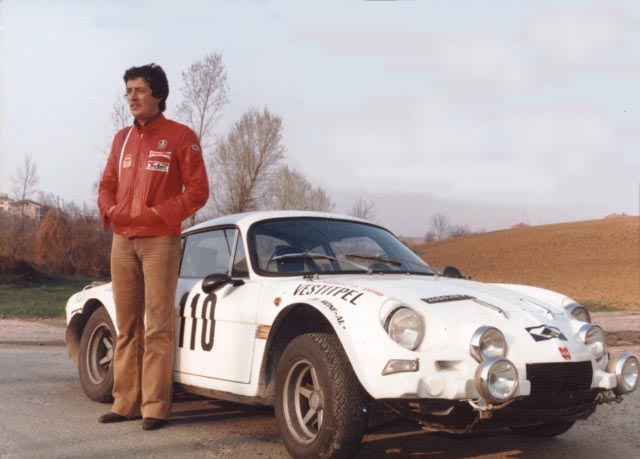
The source describes a 1975 SC, clearly captioned as a later illustration of the model.
Explore related Alpine profiles
Sources
- Club Alpine Dieppe: A110 chronology
- Artcurial: 1974 A110 1600 SC, chassis 20262
- Artcurial: 1974 A110 1600 SC, chassis 20174
- FIA Historic Database: A110 1600, form 3068
Historical statements follow the linked manufacturer, club, homologation and vehicle records. Inspection and collecting guidance is editorial analysis. Individual catalogue claims remain attributed to the relevant car and source.
Photography and credit
Source-described Claudio Olenciuc with his 1975 Alpine A110 1600 SC. The illustrated later car is not identified as a 1973 build. Photo: Macjack / Wikimedia Commons · CC BY-SA 3.0. Original file supplied without content retouching. WordPress may resize display copies and website layouts may crop them.
Why this machine matters
The Alpine A110 1600 SC is a late Berlinette evolution distinguished by a revised mechanical package and rear suspension linked to the A310. It rewards careful identification: the SC road model, a later competition preparation and an earlier S fitted with newer parts are different collector propositions.
Built in limited numbers
Artcurial’s catalogue for chassis 20262 states that 481 SC examples were produced. That is a sourced auction-catalogue figure, retained as an attributed statement rather than an independently corroborated factory census. It should not be confused with the combined SC/SI output or every late A110. The strict verified numeric field remains blank pending corroboration of its exact scope. A precise-looking figure becomes useful when its definition is clear, not merely because it appears frequently in sale descriptions.
Gallery
Specifications
Factory specifications may vary by model year, market and configuration.
Identity & production
- Official model
- Alpine A110 1600 SC
- Base model
- A110
- Country of manufacture
- France
Powertrain & performance
- Engine
- Renault 12 Gordini-derived inline-four, carbureted SC specification