Homologation specials: five road cars shaped by competition rules
Some rare cars begin with a customer brief. These begin with permission to compete. A homologation document links a competition machine to an approved specification, and the road cars around it can become an unusually vivid record of that process.
The results do not all look alike. A purpose-built mid-engined rally car and a familiar four-door saloon can both belong to this story. One programme may establish a model’s eligibility; another may introduce an evolution of a car already racing. The particular category, date and approval matter.
These five profiles follow that relationship through Group B rallying and touring-car development. The question is how a rulebook helped shape the car you could buy: where its engine went, what changed in its body and why a relatively small batch had a purpose beyond the showroom.
01 / An unmistakable silhouette — Mercedes-Benz 190 E 2.5-16 Evolution II
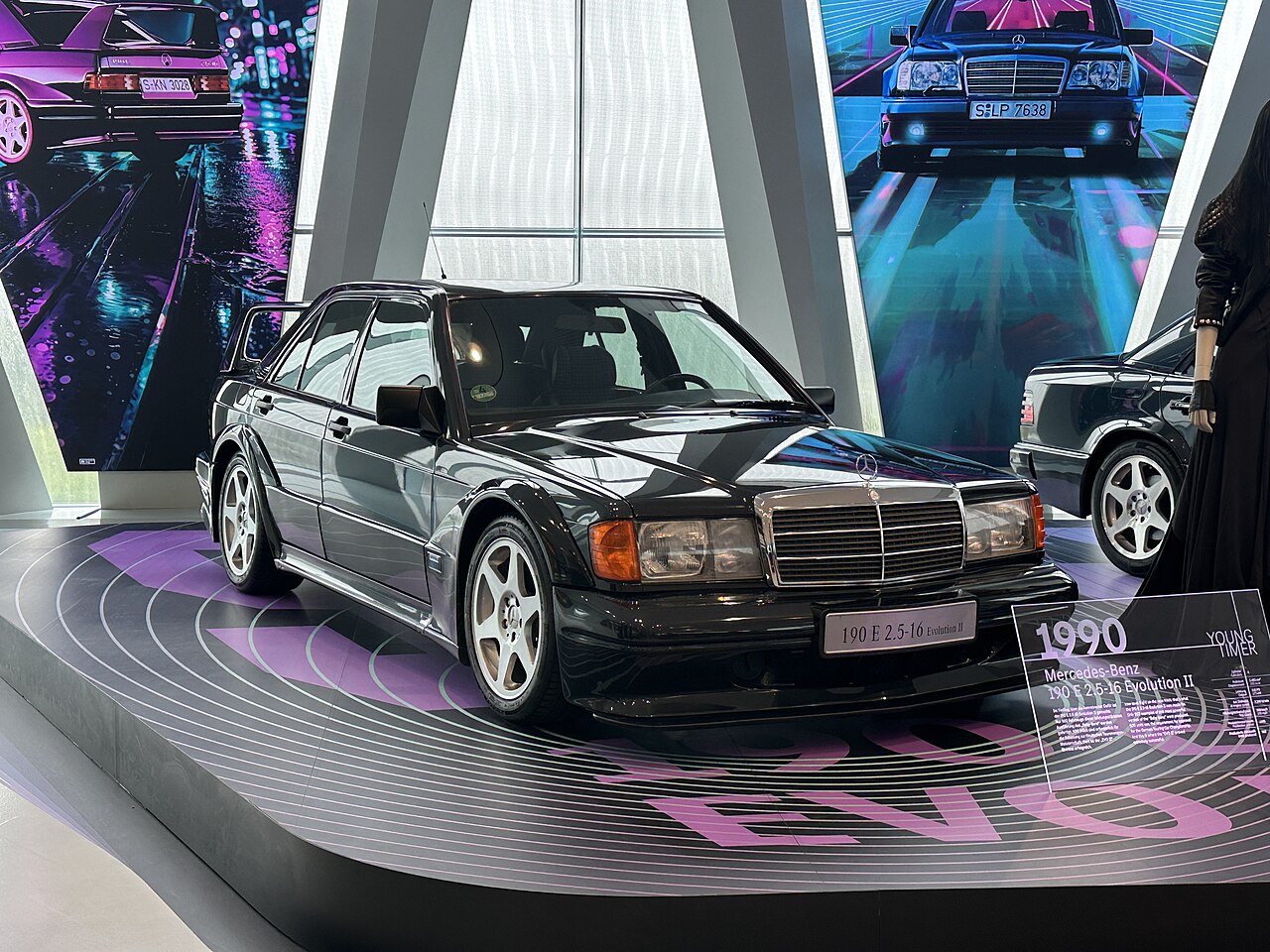
The Evolution II makes its competition connection visible. Mercedes-Benz’s museum account identifies the 1990 model as a DTM-related development and records an exclusive series of 502 examples. Its pronounced wheel arches and rear wing give an otherwise familiar saloon an entirely different outline. [1]
That outline is a useful starting point, but the development sequence explains more. The Evolution II belongs after the earlier Evolution model in the 190 E story. Its identity depends on that specific stage, rather than simply on the presence of a large wing or a sixteen-valve engine.
A homologation special can preserve everyday recognisability while accommodating a much narrower sporting brief. Here, the four-door body is part of the fascination: the passenger compartment still reads as a Mercedes compact saloon while the surrounding bodywork describes another set of priorities. Reading the two together is more revealing than treating the aero package as decoration.
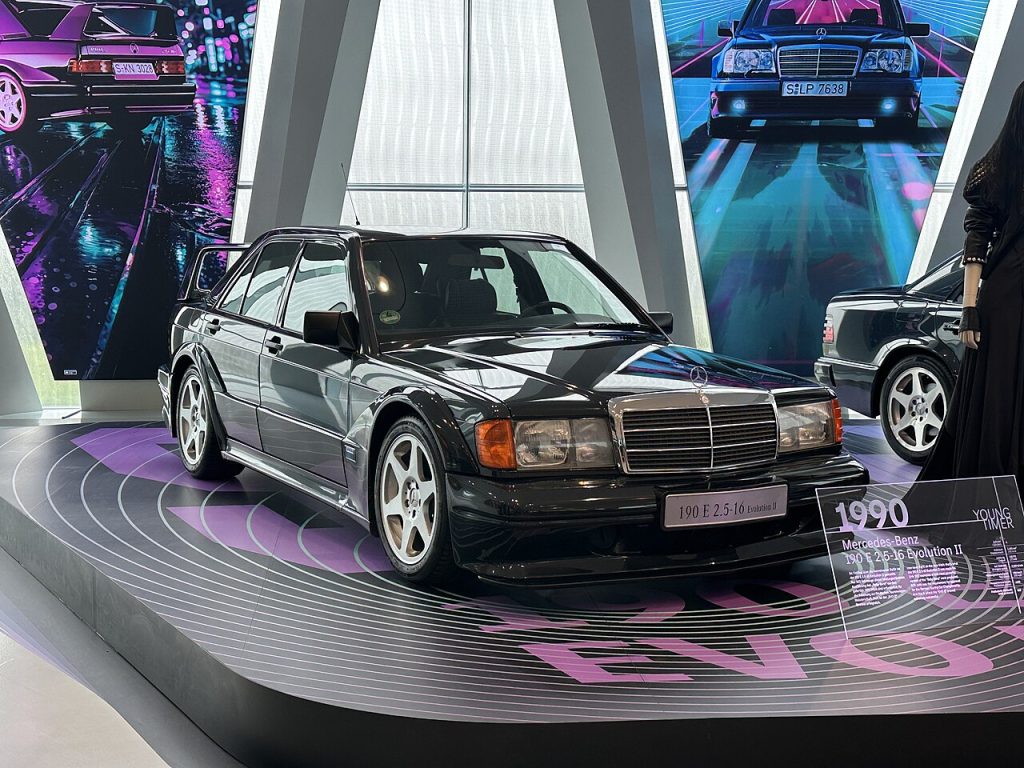
1990 Mercedes-Benz 190 E 2.5-16 Evolution II
The 1990 Mercedes-Benz 190 E 2.5-16 Evolution II is the most visually emphatic road-going expression of the W 201 touring-car story. Its tall rear wing is memorable, but the whole aerodynamic and…
Explore the full profile02 / A rally car from the outset — Ford RS200
Ford’s own rally retrospective describes the RS200 as a purpose-designed rally car with a mid-mounted Cosworth-developed engine, four-wheel drive and fibreglass bodywork. Ford relates the road-going series to Group B homologation; the FIA archive separately preserves the competition approval record. [2] [3]
The RS200 reverses the usual mental picture of a fast Ford. The starting point was the competition project itself, with the engine and driveline organised around that brief. Its road-car identity needs to be understood within the original programme, separately from later modifications or competition evolutions.
This also explains why an entry in a homologation archive and a road-car production figure answer different questions. One records an approved specification. The other attempts to describe cars made, sold or completed within a stated scope. The RS200 is most interesting when those documents illuminate each other, rather than when one number is asked to stand in for the entire project.
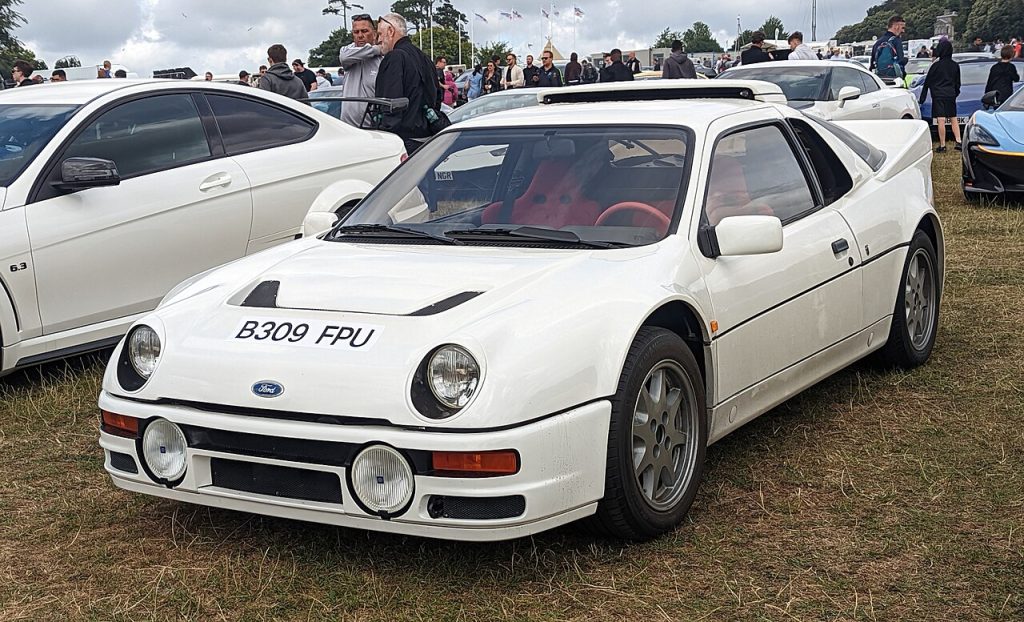
1986 Ford RS200 — Original Programme
The Ford RS200 was developed as a specialised mid-engine rallying proposition rather than a modified ordinary Ford saloon.
Explore the full profile03 / A familiar badge, a different layout — Peugeot 205 Turbo 16
The 205 Turbo 16 carried the name and visual references of Peugeot’s small hatchback into a very different mechanical arrangement. The FIA’s Group B homologation form B-262, effective from April 1984, documents the Turbo 16’s approved specification, including its engine and driven-wheel arrangement. [4]
The road homologation model places its turbocharged engine behind the occupants and uses four-wheel drive. That distinction changes how the whole car should be read: the rear bodywork is serving a powertrain installation, rather than simply extending the luggage area of an ordinary 205.
There are consequently two histories to follow. One concerns the wider 205 family and the recognition its shape provided. The other concerns the Turbo 16 programme and the engineering required for its competition purpose. A name can connect those histories without making their mechanical foundations interchangeable. The linked profile keeps the road series separate from the works rally evolutions.
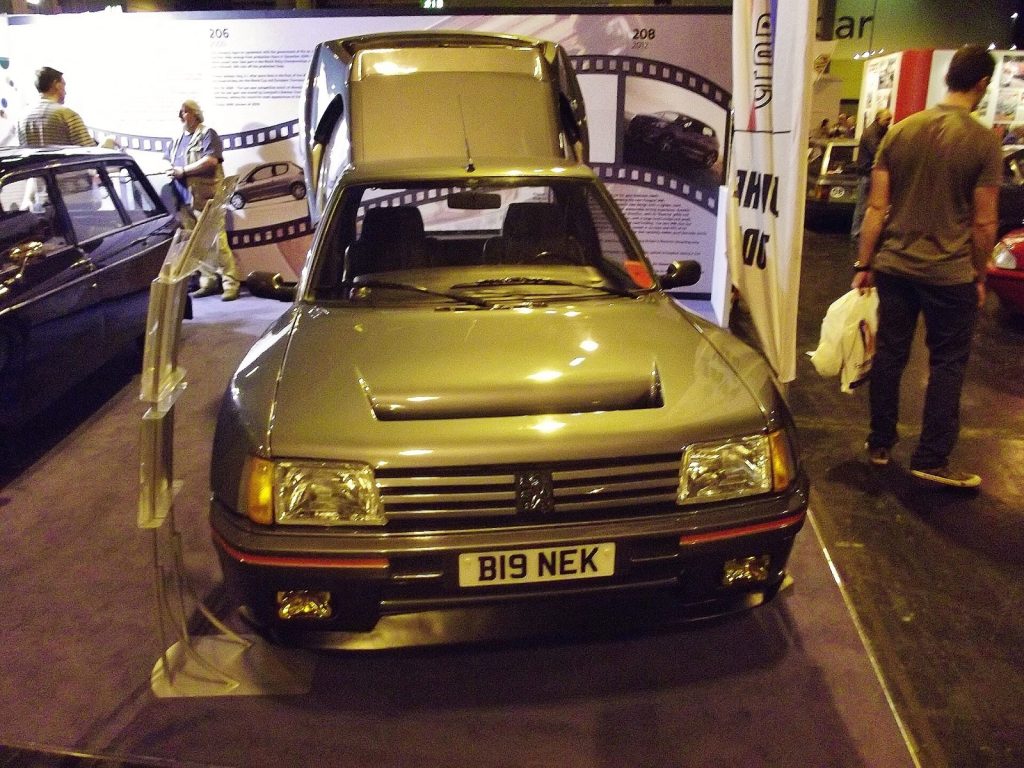
1984 Peugeot 205 Turbo 16 — Road Homologation Series
The 205 Turbo 16 road car shared a name and recognisable outline with Peugeot's small hatchback, but its purpose and layout were radically different. A mid-rear turbocharged engine and four-wheel drive served…
Explore the full profile04 / An evolution within the family — Ford Sierra RS500 Cosworth
The Ford RS Owners Club records the RS500 as a 500-car homologation evolution produced through Tickford. It grew out of the Sierra RS Cosworth rather than creating a wholly unrelated road-car platform. The club’s model history describes the dedicated batch and its competition purpose. [5]
That relationship makes the RS500 a different proposition from the RS200. The Sierra’s recognisable three-door body provides continuity with an existing model; the evolution designation identifies a particular development within it. The familiar silhouette and the specialised programme belong in the same description.
For an enthusiast building a collection, the useful detail is the chain of identities: Sierra, RS Cosworth, then RS500. Each step narrows the subject. Following that chain helps explain why a later modification to a standard car, however capable, does not create the same historical object as a vehicle from the original evolution batch.
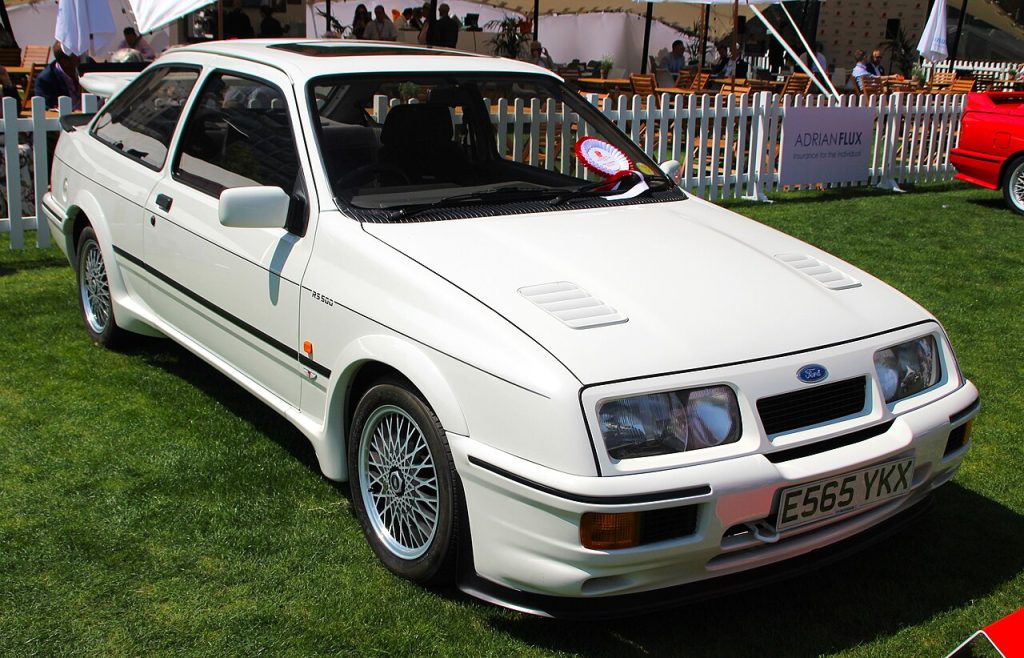
1987 Ford Sierra RS500 Cosworth
The Ford Sierra RS500 Cosworth was a finite homologation evolution built through Aston Martin Tickford.
Explore the full profile05 / A final development step — BMW M3 Sport Evolution
BMW Group Classic describes the 1990 M3 Sport Evolution as a homologation model limited to 600 examples. Its account identifies a displacement increase to 2.5 litres, reduced weight and an adjustable rear spoiler among the changes. This is the E30 Sport Evolution, rather than a general label for every special-edition M3. [6]
The engine change gives this chapter a different emphasis. A competition-led evolution can involve more than the surfaces you see in a photograph. The mechanical specification and the exterior development can move together as parts of one programme.
Placed beside the other four cars, the BMW shows how varied homologation stories can be. There is no single body style or engine location that defines the category. What connects them is the documented relationship between a road-going identity and the requirements of a sporting programme. That relationship is the reason to look beyond the badge.
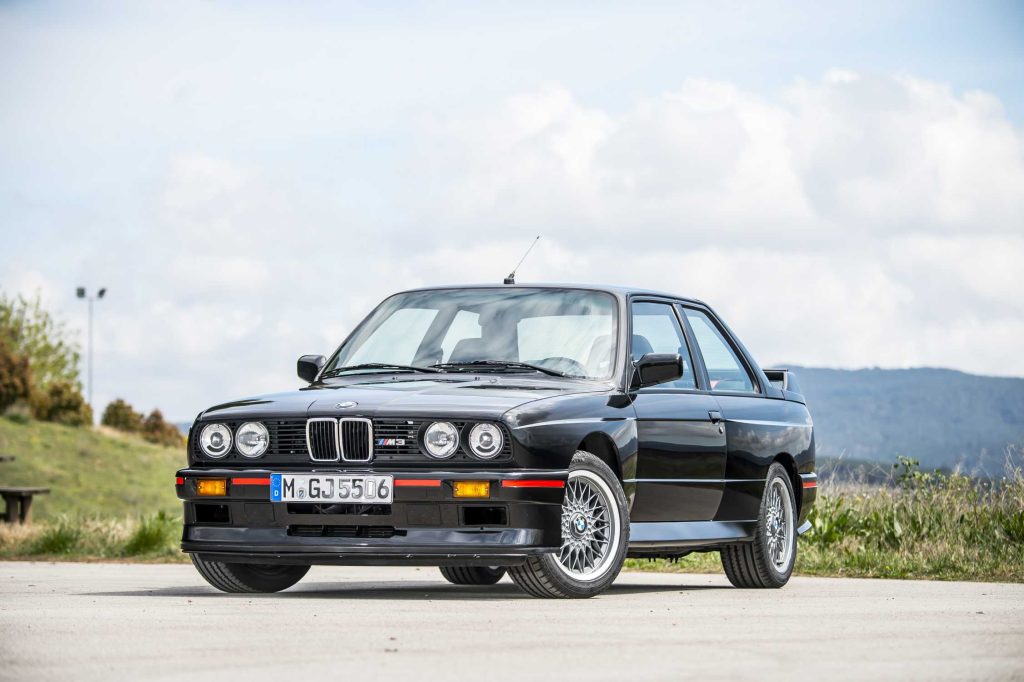
BMW M3 Sport Evolution E30 (1990)
The 1990 BMW M3 Sport Evolution is the 600-car homologation model that took the original M3 to approximately 2.5 litres and a published 238 hp. Its significance comes from a connected package…
Explore the full profileThe document behind the silhouette
A useful way to explore homologation cars is to begin with three documents: the manufacturer’s account of the road model, its original specification and the relevant approval record. Each provides a different view of the same project. Together they explain much more than a production number alone.
Keep the road model, the competition derivative and subsequent evolution stages clearly named. A racing result belongs to the car and specification that achieved it. A road car can share the development story without carrying the same tune, equipment or competition history.
The reward is a collection organised around causes as well as shapes. The wing, engine position or unusual bodywork becomes evidence of a decision. These five profiles offer five starting points for following that decision back to the rulebook.
Sources & further reading
- Mercedes-Benz: EVO II museum spotlight — Factory museum account and 502-car series.
- Ford: Stage Presence — Manufacturer retrospective on the RS200’s purpose and layout.
- FIA Historic Database: Ford RS200 — Original competition approval record; not a completed road-car census.
- FIA: Peugeot 205 Turbo 16 homologation form B-262 — Original homologation form and technical specification.
- Ford RS Owners Club: Sierra RS500 — Specialist club history of the Tickford conversion programme.
- BMW Group Classic: M3 Sport Evolution — Factory model record and scoped 600-car series.
Continue exploring
For a different route from motorsport thinking to a road car, read The Rarity Edit 002, then explore more documented vehicles in the archive.