Five road-legal track specials and the engineering behind them
A wing is the visible part. The real story runs underneath: heat management, weight distribution, aerodynamic load and decisions about what the driver can live without. These five limited-run road cars make that story unusually easy to follow.
For the second Rarity Edit, we turn to road-legal track specials. The starting points could hardly look more familiar: a 911, two German coupés, a French hatchback and an Italian saloon. Their makers used those recognisable forms to explore a much narrower brief.
A useful way to read such a car is to follow a chain of decisions. An engine modification changes the demands on cooling. An aerodynamic device changes how air moves around the body. Removing a rear seat changes the purpose of the cabin. The edition badge is a convenient name for the result; the engineering is what gives that name meaning.
These are five different interpretations, rather than five interchangeable answers. This edition explains their factory specifications and documented programme scopes, then connects you to the individual profiles for the longer histories.
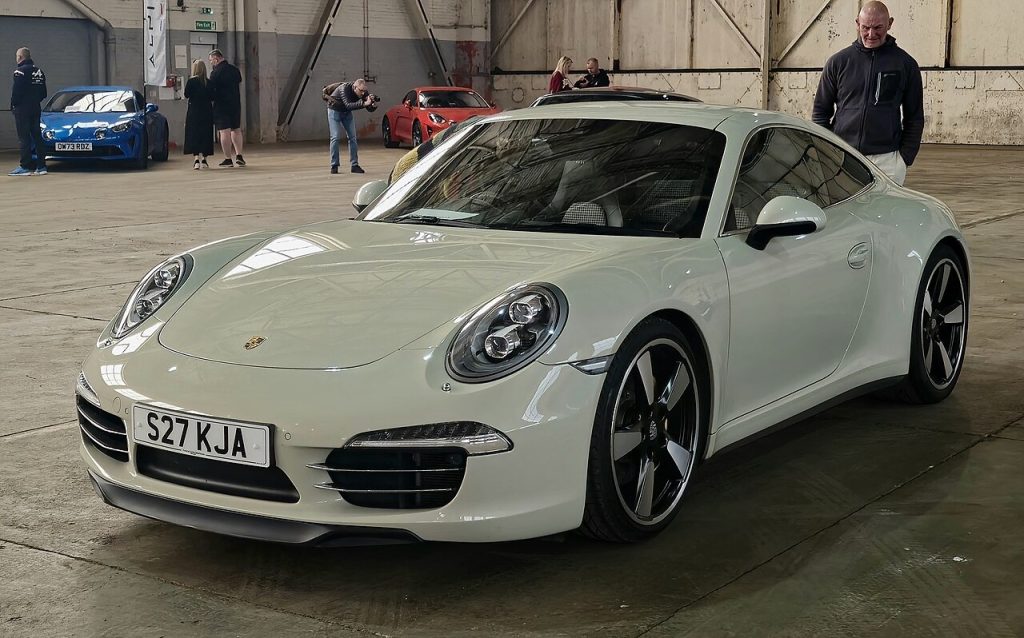
01 / A final statement — Porsche 911 GT3 RS 4.0
The 2011 911 GT3 RS 4.0 brought a four-litre naturally aspirated flat-six to the 997-generation RS. Porsche’s own retrospective describes components borrowed from its contemporary RSR race car and a production limit of 600. The generation matters: this is the 997-era 4.0, not a blanket description of every later GT3 RS with that engine capacity. [1]
Its appeal as an engineering story lies in the relationship between a familiar layout and a highly particular development stage. The engine sits within the long-running rear-engined 911 architecture, yet the model’s identity depends on the combination of generation, specification and production programme.
That is a useful habit to carry into the archive. Start with the full model designation, then work out which changes belong to that exact edition. The extra characters after a familiar badge can mark the difference between related cars with distinct histories.

2011 Porsche 911 GT3 RS 4.0 — 997
The Porsche 911 GT3 RS 4.0 belongs to 2011, correcting the inventory’s 2010 reference. It paired the 997 generation with a four-litre naturally aspirated flat-six and a manufacturer limit of 600 cars.…
Explore the full profile02 / Managing heat — BMW M4 GTS
BMW announced the M4 GTS as a worldwide series limited to 700 cars. Its Canadian launch material separately identified 50 cars for Canada. Those figures describe a global programme and one regional allocation; they should not be treated as two independent production runs. [2]
The same release explains the water-injection system. A fine spray introduced into the intake manifold evaporates, reducing intake-air temperature. BMW links the resulting thermal conditions to the engine’s ability to operate with higher boost pressure and altered ignition timing. [2]
This is a reminder to look beyond the headline output. A conspicuous engineering feature becomes more interesting when you understand the constraint it addresses. Here, following the heat explains the purpose of the hardware and gives the GTS a technical story distinct from a conventional trim upgrade.

BMW M4 GTS — F82
The F82 BMW M4 GTS brought water injection and an uncompromising track emphasis to a factory-announced 700-car worldwide series. Announced in October 2015 and launched into the 2016 production era, it carries…
Explore the full profile03 / A racing connection — Mercedes-Benz CLK DTM AMG Coupé
Mercedes-Benz connects the CLK DTM AMG to its successful 2003 DTM season and describes a run of 100 cars introduced in 2004. The Petersen Automotive Museum identifies the roadgoing coupé’s carbon-fibre body panels, widened body and supercharged engine as defining features. [3] [4]
The distinction between inspiration and identity is essential here. A roadgoing car can carry a close visual relationship to a racing programme while remaining a separate vehicle with its own structure, specification and purpose. The DTM name is an entry into that relationship, rather than a reason to collapse the two into one story.
Keep the body style in view, too. This chapter concerns the coupé. The later CLK DTM AMG Cabriolet has its own profile and programme context; its existence does not change what the coupé’s 100-car figure describes.
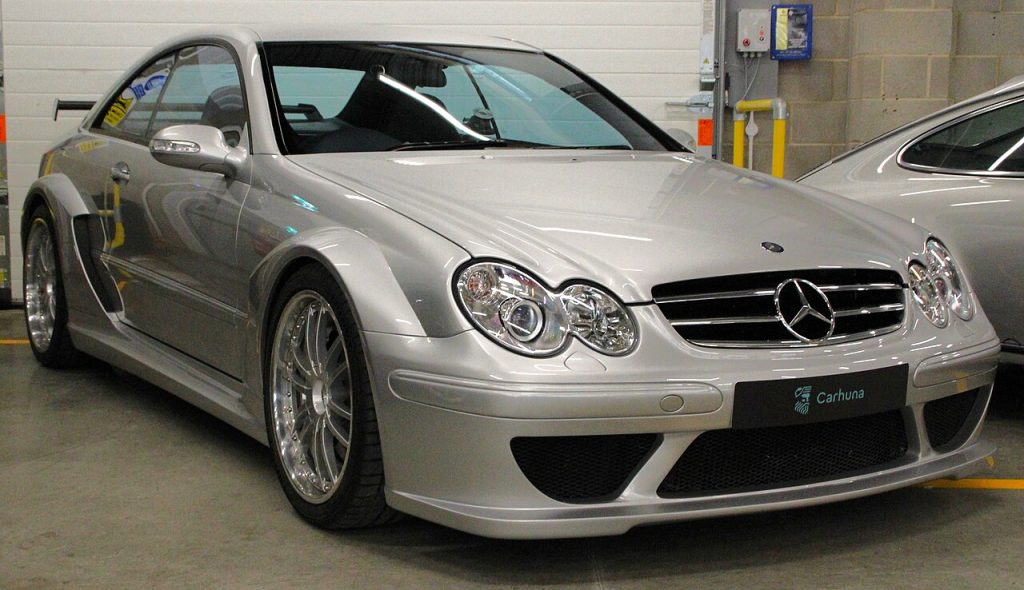
2004 Mercedes-Benz CLK DTM AMG Coupé
The Mercedes-Benz CLK DTM AMG Coupé turned a successful touring-car era into a dramatic limited road-car programme. Its wide body and supercharged V8 made a clear statement, yet the 100 customer coupés…
Explore the full profile04 / Removing the unnecessary — Renault Mégane R26.R
Renault’s launch announcement explains that the Mégane R26.R retained the engine, gearbox and limited-slip differential of the Mégane F1 Team R26 while losing 123 kg and receiving its own suspension calibration. The German manufacturer release set a 450-car limit for the edition. Here, 450 is presented as the announced programme limit, not as an independently reconciled completed-production census. [5] [6]
This makes the R26.R an especially clear example of changing a car by changing its priorities. The headline is not a wholly different engine. It is a decision to concentrate on what the existing platform could do when equipment, materials and chassis settings were reconsidered together.
Renault’s German material details a carbon-fibre bonnet and polycarbonate side and rear windows among its measures. Read those choices as parts of the overall brief, rather than isolated exotic ingredients. A material earns its place in the story through the job it performs. [6]
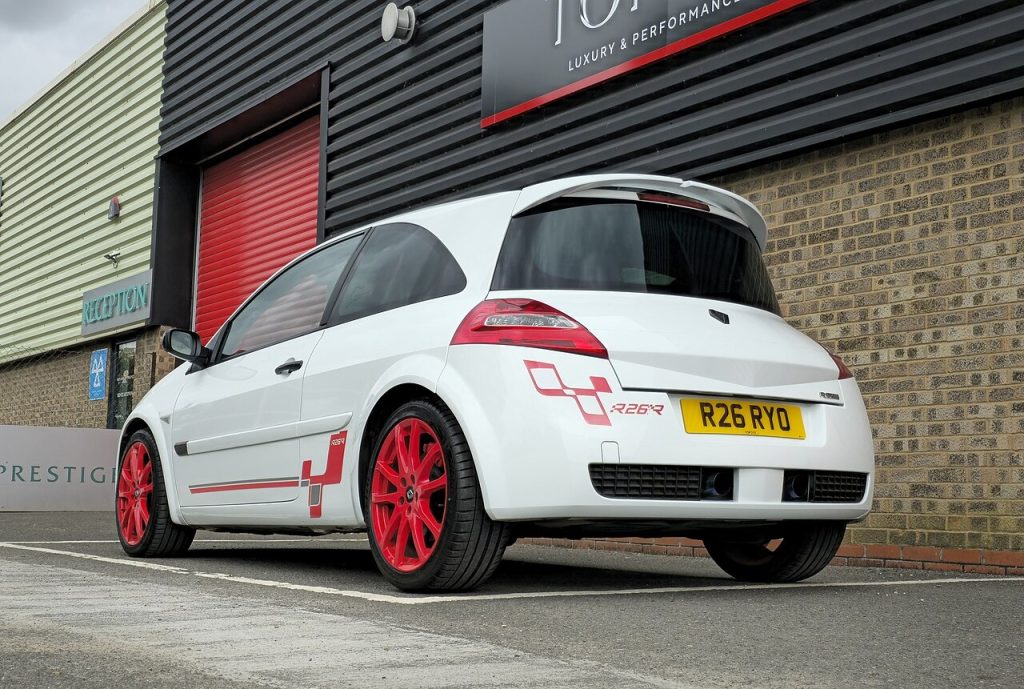
2008 Renault Mégane R26.R
The Renault Mégane R26.R made weight reduction the centre of a road-car programme. It retained the distinctive second-generation Mégane outline while removing much of the equipment that made an ordinary hatchback versatile.…
Explore the full profile05 / Giving the air a job — Alfa Romeo Giulia GTAm
Alfa Romeo’s 2020 announcement paired the four-seat Giulia GTA with the more extreme GTAm, featuring two racing seats, a roll bar and six-point belts. The stated 500-car availability covered GTA and GTAm together. It does not establish a separate 500-car run for the GTAm alone. [7]
In its 2021 technical account, Alfa Romeo describes Sauber Engineering’s involvement in the aerodynamic work and the GTAm’s manually adjustable front splitter and rear wing. That makes the shape worth reading as a functional arrangement: the visible components belong to an effort to manage the airflow around and beneath the car. [8]
The saloon outline adds another layer to the story. The GTAm begins with a form associated with a practical passenger cabin, then uses that form for a far more specific purpose. The seat count and aerodynamic adjustments reveal how extensively that purpose can reshape the experience promised by a familiar silhouette.
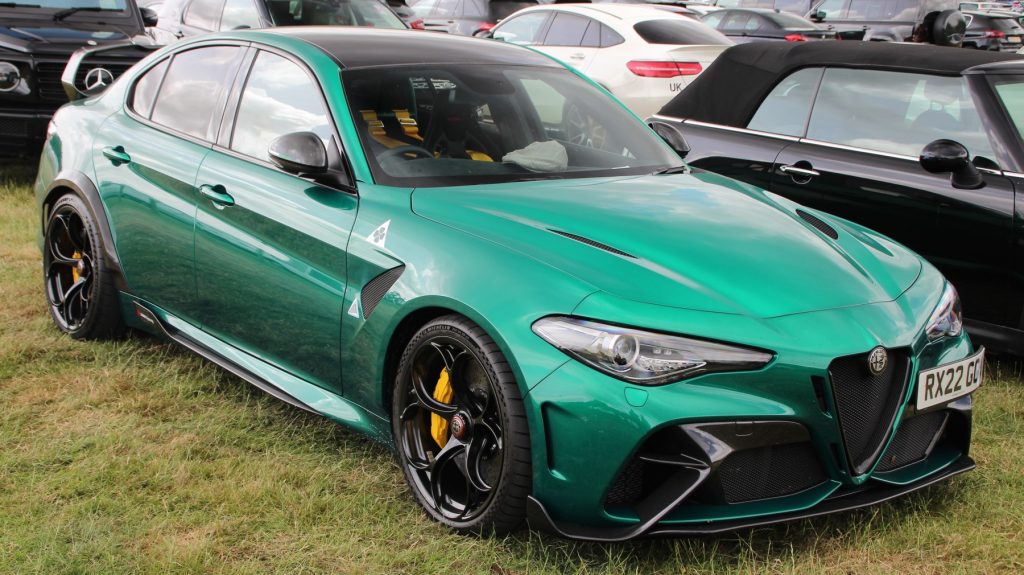
Alfa Romeo Giulia GTAm
The two-seat Giulia GTAm is the more extreme member of the shared 500-car GTA/GTAm programme.
Explore the full profileRead the brief before the badge
These five cars suggest a better way to explore track-focused special editions. Begin with the problem each programme tried to solve. Ask how its engine, bodywork, chassis and cabin choices fit that problem. Then check which parts of the story apply to the precise car in front of you.
Three questions help organise a collection:
- What changed? Separate a mechanical or material change from a cosmetic identifier. Both can be interesting, but they tell different stories.
- Why did it change? Follow the stated design brief: cooling, weight reduction, airflow, commemoration or a particular use.
- What does the number count? Keep the whole edition, regional deliveries, body styles and shared model programmes distinct.
This approach leaves room for very different favourites. You might save the Mégane because the subtraction is unusually clear, the BMW because of its intake-cooling system or the Alfa Romeo because its aerodynamic work changes the character of a saloon. The connection is the deliberate brief behind each car.
Porsche’s 600-car reference, BMW’s 700-car announcement, the CLK DTM coupé’s 100-car account, Renault’s announced 450-car limit and Alfa Romeo’s shared 500-car GTA/GTAm programme refer to different documented scopes. They are not a combined production census. The linked profiles retain the context and qualifications for each programme.
Sources & further reading
- Porsche: Colors of Porsche — the 2011 911 GT3 RS 4.0 section identifies the generation, engine programme and 600-car limit.
- BMW Group Canada: The new 2016 BMW M4 GTS — global limit, Canadian allocation and water-injection explanation, 20 October 2015.
- Mercedes-Benz: 55 Years AMG museum exhibition — the CLK DTM AMG section connects the 2004 car to the 2003 racing season and states 100 examples.
- Petersen Automotive Museum: 2005 Mercedes-Benz CLK DTM AMG — museum vehicle record covering the roadgoing coupé and its construction.
- Renault Sport: Mégane R26.R, the new flagship — archived manufacturer launch announcement, 22 July 2008.
- Renault Germany: Neues Topmodell von Renault Sport — programme limit, weight-reduction measures and specification.
- Alfa Romeo: Giulia GTA, the return of a legend — GTA/GTAm configurations and shared programme limit, 2 March 2020.
- Alfa Romeo: Giulia GTA, a legend takes to the streets — Sauber Engineering and adjustable aerodynamic components, 12 May 2021.