1986 Ford RS200 — Original Programme
Explore 1986 Ford RS200 — Original Programme: sourced history, design, specifications, rarity evidence and a real photograph with creator credits.
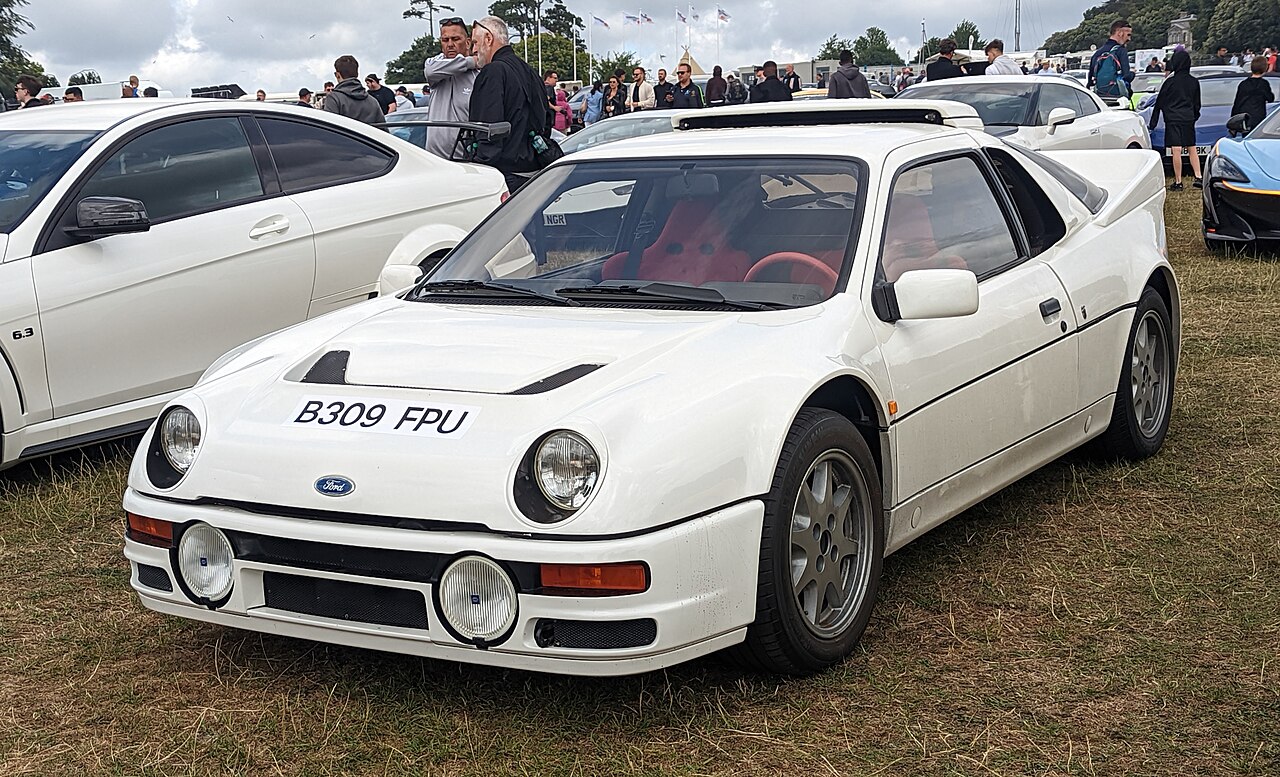
The Ford RS200 was developed as a specialised mid-engine rallying proposition rather than a modified ordinary Ford saloon.
History and purpose
The Ford RS200 was developed as a specialised mid-engine rallying proposition rather than a modified ordinary Ford saloon. RM Sotheby’s custodial account connects its development to Ford Motorsport and describes a compact coupé using a turbocharged 1.8-litre Cosworth BDT engine and four-wheel drive. The original programme’s published scale is approximately 200 cars. This profile retains that whole-programme figure and leaves the exact completed fabrication tally unset. Evolution conversions remain inside the original programme’s scope, while later replicas and newly licensed reinterpretations belong outside it. The reference year 1986 follows the original competition introduction, not the date of every surviving road car.
Design and engineering
The white road example has a compact passenger cell, a low wedge-shaped nose and large circular lamps. Side openings sit behind the doors, and a substantial rear wing gives the short body a distinctive outline. The picture makes the contrast with an Escort saloon immediate: passenger space and engine package are gathered into a purpose-built sports-car form. The documented mid-engine and four-wheel-drive arrangement explains why the RS200 should not be described as another front-engine Escort derivative. The photograph identifies an original-type road example rather than a specific rally entrant. Its visible trim and equipment should remain attached to the dated specimen view.
Identifying the original configuration
Keep original programme in the identity because the RS200’s recognisable shape has inspired later replicas and licensed projects. A white body and round lamps alone do not connect a car to the original homologation series. The selected photograph’s model description and visible configuration match the original programme, with replica-labelled search results explicitly excluded. An individual chassis file should add factory, registration and custodial evidence before making claims about development-car or Evolution status. Those variations can be historically important, but they should not inflate the parent manufacturing figure. The archive’s count field therefore distinguishes the published original scale from an exact tally of every experimental object.
Collector context and preservation
The RS200 is useful beside the GT40 because both reorganise Ford performance around a low sports-car body, while serving different competition purposes. Use whole-car images to show engine-placement proportions before introducing driveline detail. A preservation file should connect installed turbocharging, transmission and body equipment to dated configurations, especially for a car that has received competition upgrades. Keep original development material and later historic-event photographs in chronological order. This helps readers understand why the model matters without mistaking its current specification for a single universal factory state. The complete original programme remains the rarity unit, even when one surviving chassis has a particularly complex history.
Reading the evidence for this profile
The original source links below identify the programme and the historical statements used in this article. The photograph has its own creator and licence record, separate from the manufacturer’s vehicle history. Keep both when transferring this profile into a collection catalogue. A manufacturing tally describes how many cars belong to a defined original programme; it does not measure how many survive, how many are publicly visible, or how many retain all their original components. Those individual questions require dated chassis and restoration evidence. The reference year likewise describes the programme’s introduction or named historic configuration, while the supplied caption states the photographed setting and any established individual identity. This lets future research expand the car’s history without blurring the scope of the record already assembled here.
Specifications and verified rarity
| Reference year | 1986 |
|---|---|
| Model / programme | RS200 — Original Programme |
| Body / role | Mid-engine four-wheel-drive homologation coupé |
| Documented engine | 1.8-litre turbocharged Cosworth BDT four-cylinder in original road form |
| Architecture / transmission | Mid-engine coupé; four-wheel drive |
| Exact manufacturing tally | Not established |
| Eligibility bound | 200 for the documented scope or parent programme |
| Rarity scope | Complete original 1980s RS200 homologation programme, published at approximately 200 cars. Original Evolution conversions remain inside the parent programme rather than being added as separate manufacture. Exact completed fabrication tally including every development object is not certified; later replicas and newly licensed reinterpretations are excluded. |
| Inventory reference | FRD-209 — Verified |
Frequently asked questions
What is the Ford RS200 — Original Programme?
The original approximately 200-car Ford RS200 homologation programme, with mid-engine BDT power and four-wheel drive; later replicas excluded.
What engineering defines this Ford?
1.8-litre turbocharged Cosworth BDT four-cylinder in original road form. Mid-engine coupé; four-wheel drive. These are the documented programme or preserved-concept specifications. Connect an individual vehicle’s installed components to its own dated records before assigning a factory configuration to that particular example.
Why is 1986 the reference year?
It identifies the introduction or original historical configuration described in this article. The photograph can show a later example or a later display of the original subject. The source inventory’s original heading remains an identity alias wherever the date or model name has been corrected.
How should an individual RS200 — Original Programme be documented?
Start with the chassis identity and connect it to dated construction, registration or custodial records. Keep exterior, interior, engine and underbody photographs together. Record changes to finish, equipment and mechanical specification as separate events, so the physical car’s history can grow without changing the definition of the original programme.
What rarity or archive scope is verified?
Complete original 1980s RS200 homologation programme, published at approximately 200 cars. Original Evolution conversions remain inside the parent programme rather than being added as separate manufacture. Exact completed fabrication tally including every development object is not certified; later replicas and newly licensed reinterpretations are excluded.
Who took the supplied photograph?
Calreyn88 via Wikimedia Commons, under CC BY-SA 4.0. The original file and licence links accompany the image. Retain that credit when the photograph is uploaded, exported or reused.
Related Ford profiles
Sources and photo credits
- Manufacturer, institutional or original custodial record
- Original custodial history of the complete RS200 programme
- Ford’s period RS200 history document
Photograph: Calreyn88 via Wikimedia Commons original file, CC BY-SA 4.0. Source-provided photograph supplied without local cropping, retouching or text removal. A source thumbnail is used where available. 1985-labelled original-type Ford RS200 road car photographed in Britain in 2022; no Evolution or works-rally identity assigned.
Built in limited numbers
Complete original 1980s RS200 homologation programme, published at approximately 200 cars. Original Evolution conversions remain inside the parent programme rather than being added as separate manufacture. Exact completed fabrication tally including every development object is not certified; later replicas and newly licensed reinterpretations are excluded.
Gallery
Specifications
Factory specifications may vary by model year, market and configuration.
Identity & production
- Official model
- RS200 — Original Programme