1984 Peugeot 205 Turbo 16 — Road Homologation Series
Explore the 205 Turbo 16 — Road Homologation Series: history, verified identity, specification references, rarity evidence and real credited photos.
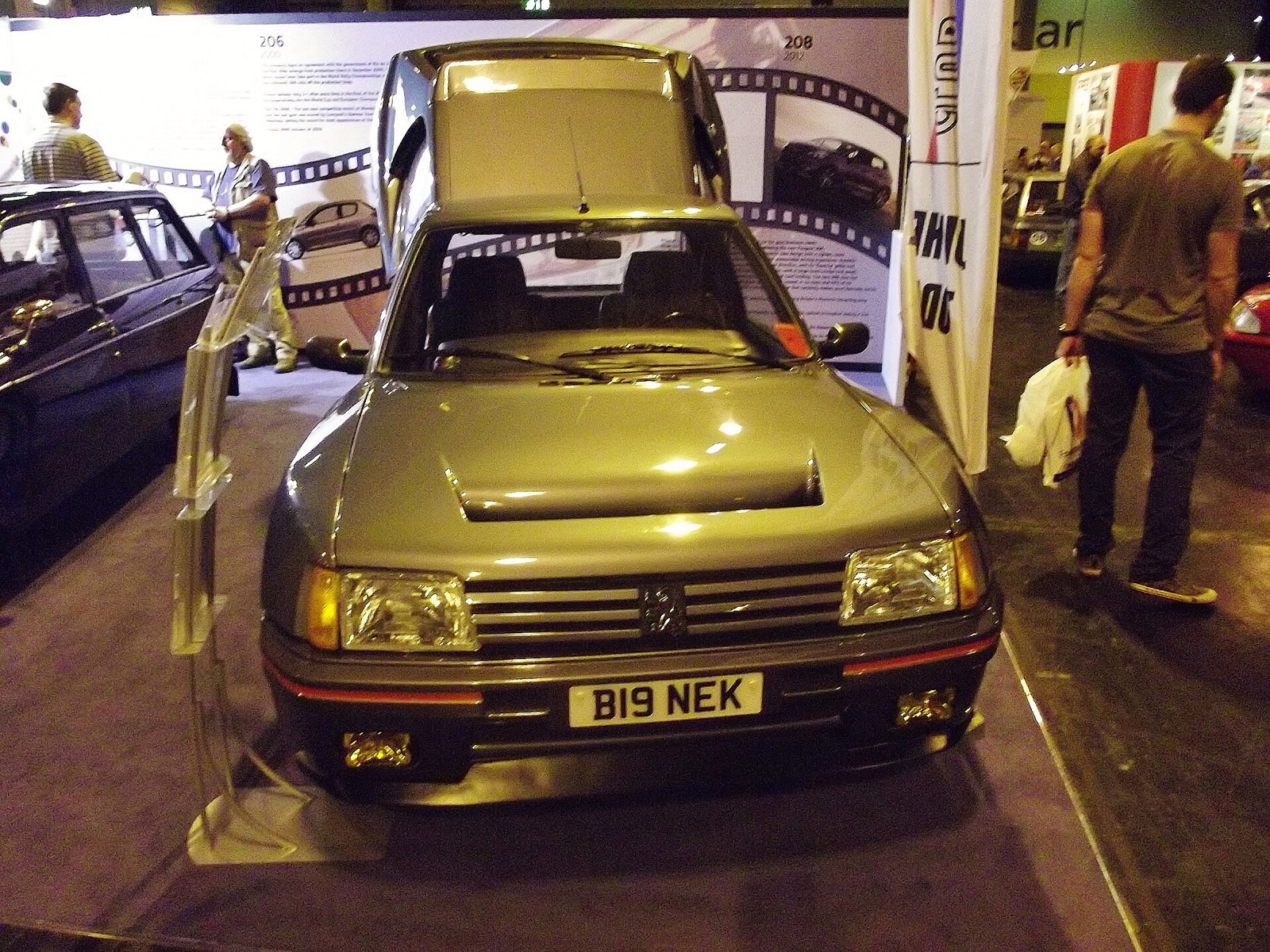
The 205 Turbo 16 road car shared a name and recognisable outline with Peugeot's small hatchback, but its purpose and layout were radically different. A mid-rear turbocharged engine and four-wheel drive served the homologation programme behind Peugeot's Group B campaign. The manufacturer describes a two-hundred-car road batch. This profile keeps that road series separate from competition evolutions, Grand Raid adaptations and the vastly larger ordinary 205 family.
A road batch built around a rally objective
Peugeot's retrospective explains that the project needed two hundred road-legal cars for its Group B acceptance. That requirement makes the road series a defined homologation subject, rather than an arbitrary slice of standard 205 production. The reference belongs to the eligible road batch; it must not absorb every development car, subsequent rally chassis or rebuilt competition machine. A homologation programme can connect road and racing vehicles without making their specifications or production counts interchangeable.
Peugeot: homologation batch, road layout and output
The engine moved behind the occupants
The manufacturer's road-car description places a turbocharged 1.8-litre sixteen-valve engine in the mid-rear position, with drive to all four wheels. This is the fundamental difference from an ordinary front-engined, front-drive 205 GTI. The familiar silhouette should not conceal that architectural break. Nor should a wide-bodied GTI conversion be described as a Turbo 16 simply because it reproduces the shape of the rear arches or carries similar decals.
Road output and competition escalation
Peugeot gives the road car a 200 hp reference and separately mentions a Peugeot Talbot Sport kit capable of raising the figure. That optional or modified configuration is not assigned automatically to every homologation example. Still higher competition outputs describe another development context. When reading a sales description, identify the original road specification, later engine work and the evidence for each claimed performance level rather than merging them into one factory figure.
Peugeot: homologation batch, road layout and output
A recognisable body with specific identification needs
The road car's widened body and rear access arrangement express the unusual powertrain layout, while the cabin retains visible links with the 205 era. Exterior similarity is useful for illustration but insufficient for authentication. An original car's chassis and engine identifiers, national approval record and factory delivery documents provide the stronger foundation. Restoration, replacement panels and revised mechanical equipment should be recorded alongside that identity rather than presented as another factory series.
Peugeot: homologation batch, road layout and output
Keeping the two-hundred-car boundary intact
The manufacturer-reported homologation batch supports this profile's rarity scope, but it is not entered as a surviving-car census. Export, re-registration and restoration do not increase the original road batch, while a written-off or converted car does not vanish from historical manufacture. A collector file should retain both the original delivery identity and later changes. Competition winners and road cars contribute to the same broader story, but only the defined road series belongs in this profile's allocation reference.
Specifications and identity reference
| Reference introduction | 1984 |
|---|---|
| Purpose | Group B road homologation |
| Manufacturer-reported road batch | 200 road-legal units |
| Engine | Turbocharged 1.8-litre, 16-valve |
| Engine position | Mid-rear |
| Drive | Four-wheel drive |
| Road output reference | 200 hp; tuning kits kept separate |
| Count exclusions | Race evolutions, Grand Raid cars and survivors |
Rarity and production scope
Verified road homologation series. Peugeot retrospectively describes 200 road-legal units; this is a manufacturer-reported batch, not an independent chassis audit or a surviving total. Competition and conversion counts are excluded.
What the photograph represents
Photograph specifically identified as a 205 Turbo 16 road version. It illustrates the homologation car rather than a standard GTI or a works rally evolution.
Related Peugeot heritage profiles
Frequently asked questions
Was the Turbo 16 a standard GTI with a body kit?
No. Its mid-rear engine and four-wheel-drive architecture made it a distinct homologation car.
Does the road figure include all Group B racing cars?
No. The manufacturer describes the defined road-legal homologation batch.
What is the production-count boundary for this profile?
Verified road homologation series. Peugeot retrospectively describes 200 road-legal units; this is a manufacturer-reported batch, not an independent chassis audit or a surviving total. Competition and conversion counts are excluded.
Sources and further reading
Research checked 16 October 2026. Linked factory, heritage and specialist-register records support the specifically attributed claims. Photographic descriptions identify the illustrated subject. Design analysis and suggested authentication steps are editorial interpretation.
Built in limited numbers
Verified road homologation series. Peugeot retrospectively describes 200 road-legal units; this is a manufacturer-reported batch, not an independent chassis audit or a surviving total. Competition and conversion counts are excluded.
Gallery
Specifications
Factory specifications may vary by model year, market and configuration.
Identity & production
- Official model
- Peugeot 205 Turbo 16 — Road Homologation Series
Sources and verification
Source citations are being prepared for this profile.