1984 Peugeot Quasar Concept
Explore the Quasar Concept: history, verified identity, specification references, rarity evidence and real credited photos.
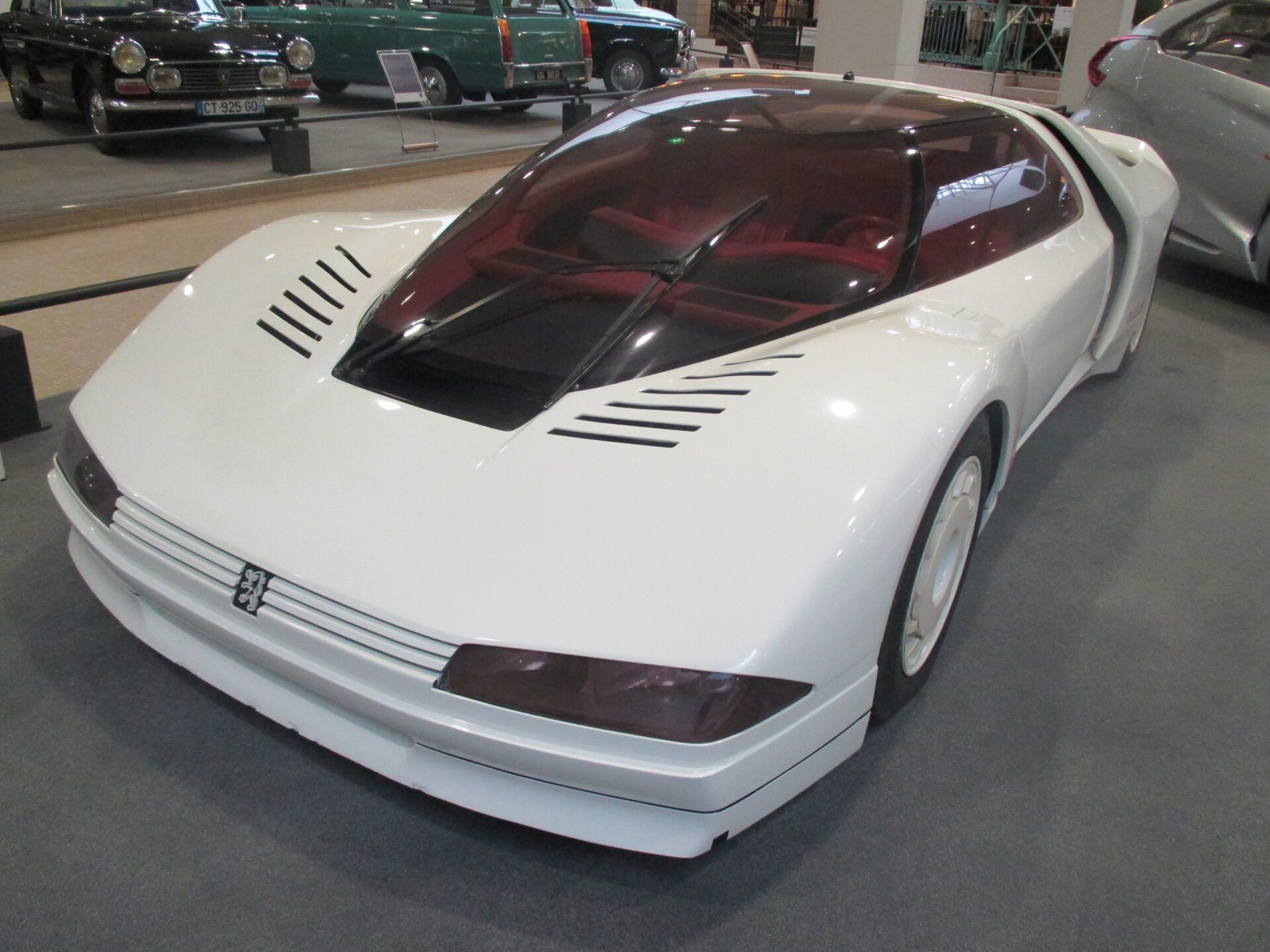
Unveiled in 1984, the Quasar let Peugeot's designers and engineers use the 205 Turbo 16's architecture as the basis for an unrestricted design statement. Its exposed mechanical elements, broad glass canopy and elaborate electronic interior made it far more than a prediction of the next hatchback. This profile follows the physical factory concept and its documented design authorship, while separating proposed performance from an independently measured road-car specification.
Peugeot’s first modern concept-car statement
The manufacturer's design retrospective identifies Quasar as the first full modern concept exercise in this particular Peugeot lineage. It does not erase earlier prototypes or coachbuilt experiments. Engineers and designers were freed from normal industrial constraints to explore a complete vehicle proposition. That explains the significance of the 1984 date: Quasar established a recognisable programme of public design experiments rather than opening a customer order book for a limited sports car.
Peugeot: Quasar design history and engineering basis
A Turbo 16 foundation, transformed
Peugeot links the chassis and engine basis to the 205 Turbo 16, but the concept is a separate physical subject from the road homologation series. The body exposes and celebrates mechanical content instead of concealing it beneath an ordinary hatchback shell. Sharing an engineering foundation does not give the exhibit the competition identity of a works rally car. It also does not justify applying the road series' two-hundred-car count to the Quasar programme.
The people behind the shape and cabin
Peugeot credits the exterior to Gérard Welter's work from a sketch by Eric Berthet and identifies Paul Bracq with the interior. Keeping those roles distinct gives the design history more precision than a single-name attribution. The body and cabin pursue complementary versions of the future: one displays sporting machinery and aerodynamic form, while the other investigates a more information-rich relationship between occupants and the vehicle.
Peugeot: Quasar design history and engineering basis
Electronic theatre and a performance proposition
The heavily glazed cabin and electronic displays are central to Quasar's visual identity. They belong to a concept-car interpretation of future travel rather than a guarantee of present-day navigation or connectivity functions. Peugeot's historical account quotes a much higher engine-output proposition than the road Turbo 16 reference. That published figure remains a manufacturer concept description; this article does not turn it into a verified dynamometer result or certified road performance claim.
Peugeot: Quasar design history and engineering basis
Reading the surviving exhibit
A museum or event photograph establishes the shape and visible details of the displayed Quasar, while custody and workshop records are needed to establish its condition and any changes over time. Scale models, artwork and later appearances should not be counted as additional concepts. The selected manufacturer retrospective supports the factory identity and design story, but does not reconcile every mock-up, engine installation or physical continuation into an exclusive completed-build census.
Specifications and identity reference
| Debut reference | 1984 |
|---|---|
| Vehicle status | Physical factory concept |
| Engineering basis | 205 Turbo 16-derived chassis and engine |
| Exterior attribution | Gérard Welter; Eric Berthet sketch |
| Interior attribution | Paul Bracq |
| Manufacturer concept output reference | 600 horsepower; not independently measured here |
| Customer allocation | None assigned |
| Completed physical-build census | Not assigned |
Rarity and production scope
Verified physical Quasar concept. Design roles and the Turbo 16 relationship are manufacturer-documented. The concept output is attributed, and no customer allocation or exclusive physical-build total is inferred.
This is an Archive record. Concepts, restored heritage vehicles, works cars and competition programmes are not added to customer road-production totals. A programme profile does not establish how many physical chassis were made, and repeated exhibition appearances do not create additional vehicles.
What the photograph represents
Physical Peugeot Quasar concept in a collection display. The photograph illustrates its appearance, not a verified current engine output or an exclusive completed-build total.
Related Peugeot heritage profiles
Frequently asked questions
Is Quasar one of the 200 road Turbo 16s?
It is a distinct factory concept programme, not another customer road-series profile.
Does the quoted concept output establish certified performance?
No. It is a historical manufacturer proposition, separate from independent measurement.
What is the production-count boundary for this profile?
Verified physical Quasar concept. Design roles and the Turbo 16 relationship are manufacturer-documented. The concept output is attributed, and no customer allocation or exclusive physical-build total is inferred.
Sources and further reading
Research checked 16 October 2026. Linked factory, heritage and specialist-register records support the specifically attributed claims. Photographic descriptions identify the illustrated subject. Design analysis and suggested authentication steps are editorial interpretation.
Built in limited numbers
Verified physical Quasar concept. Design roles and the Turbo 16 relationship are manufacturer-documented. The concept output is attributed, and no customer allocation or exclusive physical-build total is inferred.
Gallery
Specifications
Factory specifications may vary by model year, market and configuration.
Identity & production
- Official model
- Peugeot Quasar Concept
Sources and verification
Source citations are being prepared for this profile.