1996 Peugeot Asphalte Concept
Explore the Asphalte Concept: history, verified identity, specification references, rarity evidence and real credited photos.
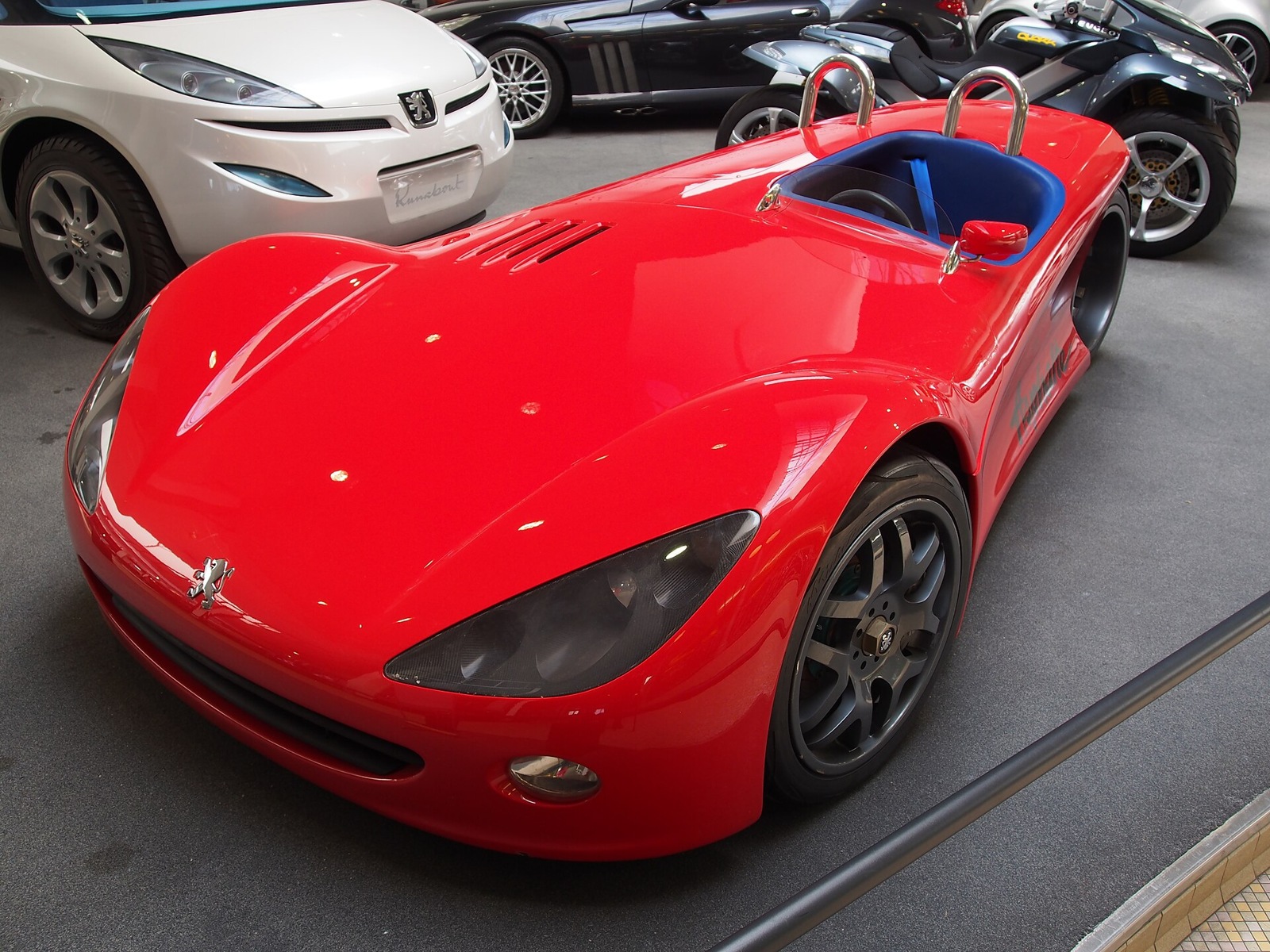
The Asphalte compressed Peugeot's sports-car imagination into a tiny open body with an unusually narrow rear track. Presented in Paris in 1996, it is often described casually as a three-wheeler, but Peugeot's own retrospective identifies two closely spaced rear wheels. This profile preserves that important distinction from the later 20Cup, while recording the Asphalte's lightweight, configurable-cabin proposition and the factory's historical technical references.
Correcting the date and the wheel count
Peugeot identifies the original presentation as the 1996 Paris Motor Show, correcting the inventory's 1997 shorthand. The car's tapering rear body creates a visual resemblance to a tricycle, but resemblance is not the same as construction. The manufacturer's description specifically discusses the two rear wheels and their unusual arrangement. Keeping those details precise prevents the Asphalte from being merged with Peugeot's genuinely three-wheeled 20Cup concept of 2005.
Peugeot: dedicated Asphalte date, architecture and technical retrospective
Lightness before a dramatic power claim
The manufacturer's retrospective gives a 580 kg reference alongside a 1.6-litre engine rated at 90 CV. Those figures frame the project around low mass rather than a large, highly tuned engine. The technical point is the relationship between the small powertrain and an exceptionally compact vehicle proposition. The figures remain attributed historical descriptions, not an independent weighing or dynamometer exercise, and they do not assess the surviving exhibit's current mechanical state.
The narrowing body and rear track
The body pulls inward sharply behind the occupants, making the rear-wheel arrangement central to both the appearance and the packaging experiment. Peugeot's account connects this with aerodynamic and weight objectives. A photograph is useful for observing the geometry, while detailed handling or stability conclusions would require tests. The low, tapering shape should therefore be explained as a design strategy rather than an automatically proven advantage in every driving situation.
Peugeot: dedicated Asphalte date, architecture and technical retrospective
A cockpit that could change its emphasis
The concept's two-place arrangement and passenger-side cover allowed the open body to present a more single-seat character. Peugeot also describes carbon-fibre structural ideas and rollover-protection elements. These features make the Asphalte more than a minimalist shell. They investigate how a compact leisure vehicle might balance the drama of an exposed cockpit with practical packaging and occupant provision, without establishing modern certification or a customer-ready safety specification.
Peugeot: Asphalte and 20Cup in the EX1 design lineage
A clear boundary from the 20Cup
Peugeot later linked the Asphalte and 20Cup with the architecture explored by EX1. That is a useful design lineage, not evidence that the three projects share one chassis or an identical wheel arrangement. An archive file should retain the Asphalte's own date, physical appearance and custody history. No retail allocation is created from its public appeal, and the inventory's single-car shorthand is not promoted into a reconciled exclusive physical-build census.
Specifications and identity reference
| Debut | Paris, 1996 |
|---|---|
| Architecture | Open roadster with very narrow rear track |
| Wheel distinction | Two closely spaced rear wheels; not the 20Cup’s single rear wheel |
| Manufacturer mass reference | 580 kg |
| Engine reference | 1.6-litre; 90 CV |
| Transmission reference | Three-speed automatic, per retrospective |
| Cabin proposition | Configurable two-place / covered passenger area |
| Completed concept census | Not assigned |
Rarity and production scope
Verified physical 1996 Asphalte. The rear axle has two closely spaced wheels, distinguishing it from a true three-wheeler. Technical values remain manufacturer retrospective references; no exclusive construction census is assigned.
This is an Archive record. Concepts, restored heritage vehicles, works cars and competition programmes are not added to customer road-production totals. A programme profile does not establish how many physical chassis were made, and repeated exhibition appearances do not create additional vehicles.
What the photograph represents
Physical Peugeot Asphalte concept in a collection display. Its narrowing rear body has two closely spaced rear wheels, unlike the later three-wheeled 20Cup.
Related Peugeot heritage profiles
Frequently asked questions
Is Asphalte a three-wheeler?
Peugeot’s retrospective identifies two closely spaced rear wheels.
Was it first presented in 1997?
The cited manufacturer history identifies the 1996 Paris show.
What is the production-count boundary for this profile?
Verified physical 1996 Asphalte. The rear axle has two closely spaced wheels, distinguishing it from a true three-wheeler. Technical values remain manufacturer retrospective references; no exclusive construction census is assigned.
Sources and further reading
- Peugeot: dedicated Asphalte date, architecture and technical retrospective
- Peugeot: Asphalte and 20Cup in the EX1 design lineage
Research checked 16 October 2026. Linked factory, heritage and specialist-register records support the specifically attributed claims. Photographic descriptions identify the illustrated subject. Design analysis and suggested authentication steps are editorial interpretation.
Built in limited numbers
Verified physical 1996 Asphalte. The rear axle has two closely spaced wheels, distinguishing it from a true three-wheeler. Technical values remain manufacturer retrospective references; no exclusive construction census is assigned.
Gallery
Specifications
Factory specifications may vary by model year, market and configuration.
Identity & production
- Official model
- Peugeot Asphalte Concept
Sources and verification
Source citations are being prepared for this profile.