Alpine A110 Première Edition
The Alpine A110 Première Edition is the numbered 1,955-car launch series that brought Alpine’s new road sports car to customers. Its rarity is supported by a manufacturer statement confirming that all 1,955 were produced, while its collector appeal combines relaunch history with lightweight aluminium engineering.
The Alpine A110 Première Edition is the numbered 1,955-car launch series that brought Alpine’s new road sports car to customers. Its rarity is supported by a manufacturer statement confirming that all 1,955 were produced, while its collector appeal combines relaunch history with lightweight aluminium engineering.
Alpine A110 Première Edition at a glance
| Manufacturer | Alpine |
|---|---|
| Model family | A110 II |
| Profile scope | Historic road-model variant |
| Inventory reference | ALP-062 |
| Completed production | 1955 — Worldwide Première Edition launch series; all built by November 2018 |
| Engine reference | Rear-mid-mounted 1.8-litre turbocharged inline four-cylinder |
The edition that made the revival tangible
The Première Edition marked Alpine’s return to the road-car market after a long gap. Its title identifies a launch series, not the whole second-generation A110 family. For a collector, that makes it a specific historical object: the customer car that followed the Vision preview and turned the revival into deliveries. Keep its numbered-edition identity separate from later Pure, Légende and S versions. They belong to the same generation but answer different production and specification questions.
Why the number is 1,955
Alpine chose 1,955 examples as a reference to the marque’s founding year. The December 2017 manufacturer account says the edition was fully reserved within five days of going on sale. Reservations explain the initial demand, but they are not by themselves proof of manufacture. The later completion statement is therefore important. A collector record should distinguish the announced allocation, the reservation history and the final completed total, even when the number is the same at each stage. That method prevents a launch promise from quietly becoming an unsupported build census.
Production and rarity: all 1,955 completed
Alpine’s release of 30 November 2018 explicitly states that all 1,955 Première Edition units had been produced, with final deliveries in progress. This supports the completed-production field used here. It is a worldwide edition total, not a count of all second-generation A110s, a local-market allocation or known survivors. A missing or damaged car does not alter the historical build count. Current surviving, roadworthy and unmodified examples would each require a separate census with its own date and definitions.
The launch engineering reference
The December 2017 specification describes a mid-engined two-seat coupé with aluminium construction, double-wishbone suspension, a turbocharged 1.8-litre four-cylinder petrol engine producing 252 PS and rear-wheel drive. These are the model’s launch references. They are not a dyno measurement or a condition assessment of the photographed example. For an individual car, compare its identification and service history with the original build information. If its engine software, suspension or braking equipment changed later, keep those changes visible in the record.
A numbered edition needs more than a plaque
A numbered plaque is useful, but authentication should connect it with the car’s build identity and original documents. Request the manufacturer or dealer record, original specification information and a clear ownership history. Photograph the plaque and identifying details together where practical. A replacement plaque or an interior part from another car should be disclosed. The objective is a consistent chain of evidence for the edition identity, rather than relying on a small removable feature to prove everything about the underlying vehicle.
Première Edition versus Pure and Légende
Alpine’s March 2018 announcement presented Pure and Légende as regular production versions sharing the Première Edition’s technical foundation, with different characters and equipment. The distinction is important for production figures: a later road A110 with similar mechanical performance does not join the 1,955-car launch allocation. Compare build specification, edition documentation and equipment rather than treating an exterior badge or colour as decisive. An ordinary production car can be appealing on its own terms without borrowing the launch edition’s smaller count.
Design recognition and the collecting story
The revived A110 received a Festival Automobile International design award in January 2018, with Alpine’s announcement describing the Première Edition. That provides a useful contemporary record of how the car was received. A collecting profile can connect the award with the road-car relaunch without claiming that one photographed car personally won a prize. Awards concern the model or design named in the source. Keep them distinct from an individual example’s exhibition history, competition use or ownership provenance.
Inspection of an aluminium-bodied road car
Arrange a specialist assessment of structure, body repairs, panel fit and any accident history. Aluminium construction makes the quality and documentation of repair work particularly important to understand. Ask for invoices and photographs taken before and during repairs. A clean exterior does not replace evidence about concealed work. Equally, a documented repair does not automatically remove a car’s historical interest. The inspection should explain what was done, how it was assessed and whether further examination is needed for the intended use.
Service history and present specification
Review maintenance dates, mileage records, fluid changes, diagnostic findings and any relevant work recorded by the servicing specialists. Assess the actual installed engine, transmission, brakes and suspension rather than assuming the car remains exactly as delivered. Ask whether modifications were reversible, which original parts survive and what documentation accompanied tuning or replacement equipment. A complete file helps compare two cars with similar mileage but very different usage. Use recorded condition and history to guide the decision; an edition number alone cannot determine mechanical quality.
Interior completeness and original equipment
Seats, trim, wheels, instrumentation and small fittings contribute to the car’s edition presentation. Compare them with the original specification record and distinguish surviving equipment from later replacements. An updated cabin or altered wheel set may suit an owner’s preferences but should be documented for a collection. Preserve original components and photographs when practical. The goal is not to demand that every consumable remain untouched; it is to make the car’s changes understandable and keep its launch-edition identity anchored in evidence.
Where it fits among rare modern Alpines
The Première Edition tells the road-car relaunch story, while the Cup and GT4 show the customer-racing expansion and the 2020 special editions show later variation. These are useful internal comparisons because they connect related vehicles through different purposes. A collector interested in the revival may prioritize a clear launch-edition file; another may choose a race car for its individual career. The strength of a particular example depends on identity, history and condition, rather than assuming that every lower allocation has greater significance.
The photograph and individual numbering
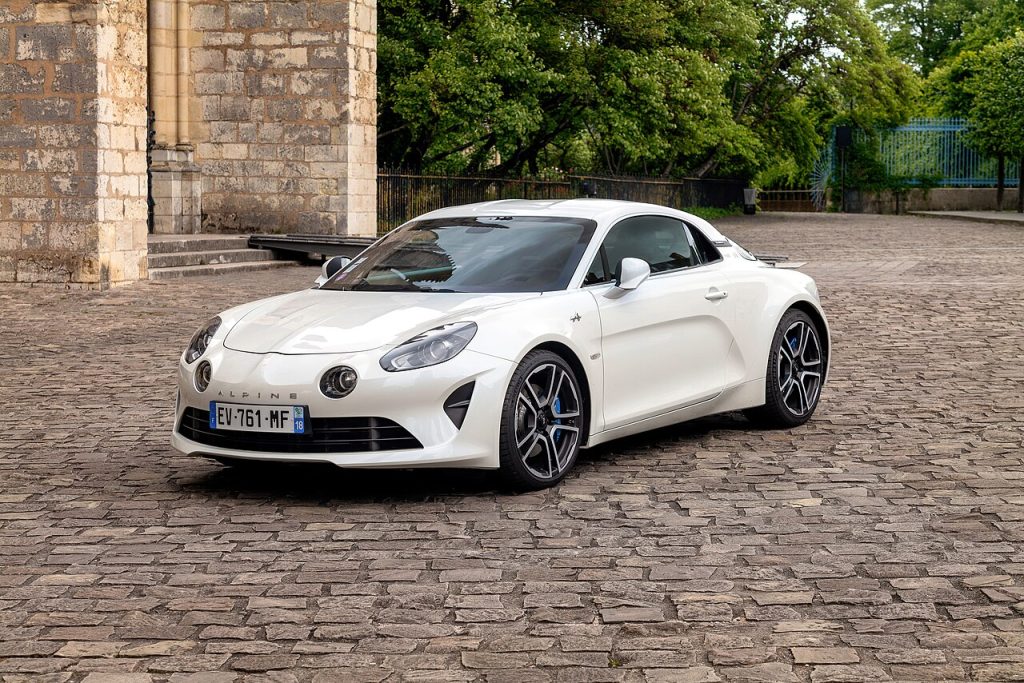
The bundled image is identified in its source as an A110 Première Edition. It illustrates the model without assigning an edition number, a build position or a particular owner to the pictured car. Its visible credit links the photographer and reuse licence. A chassis-specific feature should add photographs of identification, numbered plaque, original specification and any restoration or repair evidence. Those supporting views can authenticate an individual example, while the general model image remains a clear illustration of the launch series.
Frequently asked questions
Were all 1,955 Première Editions actually built?
Yes. Alpine’s 30 November 2018 release explicitly states that all 1,955 units had been produced, with final deliveries in progress.
Does 1,955 cover every modern A110?
No. It covers the Première Edition launch series. Later production versions and other limited editions have separate scopes.
Why was the edition limited to 1,955?
The number refers to Alpine’s founding year, according to the manufacturer’s launch account.
Can a plaque prove an individual car is genuine?
It should be checked against build identity and original documents. A plaque alone cannot establish the complete edition and ownership history.
Explore related Alpine profiles
Sources
- Alpine: Première Edition launch specification, December 2017
- Alpine: all 1,955 Première Editions produced, November 2018
- Alpine: A110 Première Edition design award, January 2018
- Alpine: Pure, Légende and GT4 reveal, March 2018
Historical statements follow the linked manufacturer and competition-programme records. Inspection and collecting guidance is editorial analysis. Individual catalogue claims remain attributed to the relevant car and source.
Photography and credit
Alpine A110 Première Edition, as identified in the photographer’s source record; no individual edition number or ownership history is inferred. Photo: Rolf Kranz / Wikimedia Commons · CC BY-SA 4.0. Wikimedia thumbnail resized from the original; no cropping or colour changes.
Why this machine matters
The Alpine A110 Première Edition is the numbered 1,955-car launch series that brought Alpine’s new road sports car to customers. Its rarity is supported by a manufacturer statement confirming that all 1,955 were produced, while its collector appeal combines relaunch history with lightweight aluminium engineering.
Built in limited numbers
Alpine’s release of 30 November 2018 explicitly states that all 1,955 Première Edition units had been produced, with final deliveries in progress. This supports the completed-production field used here. It is a worldwide edition total, not a count of all second-generation A110s, a local-market allocation or known survivors. A missing or damaged car does not alter the historical build count. Current surviving, roadworthy and unmodified examples would each require a separate census with its own date and definitions.
Gallery
Specifications
Factory specifications may vary by model year, market and configuration.
Identity & production
- Official model
- Alpine A110 Première Edition
- Base model
- A110 II
- Worldwide production
- 1955
- Country of manufacture
- France
Powertrain & performance
- Engine
- Rear-mid-mounted 1.8-litre turbocharged inline four-cylinder