Alpine A110 1973 WRC Works Cars
The 1973 Alpine A110 works-car programme earned Alpine-Renault the inaugural World Rally Championship manufacturers’ title. This profile follows that championship story while keeping team achievements separate from the provenance of any one surviving Berlinette.
The 1973 Alpine A110 works-car programme earned Alpine-Renault the inaugural World Rally Championship manufacturers’ title. This profile follows that championship story while keeping team achievements separate from the provenance of any one surviving Berlinette.
Alpine A110 1973 WRC Works Cars at a glance
| Manufacturer | Alpine |
|---|---|
| Model family | A110 |
| Profile scope | Competition archive |
| Inventory reference | ALP-030 |
A programme profile, not a numbered special edition
This entry covers the championship works-car story listed in the inventory. It is not a factory road edition called World Champion 73 and not a claim that every A110 built in 1973 belonged to the team. The useful distinction is between programme history and individual-car provenance. A car may be presented in championship livery without having taken part. A genuine works chassis needs its own documentary connection to the entrant, crew and events attributed to it.
The first manufacturers’ world title
Alpine’s heritage retrospective records six victories during the 1973 campaign: Monte Carlo, Portugal, Morocco, Acropolis, Sanremo and Tour de Corse. Its later San Remo 73 release identifies Sanremo as the round that secured the manufacturers’ title. Those achievements belong to Alpine-Renault’s programme. They should not be copied onto every car which carries an A110 badge or a related color scheme. The programme is significant precisely because several crews and individual vehicles contributed to it.
Sanremo and the distinction between team and chassis
The manufacturer’s anniversary account describes the historic first- and third-place Alpine finish at Sanremo and the significance of that event for the title. A collector studying a proposed Sanremo car must go further: identify the chassis, crew, entry number and evidence linking them together. A contemporary photograph, result and team document can support different parts of that connection. A later tribute livery alone cannot. Keep the championship narrative at programme level until the vehicle-specific chain is established.
What “works car” should mean in a description
A works-car claim should explain the nature of factory involvement and the dates concerned. Was the vehicle prepared and entered by the team? Was it supplied to a customer? Did it receive factory parts later? These are different relationships. Avoid letting the broad prestige of factory support replace a precise account. An authenticated customer car can have an excellent career without being a works car, and a former works chassis can have a later life that needs equal attention.
Specifications varied with purpose
A championship programme is not necessarily one fixed engine, suspension and wheel specification. The car should be described in relation to the event and date being represented. Record what evidence supports the installed equipment and which changes occurred later. This profile does not assign one universal output, weight or capacity to the entire 1973 works-car group. A collector database is more useful when it leaves those fields for individually documented configurations instead of filling them with a familiar headline number.
Production, conversions and overlap
There is no independently verified total for the complete set of 1973 championship works chassis in this batch. Race starts, team entries and surviving cars are different populations. One car can start several events; another can be repaired or converted; a later restoration can represent a championship appearance. The Group 4 and 1800 profiles may overlap with this programme. Their entries should never be added together as separate production allocations without a chassis census that explains the relationships.
Building the provenance chain
Start with the earliest record that positively identifies the chassis. Follow ownership, competition entries, major repairs and subsequent preparation in chronological order. For each important claim, note the source and whether it is contemporary or retrospective. Keep conflicting accounts visible. If a famous driver is associated with the car, ask whether the evidence concerns this chassis, another car from the same team or only the livery now displayed. A careful chain is more persuasive than a collection of unrelated images and recognizable names.
Livery and race numbers
The championship colors make a powerful display, but presentation is only part of the story. Establish whether the current scheme reproduces the car’s own documented appearance, another works car or a modern tribute. Compare details with several dated photographs. Sponsor markings and auxiliary equipment may change between events, so record the date represented. A restoration can be historically thoughtful without being unchanged from period. The description should allow a reader to see the distinction.
Inspecting a proposed works survivor
Commission both a documentary review and a physical inspection. Have the structure, identity markings, repair history and major assemblies assessed against the claimed career. Request photographs from dismantling and restoration, especially around areas now covered by the body or trim. Ask which parts survive from the relevant period and which were replaced. A major rebuild may be well documented, but its extent should be explained rather than hidden beneath the works-car label.
Competition history versus readiness
A proven historical identity does not establish present operational condition. Check the current engine, gearbox, fuel system, brakes, steering, tires and safety equipment with the maintainer. Discuss the intended activity and the documents required by its organizer. A demonstration car may be prepared differently from one intended for a competitive historic rally. Keep eligibility, maintenance and provenance in separate sections so that a favorable conclusion in one area is not mistaken for a complete assessment of the car.
Preserving records through restoration
Photograph the car before dismantling, retain important removed material where practical and record the reason for each replacement. Catalogues and display boards should identify the represented configuration and the source of the major historical claims. A digital archive can help, but preserve the original documents and their context. An image without a date or identification may become difficult to interpret later. Good recordkeeping is part of preserving a works car’s historical value.
The championship’s place in an Alpine collection
The 1973 programme can serve as a connecting narrative between the roadgoing Berlinettes and the individual competition specifications. It gives readers a reason to explore the 1600 Group 4, 1800 Group 4 and road-model profiles while understanding that these categories are not independent chassis counts. A collection may also include a later heritage tribute, but that modern edition should receive its own identity. The historical achievement and its later celebration are related stories, not the same vehicle.
Frequently asked questions
What title did Alpine-Renault win in 1973?
The inaugural World Rally Championship manufacturers’ title.
Does every 1973 A110 count as a works car?
No. Works identity requires evidence for the specific chassis and its factory relationship.
Can race entries be used as a production total?
No. Repeated starts, different cars and conversions make them a different counting population.
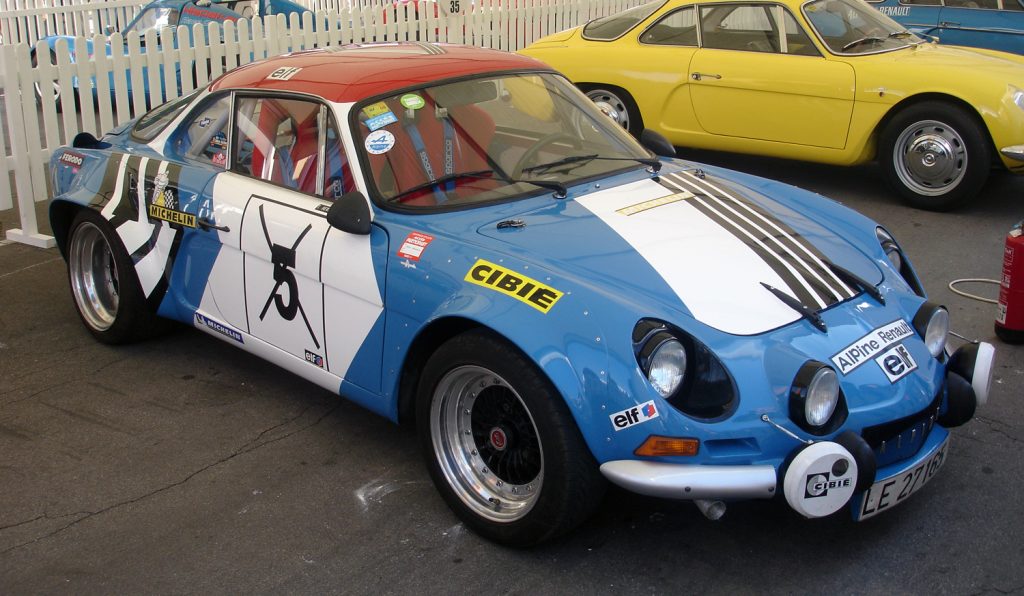
Is the photo a verified championship survivor?
No. The image is explicitly labelled as a representative A110 rally display, with no 1973 works-chassis claim.
Explore related Alpine profiles
Sources
- Alpine: San Remo 73 and the 1973 manufacturers’ title
- Alpine: 60th anniversary, competition history
- Alpine: International Automobile Festival heritage exhibition
Historical statements follow the linked manufacturer, club, homologation and vehicle records. Inspection and collecting guidance is editorial analysis. Individual catalogue claims remain attributed to the relevant car and source.
Photography and credit
A110 in rally presentation at Martini Legends, photographed in 2007. Representative illustration only: this car is not verified as a 1973 championship works chassis. Photo: Mutari / Wikimedia Commons · Public domain — photographer release. Original file supplied without content retouching. WordPress may resize display copies and website layouts may crop them.
Why this machine matters
The 1973 Alpine A110 works-car programme earned Alpine-Renault the inaugural World Rally Championship manufacturers’ title. This profile follows that championship story while keeping team achievements separate from the provenance of any one surviving Berlinette.
Built in limited numbers
There is no independently verified total for the complete set of 1973 championship works chassis in this batch. Race starts, team entries and surviving cars are different populations. One car can start several events; another can be repaired or converted; a later restoration can represent a championship appearance. The Group 4 and 1800 profiles may overlap with this programme. Their entries should never be added together as separate production allocations without a chassis census that explains the relationships.
Gallery
Specifications
Factory specifications may vary by model year, market and configuration.
Identity & production
- Official model
- Alpine A110 1973 WRC Works Cars
- Base model
- A110
- Country of manufacture
- France