Alpine A310 1600
The four-cylinder Alpine A310 introduced a different road-car chapter after the compact Berlinette. Its sharp body, distinctive six-light front and small production run make it a compelling collector subject, provided the VE, VF and VG versions remain clearly identified.
The four-cylinder Alpine A310 introduced a different road-car chapter after the compact Berlinette. Its sharp body, distinctive six-light front and small production run make it a compelling collector subject, provided the VE, VF and VG versions remain clearly identified.
Alpine A310 1600 at a glance
| Manufacturer | Alpine |
|---|---|
| Model family | A310 |
| Profile scope | Historic road-model family |
| Inventory reference | ALP-027 |
| Completed production | 2340 — VE/VF/VG four-cylinder family |
| Engine reference | Rear-mounted Renault-derived inline-four; VE/VF/VG specification varies |
A310 1600: which version are you looking at?
The A310 1600 heading is a useful family entry, but a particular car needs its subtype attached. VE, VF and VG do not describe identical mechanical packages. Begin with the chassis identification and the original build record, then inspect the installed engine and induction system. A later conversion can make a car look mechanically similar to another version without changing its original identity. A clear description should explain both what was built and what is fitted now.
The 1971 four-cylinder beginning
Club Alpine Dieppe places the early 1600 VE production in 1971 and identifies its 1605 cc Renault-derived four-cylinder engine. It then distinguishes the fuel-injected VF from the later VG, which uses a different engine specification. The four-cylinder A310 therefore needs to be understood as a sequence rather than one unchanging car. Keep the model’s introduction, each subtype’s dates and an individual vehicle’s registration separate. That approach helps explain a car which was registered after its construction or altered during ownership.
Production: a small family with defined scope
The Amicale A310 4 Cylindres records 2340 four-cylinder cars. The UK owners’ club scopes the same total to the VE/VF/VG group and Dieppe production. This profile uses 2340 for that defined four-cylinder family, excluding the later V6. It is not a count of only 1605 cc engines, a worldwide survivor census or the total for every A310. Club Alpine Dieppe’s subtype account also makes clear that the VG’s engine differs. The family meets the site’s numerical ceiling within this scope.
Design that deserves its own identity
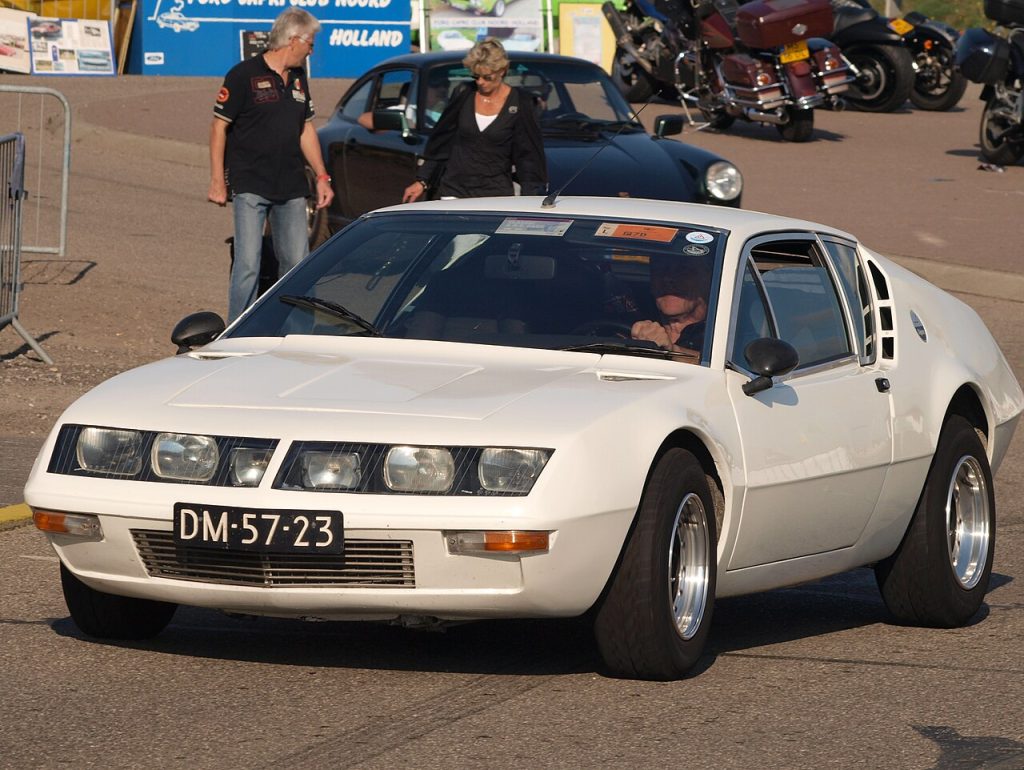
The A310 should be approached as its own road-car design rather than judged only against an A110. Its angular form and lighting arrangement give a collection a different visual language. For a buyer, the important question is whether the particular car preserves a coherent version of that design. Study period images for lights, body details, wheels and rear glazing. Record later changes openly. A car restored to its original presentation and a car carrying period owner modifications can both be interesting, but they tell different stories.
Carburetors, injection and the conversion question
A VF originally associated with injection may now have carburetors. Club Alpine Dieppe specifically notes such conversions in the history of these cars. Inspect the present installation and the documentary evidence before choosing a description. Ask whether removed equipment is retained, whether the wiring and fuel system have been altered and whether the conversion has a dated record. The task is not to assume that a converted car is poor; it is to assess its engineering and understand the cost and complexity of any intended reversal.
Four-cylinder versus V6
Keep the later V6 out of the four-cylinder production total and specification table. The two belong to related A310 chapters, but their engines and identities are different. A photograph of an A310 body alone should not be used to settle which version is represented. Check the identification and mechanical installation. This distinction also matters when comparing spare parts, restoration estimates and ownership expectations. A component advertised simply as A310 may require confirmation for the actual version and year.
Inspecting the structure beneath the body
Use an Alpine specialist to inspect the supporting structure, body mounts, suspension attachments and repair history. Request photographs from any major restoration, particularly where work would now be hidden. Examine panel fit and door operation without treating them as conclusive evidence of structural condition. Ask whether the body has been repaired around mounting areas and what the work involved. A thorough inspection should explain its findings in terms of this specific car, rather than rely on assumptions about every fiberglass-bodied vehicle.
Interior, glass and the parts inventory
Record the condition and identity of trim, seats, instruments, switches and glass. Ask which pieces were reproduced or sourced from another version. Small parts can change the scope of a restoration project because they may take time to identify and obtain. Before buying a partially dismantled car, compare the supplied inventory with the intended specification. Photograph and label loose pieces. A seemingly complete project is easier to assess when the seller can explain what each major part is and where it belongs.
Mechanical inspection and road use
Check the engine, gearbox, cooling and electrical systems around the current configuration. Request invoices for the last substantial work and ask how the car has been used since. Storage, short runs and regular use leave different maintenance questions. Have a qualified maintainer assess the fuel system, tires, brakes and steering before planning extended driving. A dated record of previous work is helpful, but it does not establish present condition by itself. Build the inspection brief around the buyer’s actual road-use plans.
Choosing a restoration approach
Decide whether the goal is preservation, return to factory specification or a documented period-style modification. For a car with later induction or trim, first establish what remains and what would need to be found. Avoid dismantling before the research and parts inventory are complete. Photograph each stage and retain a written reason for changes. This protects the evidence connecting the vehicle to its earlier life and makes future maintenance easier, especially where the car has acquired a mixture of subtype components.
Why it complements an A110 collection
A four-cylinder A310 can broaden an Alpine collection without duplicating the role of an A110. It invites a comparison between two different road-car presentations and between a compact Berlinette identity and the later A310 family. Compare actual versions rather than broad reputations. The A110 1600 SC also provides a useful technical relationship through the rear-suspension history recorded by the Dieppe club. That connection is a reason to study both models, not to merge their build totals.
Records to keep with the car
Preserve registrations, engine and chassis photographs, purchase documents, invoices and any original subtype references. Add a current specification sheet that identifies induction, gearbox, wheels and significant changes. If a car has been converted, keep the conversion evidence and a list of retained original components. This gives a future owner a reliable starting point and prevents a later sales description from erasing the distinction between original specification and present equipment.
Frequently asked questions
How many four-cylinder A310s were built?
The reviewed club sources give 2340 for the defined VE/VF/VG four-cylinder family.
Does that include the A310 V6?
No. The later V6 is excluded from this total.
Are all cars under the 1600 heading mechanically identical?
No. The umbrella entry includes subtypes with different induction and engine specifications.
Is the pictured car a VE?
The source identifies it as an A310 1600 VE; it illustrates that version of the four-cylinder family.
Explore related Alpine profiles
Sources
- Amicale A310 4 Cylindres: four-cylinder production and VF history
- Club Alpine Dieppe: A310 chronology
- Renault Alpine Owners Club: A310 production
Historical statements follow the linked manufacturer, club, homologation and vehicle records. Inspection and collecting guidance is editorial analysis. Individual catalogue claims remain attributed to the relevant car and source.
Photography and credit
Source-described A310 1600 VE at Zandvoort in September 2009. VE illustration of the four-cylinder A310 family. Photo: AlfvanBeem / Wikimedia Commons · CC0 1.0. Wikimedia display copy; no content retouching. WordPress may resize further and website layouts may crop the image.
Why this machine matters
The four-cylinder Alpine A310 introduced a different road-car chapter after the compact Berlinette. Its sharp body, distinctive six-light front and small production run make it a compelling collector subject, provided the VE, VF and VG versions remain clearly identified.
Built in limited numbers
The Amicale A310 4 Cylindres records 2340 four-cylinder cars. The UK owners’ club scopes the same total to the VE/VF/VG group and Dieppe production. This profile uses 2340 for that defined four-cylinder family, excluding the later V6. It is not a count of only 1605 cc engines, a worldwide survivor census or the total for every A310. Club Alpine Dieppe’s subtype account also makes clear that the VG’s engine differs. The family meets the site’s numerical ceiling within this scope.
Gallery
Specifications
Factory specifications may vary by model year, market and configuration.
Identity & production
- Official model
- Alpine A310 1600
- Base model
- A310
- Worldwide production
- 2340
- Country of manufacture
- France
Powertrain & performance
- Engine
- Rear-mounted Renault-derived inline-four; VE/VF/VG specification varies