Audi R8 V12 TDI Concept
The Audi R8 V12 TDI concept explored a diesel supercar direction in 2008. Audi documents the V12 diesel study separately from the customer R8 and says it never reached series production. Its 500 PS and 1,000 Nm manufacturer references belong to the concept. The supplied Detroit photograph is kept distinct from the later red Geneva presentation.
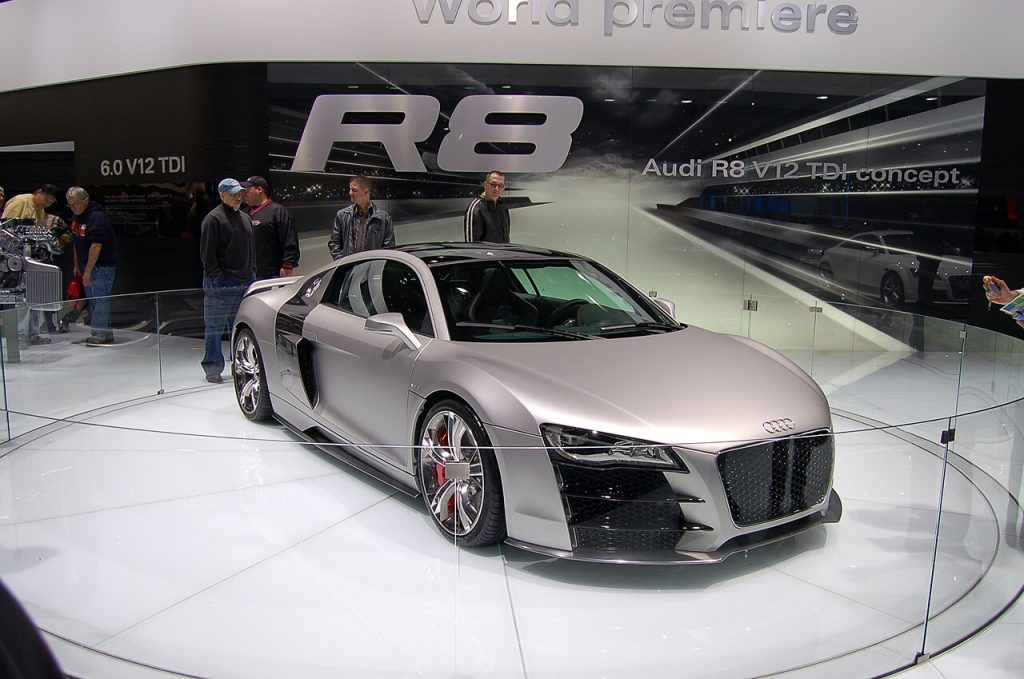
The Audi R8 V12 TDI concept explored a diesel supercar direction in 2008. Audi documents the V12 diesel study separately from the customer R8 and says it never reached series production. Its 500 PS and 1,000 Nm manufacturer references belong to the concept. The supplied Detroit photograph is kept distinct from the later red Geneva presentation.
Audi R8 V12 TDI Concept at a glance
| Manufacturer | Audi |
|---|---|
| Model / programme | R8 V12 TDI concept |
| Profile scope | Physical concept archive |
| Historical reference year | 2008 |
| Inventory reference | AUDI-032 |
| Engine reference | Manufacturer-described V12 turbo-diesel concept |
| Exact original object count | Unresolved; no numeric production badge populated |
| Manufacturer power reference | 500 PS; concept rating where applicable |
| Manufacturer torque reference | 1000 Nm; concept rating where applicable |
| Object scope | 2008 concept programme; no series production |
Correcting the inventory timeline
The workbook gives 2007, but Audi’s archive titles the original R8 V12 TDI concept with 2008. The bundled photograph is identified with the Detroit motor show in that year. Audi also retains a March 2008 R8 TDI Le Mans presentation record. This guide uses 2008 as its historical reference and preserves the inventory correction in the review notes. The dates identify presentations; they should not be converted into an invented multi-year customer production span. No retail series is claimed.
A diesel proposal within the R8 family
Audi’s retrospective describes a V12 turbo-diesel concept with 500 PS and 1,000 Nm, and states that it did not reach series production. That establishes its role as a powertrain experiment rather than a rare diesel edition sold alongside gasoline R8s. The guide keeps those manufacturer numbers as concept references. They do not authenticate the operating condition of a museum object or provide a current dynamometer result. A concept can document an engineering ambition even when it never becomes a customer product.
Why torque is not a complete performance story
The 1,000 Nm headline attracts attention, but a single torque figure does not establish lap time, handling or durability. A useful technical interpretation considers where the figure is quoted and what vehicle configuration it describes. Weight, gearing, cooling, tires and operating conditions would all be needed for a fuller comparison. This guide does not invent those missing relationships. It gives the factory reference and leaves the physical object’s current condition to its records. That keeps the concept’s ambitious specification visible without presenting a numerical slogan as a complete evaluation.
Detroit and Geneva are presentation records
The licensed picture shows the Detroit presentation, while Audi’s March archive identifies R8 TDI Le Mans. Differences in color or visible treatment between presentations do not, by themselves, prove a complete count of physical chassis. The workbook says two concepts are reported, but this review has not reconciled that into a primary object census. The exact production field remains blank. A future count should connect presentation records to object identifiers, clarifying whether a car was repainted, reconfigured or replaced.
The race-diesel connection needs careful wording
Audi places the concept in the context of its diesel motorsport ambitions. The study is nevertheless not the R10 TDI endurance race car. A road-oriented concept can use competition as inspiration without sharing an identical engine installation, chassis or race record. When comparing them, identify the actual subjects and the evidence for any technology connection. A Le Mans photograph of a racing prototype cannot illustrate the R8 V12 TDI concept without a reference caption, and a race result cannot be assigned to the concept because its name contains TDI.
Comparing it with Le Mans quattro
The 2003 Le Mans quattro and 2008 V12 TDI study represent different proposed engines within Audi’s sports-car story. The earlier concept has the documented production-R8 preview role; the diesel study explores an alternative that did not become a series product. Comparing them through their purpose and presentation is more useful than deciding that the larger torque number makes one superior. The relevant questions are what each proposal tested, how it was represented publicly and which parts of its story are supported by factory records.
Avoiding a false rare-road-car description
A vehicle advertised as a diesel-converted R8 is not this factory concept merely because it uses a diesel engine. Likewise, an R8 with a similar body kit does not acquire the study’s provenance. Identity requires an object-specific chain of evidence. The archive category is physical concept, not a limited customer edition. That distinction protects visitors from reading a proposed specification as a purchasing option. It also keeps the model out of numeric road-car rarity comparisons where ordinary production totals would answer the wrong question.
What the Detroit photo contributes
The original photographer identifies the picture with the 2008 North American International Auto Show. That provides a dated view of the correct presentation and a useful visual record independent of the workbook’s incorrect year. The caption preserves the event context. It does not certify a chassis number, a later location or present engine operation. When adding Geneva images, label them with their own dates and sources. A gallery should make the presentation sequence clearer, not encourage readers to infer an unverified chassis population from colors alone.
Researching the physical development history
Request factory object identifiers, technical sheets for each presentation and records of construction or reconfiguration. Ask whether published performance was a design target, manufacturer test reference or specification for a particular functioning vehicle. Preserve the answer and its source. These are proposed research questions rather than findings about a missing component. A concept’s mechanical history can be more complex than its public name suggests. A good archive file gives that complexity enough room without replacing gaps with a tidy but unsupported one-off narrative.
Why the V12 TDI study remains interesting
An abandoned direction can be as revealing as a successful production preview. The study shows what Audi was willing to propose for its supercar identity at that moment. Readers can compare it with Le Mans quattro and the earlier Avus to follow changing powertrain ideas without expecting a single uninterrupted development path. The strongest guide explains the confirmed dates and published specification, then makes clear what remains unresolved. That is a more durable archive entry than treating every impressive number as a proven property of the pictured object.
Frequently asked questions
When did the R8 V12 TDI concept appear?
Audi’s archive identifies it with 2008, correcting the inventory’s 2007 reference.
Was a production diesel R8 sold?
Audi’s retrospective says the V12 TDI concept did not enter series production.
What output did Audi describe?
Audi gives 500 PS and 1,000 Nm for the V12 diesel concept; these are manufacturer concept references.
Were exactly two concept chassis built?
The inventory reports two, but this review does not reconcile Detroit and Geneva presentations into a complete primary chassis census.
Explore related vehicle profiles
Sources
- Audi archive — R8 V12 TDI concept, 2008
- Audi archive — R8 TDI Le Mans, March 2008
- Audi — R8 retrospective, Le Mans quattro and RSQ histories
History and published specifications follow the linked manufacturer records. Visual comparisons, documentation questions and inspection priorities are editorial analysis. Photographs retain their original subject descriptions and separate rights records.
Photography and credit
Audi R8 V12 TDI concept at the 2008 Detroit motor show, as identified by the original photographer. Distinct from the later red Geneva presentation. Photo: Joe Ross from Lansing, Michigan / Wikimedia Commons · CC BY-SA 2.0. Wikimedia thumbnail resized from original; no cropping or color changes.
Why this machine matters
The Audi R8 V12 TDI concept explored a diesel supercar direction in 2008. Audi documents the V12 diesel study separately from the customer R8 and says it never reached series production. Its 500 PS and 1,000 Nm manufacturer references belong to the concept. The supplied Detroit photograph is kept distinct from the later red Geneva presentation.
Built in limited numbers
Corrected historical year 2008. Detroit photo and March Geneva record separated. Inventory two-car claim not reconciled; published concept ratings, no customer series.
Gallery
Specifications
Factory specifications may vary by model year, market and configuration.
Identity & production
- Official model
- Audi R8 V12 TDI Concept
- Base model
- R8 V12 TDI concept
Powertrain & performance
- Engine
- Manufacturer-described V12 turbo-diesel concept