Alpine A110 final production run
The Alpine A110 final production run is the industrial phase announced in October 2025 with 1,750 units planned before production ended in 2026. It spans different versions rather than one uniform numbered edition. This archive record does not reclassify the high-volume A110 family as a rare model.
The Alpine A110 final production run is the industrial phase announced in October 2025 with 1,750 units planned before production ended in 2026. It spans different versions rather than one uniform numbered edition. This archive record does not reclassify the high-volume A110 family as a rare model.
Alpine A110 final production run at a glance
| Manufacturer | Alpine |
|---|---|
| Model family | A110 II |
| Profile scope | Production phase archive |
| Inventory reference | ALP-112 |
| Announced final allocation | 1750 across versions; production phase, not a uniform edition |
An announcement about an industrial phase
Alpine’s October 2025 countdown release announced a final run of 1,750 second-generation A110s, with production expected to cease in mid-2026. It described several available versions rather than one common special specification. That makes the entry a production-phase archive, not an edition guide with a uniform equipment list. A useful account should identify the announcement date and explain what the allocation covered. It should not give every late-registered A110 a new factory-edition identity merely because it was delivered near the end of the model’s life.
The July 2026 completion milestone
The later manufacturer release dated 1 July 2026 records the final second-generation car leaving the line and a completed family total of 28,701. It identifies that final vehicle as an R 70. The completed family count is a different scope from the earlier final-run allocation. Do not subtract or combine them to invent a reconciled list of the last vehicles without factory evidence. The guide keeps the earlier production plan and later completion statement separately dated. This lets readers understand the industrial sequence without mistaking a forecast for an individually verified chassis register.
Rarity: a phase does not make a rare edition
A finite closing allocation is not automatically a distinct collectible model. The broader second-generation family exceeds the site’s 7,500-car ceiling, so this record remains an archive review entry rather than a way around that rule. A genuinely defined limited edition within the period can be assessed under its own scope. The closing phase itself needs an editorial eligibility decision and should not receive a production badge implying a numbered special series. A rare-vehicle archive is strongest when it can explain an important industrial event without treating every component of that event as independently rare.
Why registration date cannot prove membership
Production, delivery and registration dates answer different questions. A car first registered late may have been built earlier, while a final-phase build may reach its customer after the factory milestone. Establish timing through original build information and delivery records. Do not use a registration year alone to assign a vehicle to the announced allocation. A collecting catalogue should also avoid inventing a final-run plaque range absent factory evidence. If a particular chassis is known to belong, record the source and scope of that finding rather than allowing the model-year label to carry the claim.
Several specifications within one closing period
The announcement’s range context means different derivatives can share the final production phase while retaining their own equipment and identities. For an actual car, list the original factory specification and link to the relevant model or edition guide. The phase does not imply a common engine tune, cabin, colour or anniversary presentation. A comparison should therefore group vehicles by supported configuration before discussing their build timing. This is more useful than presenting a final-run label as if it described one consistently equipped factory series with one collecting definition.
Evidence needed for an individual late-build claim
Seek factory build date, order, invoice, delivery specification and any manufacturer confirmation relevant to the phase. Correlate them with the VIN and current vehicle. An archive should explain whether the claim concerns ordering, assembly, delivery or final position on the line. Those distinctions can matter greatly to a collecting description. If no physical sequence is documented, do not infer it from a serial pattern or a salesperson’s summary alone. The useful file establishes exactly what is known about that chassis and leaves unsupported production-order claims visible as questions.
The final chassis is a separate milestone
The documented last vehicle deserves its own record because its significance is attached to a specific factory event. That does not turn every car in the closing allocation into a similar milestone object. Link the phase guide to the final-car guide while keeping their scopes distinct. A reader should be able to understand the industrial plan, the completed family and the identified last car without seeing three overlapping production editions. This also helps a database avoid duplicate counting: a final chassis can belong to its actual model and carry a milestone status on one individual record.
Late manufacture is not a condition guarantee
A recent build or short registration history does not establish how a car was stored, maintained or used. Inspect the actual vehicle with service and repair records available. Review structure, drivetrain, cooling, suspension, tyres and brakes with a suitable specialist. If a car spent time in display or storage, document the preparation required for its intended use. The closing-phase story can be interesting, but should not replace a physical assessment. A useful ownership account connects verified manufacturing context to the particular machine’s present state, rather than suggest a factory chronology answers every practical question.
Collecting interest should follow the specification
An individual late car may be significant because of a defined edition, a special commission, a documented factory milestone or an unusually complete history. Establish that basis directly. A broad closing-period label should not be used to claim numerical rarity for a regular derivative whose scoped count is unresolved or too large. Keep the site’s eligibility rule visible in editorial review. This supports a useful archive without stretching definitions merely to create another publishable profile. The collecting story becomes stronger when its distinctive claim can be tied to the car and checked against original evidence.
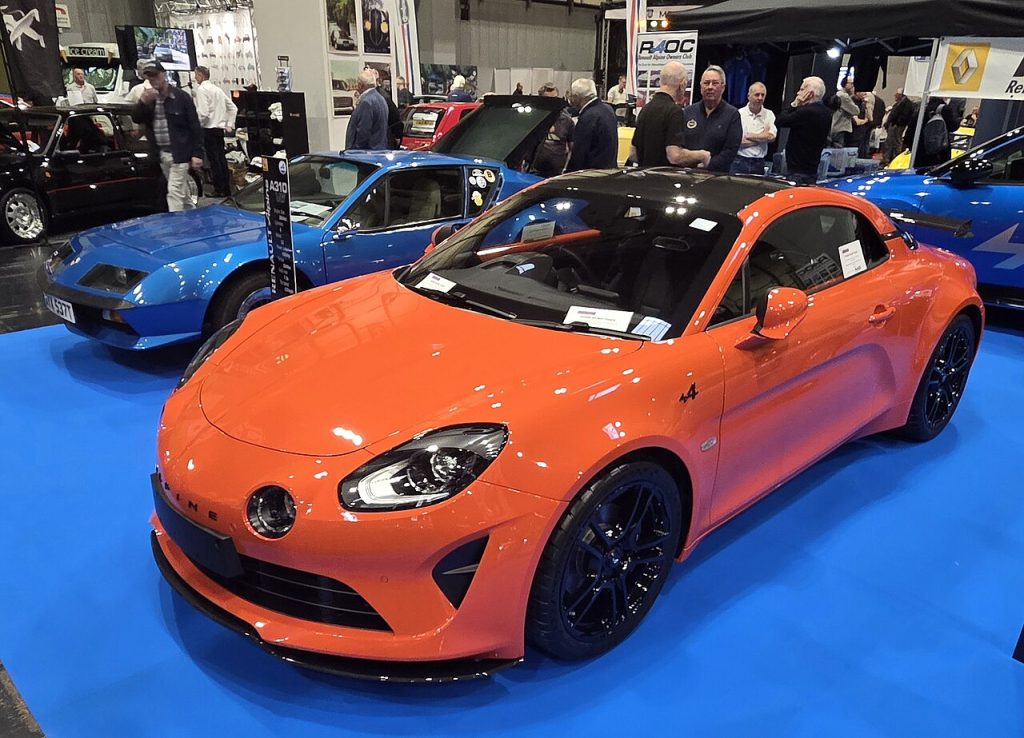
The family reference photograph
The supplied licensed photograph shows a modern A110 at the 2025 NEC show. It is not authenticated as a member of the final allocation, and its caption preserves that limitation. A photo cannot prove assembly timing merely through the event date or the car’s visible appearance. Keep author, source, licence and resizing information attached. An individual final-phase feature would need its own verified imagery and build documentation. The current reference provides general visual context while the archive remains held for eligibility review and a more specifically identified image.
A useful table needs separate count scopes
When preparing a comparison, use separate columns for announced final allocation, completed family total, edition cap and documented individual milestone. Do not combine their numbers as if they referred to comparable populations. A source date and short scope label make the difference easy to follow. Leave unsupported completion fields blank. This structure permits later evidence to refine the industrial account without changing an unrelated edition’s definition. It also prevents a visually tidy table from giving readers a false impression that the announced final run was a reconciled limited-edition production register.
Preserving the industrial story accurately
Keep the announcement, completion statement and individual build evidence as dated records. Explain corrections and differences in scope rather than overwrite the earlier plan with the later result. An archive can remain useful even where the exact closing-phase chassis list is not public. Its role is to describe what the factory announced and what it later confirmed, then identify the evidence needed for an individual claim. That is a meaningful piece of Alpine history while respecting the distinction between industrial importance and qualification as a rare numbered vehicle edition.
Frequently asked questions
Was the final run a 1,750-car numbered edition?
No. The release describes a closing production phase spanning different versions, not one uniform edition.
Does a late registration prove final-run membership?
No. Assembly timing requires build evidence; registration and delivery dates are separate.
Does this entry bypass the 7,500-car rule?
No. The broader family exceeds the ceiling; this remains an archive review record.
What does the reference image establish?
Only modern A110 family context. It does not prove that the pictured car belongs to the announced final allocation.
Explore related Alpine profiles
Sources
- Alpine: final 1,750 production allocation, October 2025
- Alpine: final second-generation chassis and completed family totals, July 2026
- Alpine: R 70 and its three tricolour subsets, February 2025
Historical statements follow the linked manufacturer and competition-programme records. Inspection and collecting guidance is editorial analysis. Individual catalogue claims remain attributed to the relevant car and source.
Photography and credit
Modern A110 family reference at the 2025 NEC show; this photographed car is not verified as part of the announced final 1,750 allocation. Photo: Andrea Boano / Wikimedia Commons · CC BY 4.0. Wikimedia thumbnail resized from the original; no cropping or colour changes.
Why this machine matters
The Alpine A110 final production run is the industrial phase announced in October 2025 with 1,750 units planned before production ended in 2026. It spans different versions rather than one uniform numbered edition. This archive record does not reclassify the high-volume A110 family as a rare model.
Built in limited numbers
A finite closing allocation is not automatically a distinct collectible model. The broader second-generation family exceeds the site’s 7,500-car ceiling, so this record remains an archive review entry rather than a way around that rule. A genuinely defined limited edition within the period can be assessed under its own scope. The closing phase itself needs an editorial eligibility decision and should not receive a production badge implying a numbered special series. A rare-vehicle archive is strongest when it can explain an important industrial event without treating every component of that event as independently rare.
Gallery
Specifications
Factory specifications may vary by model year, market and configuration.
Identity & production
- Official model
- Alpine A110 final production run
- Base model
- A110 II