BMW Z1 Art Car — A.R. Penck, 1991
Discover BMW Z1 Art Car A.R. Penck history, specifications and rarity, with sourced details, FAQs and authentic photographs with visible credits.
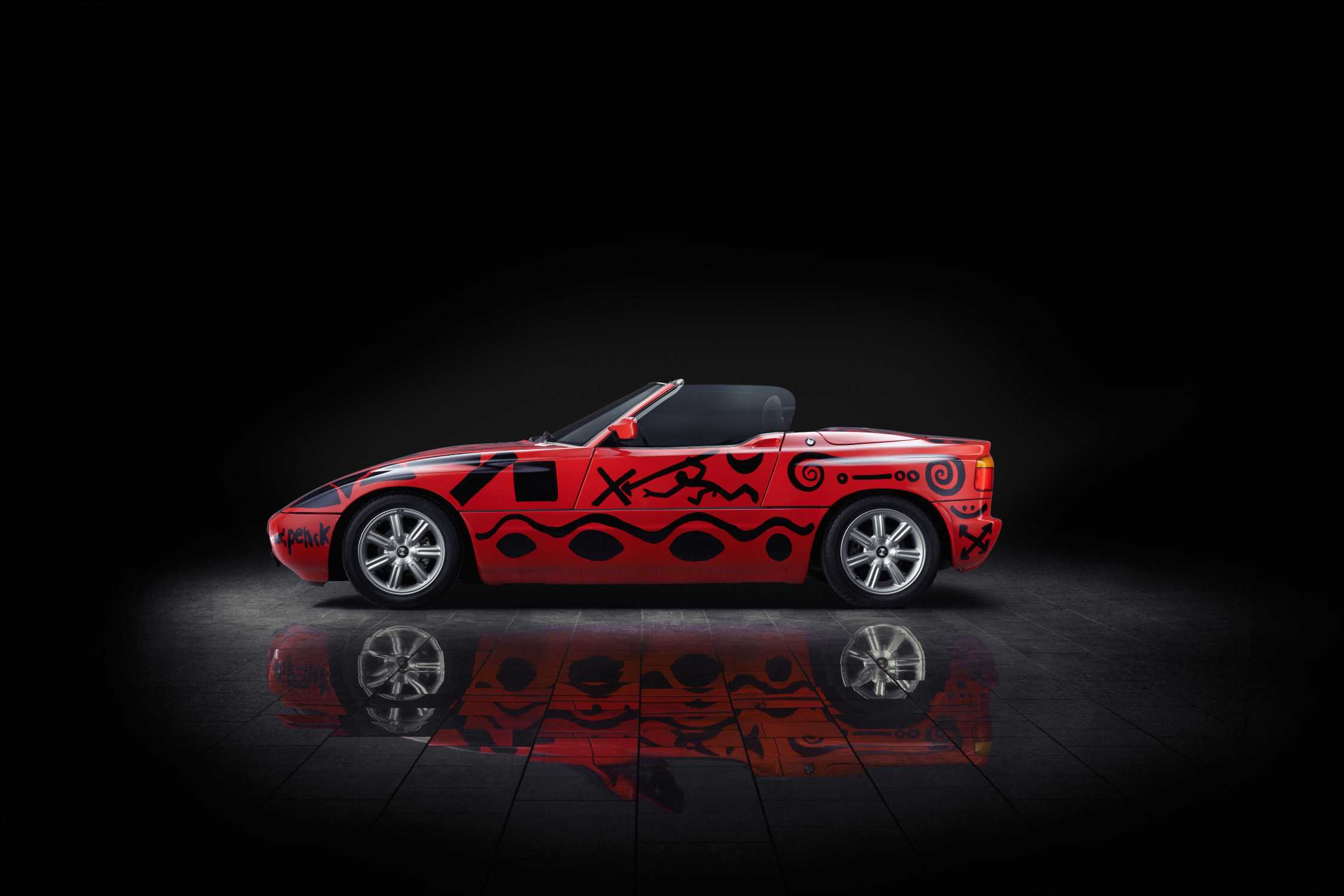
A.R. Penck’s 1991 BMW Z1 is Art Car number 11. Its red roadster body carries black signs and figures that transform the car into a three-dimensional composition. The work combines an unusually shaped BMW roadster with a visual language that rewards looking at the complete object and then at individual marks.
Record: BMW-030 · Individual BMW Art Car · Germany · 1991.
Specifications and rarity
| Item | Documented reference and scope |
|---|---|
| Art Car number | 11 |
| Artist / creation year | A.R. Penck, 1991 |
| Base vehicle | BMW Z1 roadster |
| Historical engine reference | 2,494 cc inline-six |
| Factory catalogue reference | 170 bhp; 225 km/h |
| Purpose | Exhibition artwork |
| Rarity scope | One original individual painted Z1; excludes ordinary Z1 production and reproductions |
A.R. Penck turned the BMW Z1 into a field of signs
The documented artwork year is 1991. This corrects the earlier year in the source inventory while preserving BMW-030 as the reference. The count is one original Art Car, rather than the wider Z1 production run or a series of customer roadsters with similar decoration.
The roadster changes the way the artwork is seen
Compared with the coupés and saloons elsewhere in the collection, the Z1 offers a low, open body with short surfaces and a clearly visible cabin. The red-and-black design reads immediately in a side view, but its relationship with the bonnet and rear body changes as the viewer moves around the car.
The black figures are especially legible because the background is strongly contrasting. They can be read as individual signs, yet they also form a rhythm across the body. A mark close to a wheel arch belongs both to the drawing and to the shape of the vehicle. That double relationship is visible in the supplied complete-car photograph.
This visual reading is an interpretation of the photographed work. It does not turn each symbol into a documented message with a fixed translation. The strongest way to describe the artwork is to distinguish what can be seen from what would require an explanation by the artist.
Penck’s visual language on a moving-shaped object
BMW’s collection account places the work in Penck’s distinctive sign-based language. The result is striking because it uses simple-looking forms on a technologically elaborate object. The figure and the roadster carry different kinds of information: one suggests a pictorial sign, while the other makes its mechanical function apparent.
The composition can be followed horizontally along the car. Then a different angle introduces the top surfaces and reveals that the work is more than a flat flank decoration. The roadster’s openings and panel edges interrupt the painting, creating relationships that would not occur in a picture on a rectangular canvas.
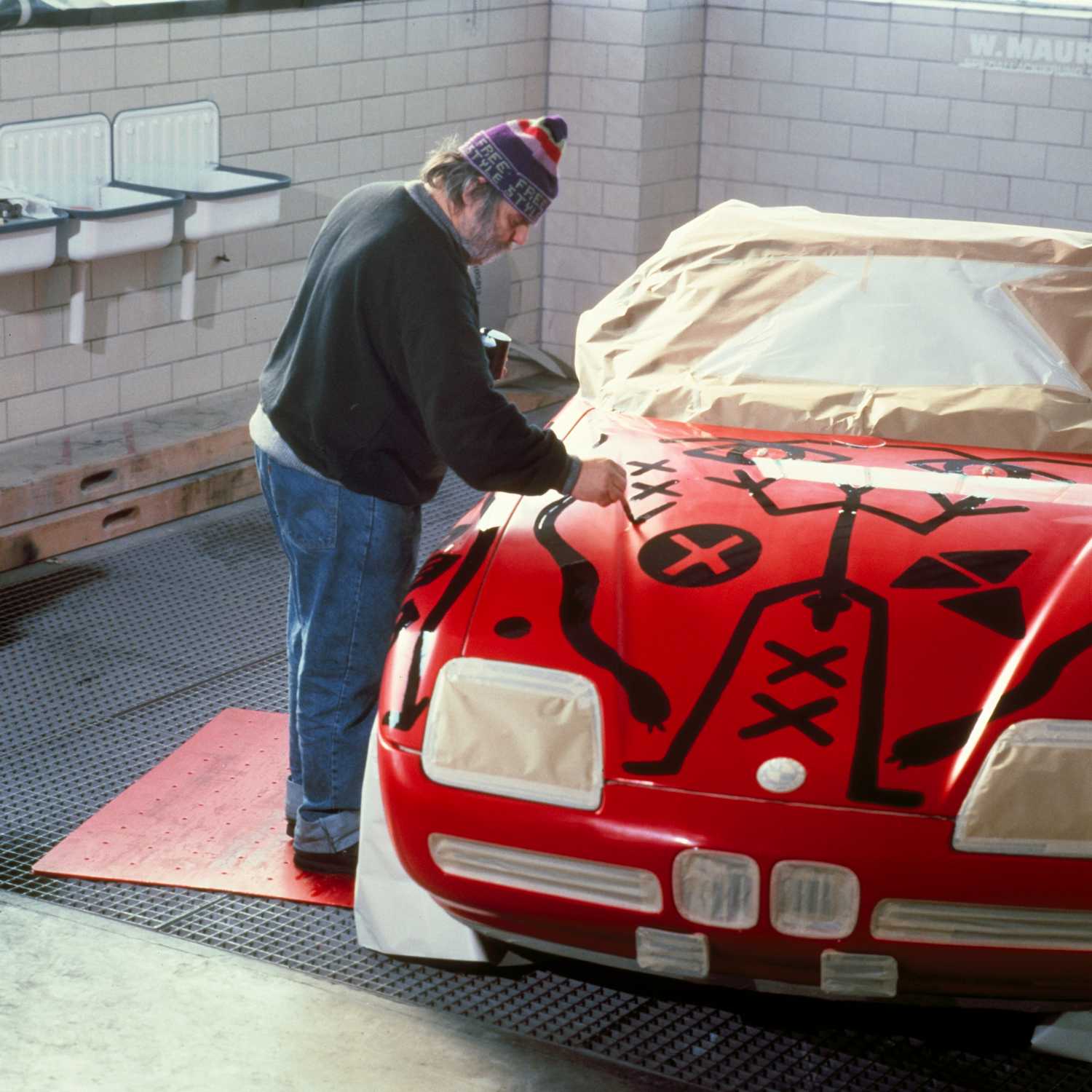
The archival photograph shows Penck working on the Z1. It is valuable evidence of the project’s physical setting and the artist’s engagement with the vehicle. The archive file’s modern publication date should not be confused with the 1991 creation date of the artwork. Artist, object and photograph each have their own chronology.
The mechanical reference belongs to a Z1
BMW’s historical Art Car catalogue associates the Penck Z1 with a 2,494 cc six-cylinder engine. Its published reference gives 170 bhp and 225 km/h. The table keeps those numbers within the catalogue’s historical base-vehicle context, instead of presenting them as a recent test of a museum object.
The Z1 identity also explains why this work looks different from the Art Cars built on the M3 or 5 Series. It is an open roadster rather than a touring-car silhouette or an executive saloon. That change of vehicle creates a different artistic support even before any paint is applied.
Mechanical description and artwork description therefore complement each other. The engine tells the reader what the base car is; the composition tells the reader why this particular example has its own collection identity. Neither requires borrowing a racing result from another Art Car.
Two photographs, two useful perspectives
The modern BMW photograph credited to Enes Kucevic shows the finished Z1 in a controlled setting. Its dark background helps isolate the red body and black marks. This is useful for reading the overall artwork without the visual competition of an exhibition hall.
The historical project image shows Penck beside the car while working on its surface. It gives context that the finished studio view cannot supply. A photograph of the process and a photograph of the completed object serve different purposes, even when they concern the same artwork.
The visible credits keep Penck’s authorship separate from the photographic roles. Enes Kucevic is credited for the modern view, and BMW AG supplies the historical image. No photographer name is invented where the archive does not identify one.
One original work in a collection of distinct cars
The Penck Z1 belongs beside the Mahlangu 525i and Hockney 850 CSi as another example of an artist using a production-based BMW as a unique work. Their differing bodies and graphic decisions make comparison useful. Shared membership of the Art Car collection does not make them interchangeable objects.
A reproduction, miniature or tribute-painted Z1 does not enlarge the original’s count. Its significance rests on the documented Penck project and the physical painted car. A collection record should preserve that connection instead of allowing a general model name to stand in for the specific artwork.
This profile consequently follows the correct artist, model, year and Art Car number together. Those four identifiers provide a reliable path through photographs, exhibition references and related collection entries.
Frequently asked questions
Which BMW did A.R. Penck paint?
The BMW Z1 roadster, identified as Art Car number 11.
What year is the Penck Art Car?
1991; the earlier inventory year is corrected.
How many Penck Z1 Art Cars are counted here?
One original individual artwork/car, excluding production Z1s, miniatures and tribute graphics.
What engine is listed in BMW’s catalogue?
A 2,494 cc inline-six, with historical references of 170 bhp and 225 km/h.
Was it created as a racing entry?
The factory collection catalogue describes an exhibition artwork.
Who receives the photo credits?
Enes Kucevic for the modern photograph and BMW AG for the supplied historical project image. A.R. Penck is credited separately as the artist.
Explore related verified BMW profiles
- BMW 525i Art Car — Esther Mahlangu, 1991
- BMW 850 CSi Art Car — David Hockney, 1995
- BMW 535i Art Car — Matazo Kayama, 1990
Sources and photo credits
Photo: Enes Kucevic / BMW Group PressClub · Press/editorial use only. BMW-supplied press photograph under BMW PressClub terms. Artwork: A.R. Penck, 1991. Original supplied photograph retained without local cropping or content alteration.
Photo: BMW AG / BMW Group PressClub · Press/editorial use only. BMW-supplied press photograph under BMW PressClub terms. Artwork: A.R. Penck, 1991. Original supplied photograph retained without local cropping or content alteration.
Why this machine matters
This profile consequently follows the correct artist, model, year and Art Car number together. Those four identifiers provide a reliable path through photographs, exhibition references and related collection entries.
Built in limited numbers
One original individual painted Z1; excludes ordinary Z1 production and reproductions
Gallery
Specifications
Factory specifications may vary by model year, market and configuration.
Identity & production
- Official model
- BMW Z1 Art Car — A.R. Penck, 1991
- Base model
- Z1
- Worldwide production
- 1
Powertrain & performance
- Engine
- 2,494 cc inline-six