BMW 525i Art Car — Esther Mahlangu, 1991
Discover BMW 525i Art Car Esther Mahlangu history, specifications and rarity, with sourced details, FAQs and authentic photographs with visible credits.
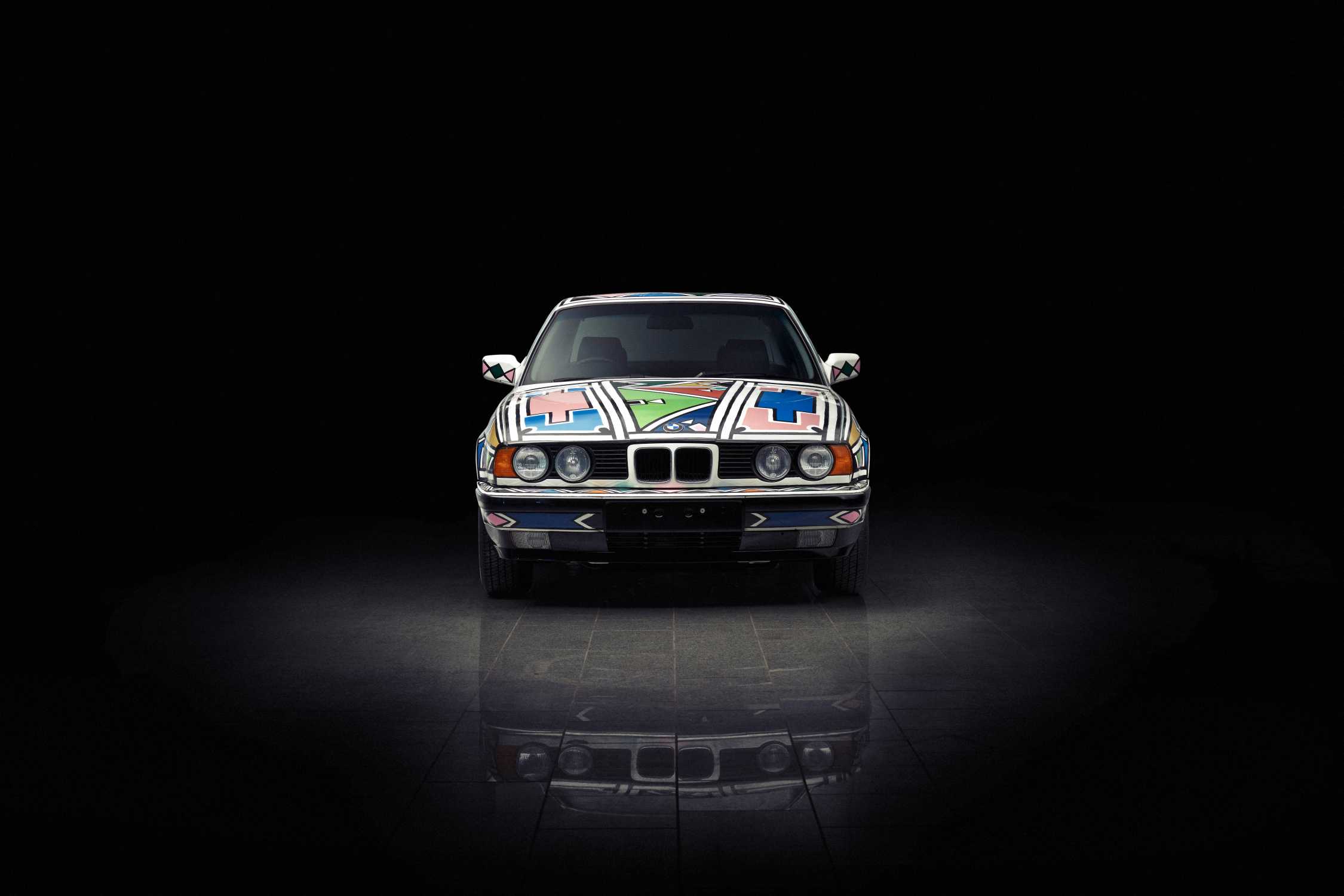
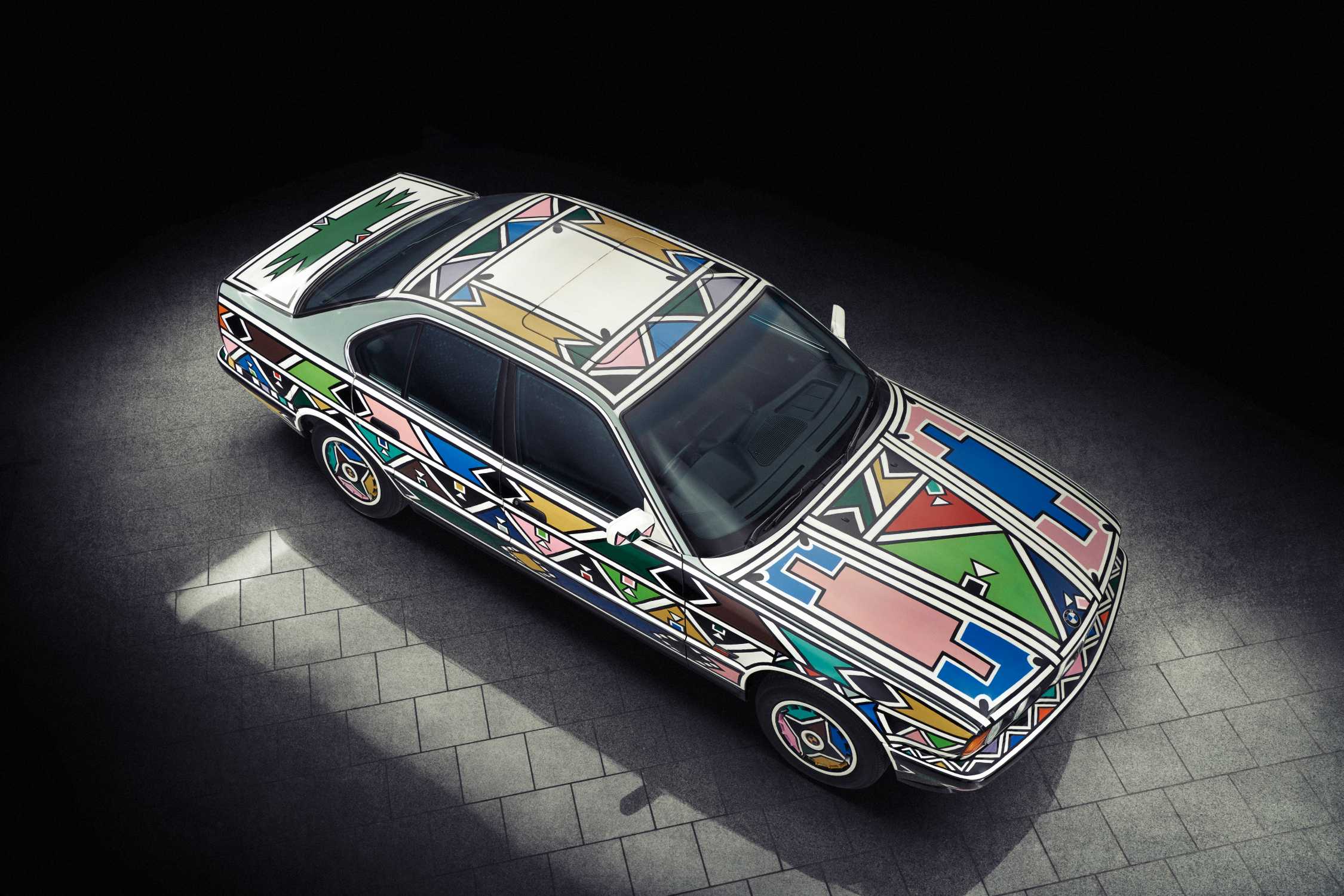
Esther Mahlangu created the twelfth BMW Art Car in 1991 on an E34 BMW 525i. Her bold geometric treatment brought a Ndebele mural-painting tradition onto the curved surfaces of an automobile. BMW identifies her as the first woman and first African artist to create a work for the collection.
Record: BMW-036 · Individual BMW Art Car · Germany · 1991.
Specifications and rarity
| Item | Documented reference and scope |
|---|---|
| Art Car number | 12 |
| Artist / creation year | Esther Mahlangu, 1991 |
| Base vehicle | BMW 525i, E34 |
| Engine family | 2.5-litre inline-six base vehicle |
| Visual tradition | Ndebele mural painting translated to a curved vehicle body |
| Purpose | Original exhibition artwork |
| Rarity scope | One original Mahlangu Art Car; excludes other commissions and ordinary 525i production |
Esther Mahlangu’s first BMW Art Car
The vehicle is a 1991 525i, not the 1992 E36 3 Series previously named in the workbook. BMW-036 remains the inventory reference, while the displayed identity follows both BMW’s account and the artist’s own project history. The count is one original Art Car.
From architectural surfaces to a car body
Mahlangu’s established practice gave the commission a visual language before the car entered the story. Translating that language onto a saloon required attention to curves, openings and changes of plane. A building surface and a vehicle body do not give an artist the same physical support.
The geometric forms are easy to recognize in the supplied photographs, but their relationship with the car is more complex than a flat pattern repeated mechanically. The bonnet, roof and flanks each change the way a form is seen. Bright colour and strong outlines help the composition remain readable across those changes.
The complete-car photograph provides the best starting point. It shows how the design occupies the vehicle as a whole. The elevated view then reveals the roof and bonnet more clearly, allowing the viewer to follow elements that a low side view would conceal.
The artist’s account of preparing the work
Mahlangu’s project history describes practicing on a spare door before painting the complete white car. It records that the full work took a little over a week. That preparation is a useful part of the story because it shows the commission as a physical painting process involving a new kind of surface.
The spare door offered a manageable way to explore the relationship between pattern and automotive form. It also connects the finished composition with an artist’s practical decisions. The work was not merely an image placed on a car after its design had been detached from the object.
Her own account traces the car’s early display through Johannesburg, Durban and Cape Town before it went to Germany and wider exhibitions. Those locations belong to the historical project narrative. They should not be presented as a current touring schedule without a dated contemporary source.
Why the E34 525i identity matters
The base car is an E34-generation 5 Series saloon. Its four-door body and broad top surfaces offer a different support from Penck’s open Z1 or Hockney’s long E31 coupé. Correct model identification therefore contributes directly to understanding the artwork, rather than serving only a specification table.
The 525i belongs to the 2.5-litre inline-six family. This profile keeps that general mechanical identity while holding a conflicting historical catalogue power figure instead of importing it as settled data. The artist, year and model are firmly established independently by the project histories.
An Art Car’s significance does not depend on maximizing its engine output. The vehicle is rare because it is the original Mahlangu work, not because an ordinary 525i production total is unusually small. Technical detail explains the support; authorship establishes the individual collection identity.
A return to South Africa with a dated exhibition context
BMW’s 2024 South African account places the original Art Car in the context of Mahlangu’s retrospective at Iziko in Cape Town. It describes the car returning to South Africa after more than thirty years and identifies Nontobeko Ntombela as curator of the retrospective.
That later appearance adds a meaningful chapter without changing the artwork’s 1991 creation date. A museum display, an archive photograph and the original painting are different events in the same object’s biography. Keeping their dates distinct makes the profile useful when readers encounter images from different exhibitions.
The event details are historical. The retrospective’s 2024 dates are not advertised here as an upcoming visit opportunity. The lasting point is the connection between the original commission and a later presentation of the artist’s broader career.
Photo credits and the scope of the original
The two supplied BMW photographs show the finished 1991 525i Art Car in the January 2024 archive context. One presents the front of the car; the other reveals more of the roof and overall surface treatment. They provide complementary views of the same documented work.
BMW AG is retained as the image credit where the selected archive page does not identify an individual photographer. Esther Mahlangu is credited separately as the artist. Naming her as the photographer would erase the difference between making the work and recording it.
Other BMW commissions involving Mahlangu belong to their own project histories. They do not increase the original Art Car’s count from one, and they should not be merged into this E34 entry. The profile therefore anchors each photograph and related link to the specific 1991 artwork.
Frequently asked questions
Was Mahlangu’s Art Car an E36 3 Series?
No. Both BMW and the artist identify a 1991 BMW 525i, E34.
Which Art Car number is it?
Number 12.
Why is the commission a milestone?
BMW identifies Mahlangu as the first woman and first African artist in the Art Car collection.
How did she prepare for painting the full car?
Her project account describes practicing on a spare door before completing the car in a little over a week.
What does the count of one include?
The original 1991 525i Art Car, excluding other commissions, replicas and ordinary production 525i cars.
Do the supplied image dates change the artwork year?
No. January 2024 is the selected archive photographic context; the artwork was created in 1991.
Explore related verified BMW profiles
- BMW Z1 Art Car — A.R. Penck, 1991
- BMW 850 CSi Art Car — David Hockney, 1995
- BMW M3 Art Car — Michael Jagamara Nelson, 1989
Sources and photo credits
- BMW South Africa: the original Art Car returns in 2024
- Esther Mahlangu: 1991 BMW Art Car project history
- BMW: the original Art Car collection
Photo: BMW AG / BMW Group PressClub · Press/editorial use only. BMW-supplied press photograph under BMW PressClub terms. Artwork: Esther Mahlangu, 1991. Original supplied photograph retained without local cropping or content alteration.
Photo: BMW AG / BMW Group PressClub · Press/editorial use only. BMW-supplied press photograph under BMW PressClub terms. Artwork: Esther Mahlangu, 1991. Original supplied photograph retained without local cropping or content alteration.
Why this machine matters
Other BMW commissions involving Mahlangu belong to their own project histories. They do not increase the original Art Car’s count from one, and they should not be merged into this E34 entry. The profile therefore anchors each photograph and related link to the specific 1991 artwork.
Built in limited numbers
One original Mahlangu Art Car; excludes other commissions and ordinary 525i production
Gallery
Specifications
Factory specifications may vary by model year, market and configuration.
Identity & production
- Official model
- BMW 525i Art Car — Esther Mahlangu, 1991
- Base model
- 5 Series E34
- Worldwide production
- 1
Powertrain & performance
- Engine
- 2.5-litre inline-six base vehicle