BMW 850 CSi Art Car — David Hockney, 1995
Discover BMW 850 CSi Art Car David Hockney history, specifications and rarity, with sourced details, FAQs and authentic photographs with visible credits.
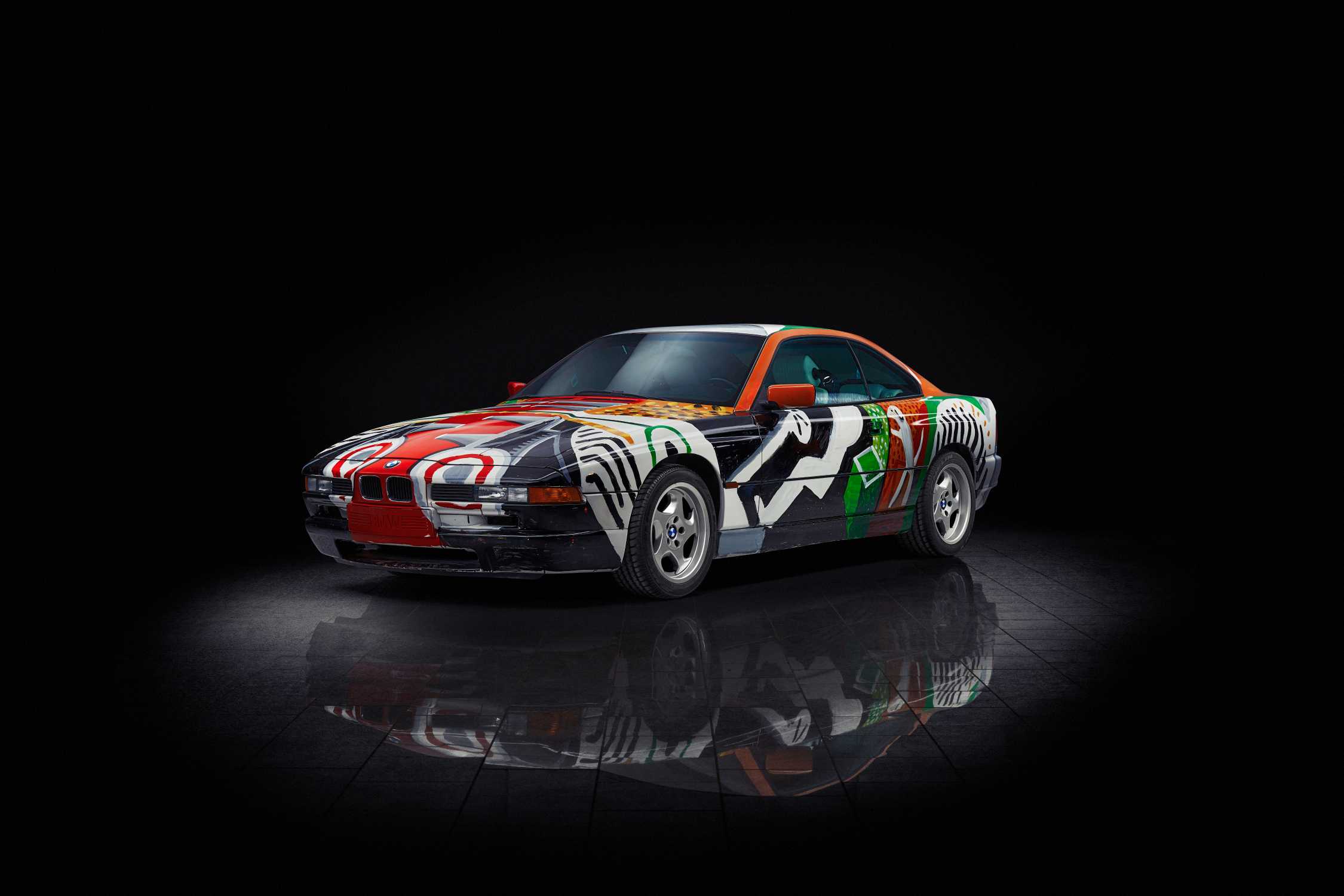
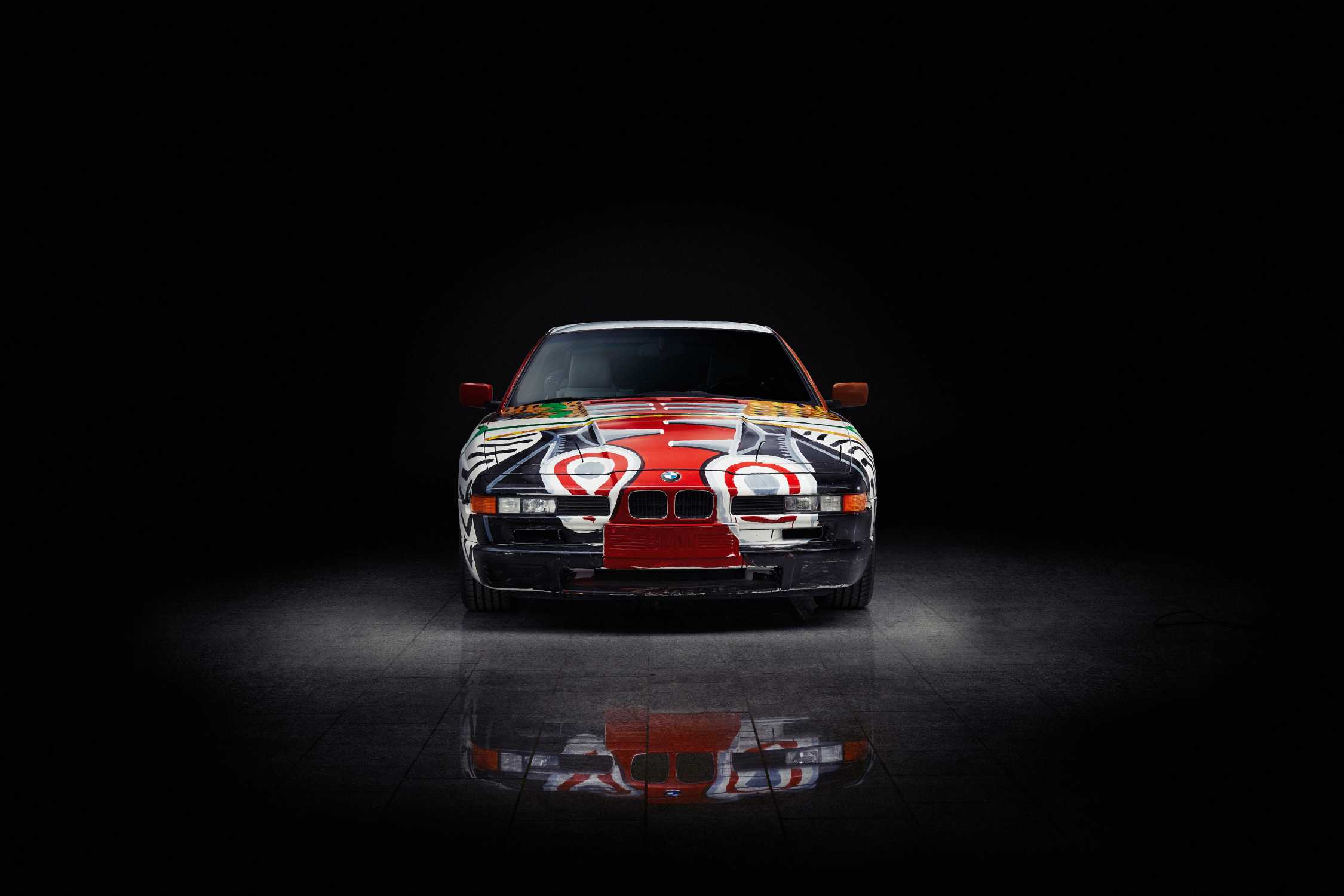
David Hockney created BMW Art Car number 14 in 1995 using an E31 BMW 850 CSi. His treatment makes the coupé appear to reveal what lies within: mechanical components, a seated figure and a dog become part of the painted outer surface. It is a distinctive response to the question of what an automobile’s exterior can communicate.
Record: BMW-031 · Individual BMW Art Car · Germany · 1995.
Specifications and rarity
| Item | Documented reference and scope |
|---|---|
| Art Car number | 14 |
| Artist / creation year | David Hockney, 1995 |
| Base vehicle | BMW 850 CSi, E31 |
| Historical engine reference | 5,576 cc V12 |
| Factory catalogue reference | 380 bhp; 250 km/h |
| Purpose | Exhibition artwork |
| Rarity scope | One original Hockney Art Car; BMW-045 is an inventory alias of this same object |
David Hockney’s 850 CSi reveals an imagined interior
The correct model and project year are 850 CSi and 1995. The earlier workbook identification is corrected here. A later workbook row, BMW-045, refers to the same original Hockney car, so it is retained as an inventory alias rather than imported as another vehicle. BMW-031 remains the single canonical profile.
An inside-out approach to painting a car
Instead of treating the E31’s body only as an attractive shell, the design introduces images associated with the spaces behind that shell. BMW’s account identifies the painted engine intake on the bonnet, a driver at the door and a dachshund in the rear-seat area. These give the surface a kind of imagined transparency.
The idea changes the task of viewing the car. A conventional colour finish emphasizes the continuous body. Hockney’s imagery invites the viewer to look through it conceptually, following painted forms that suggest the machinery and occupants. The real car remains solid, while the artwork offers a different way to understand its volume.
This reading is particularly clear in the supplied front-quarter photograph. The long bonnet and broad coupé body provide room for the imagery to develop. Seen from another angle, the design becomes a different sequence of marks and represented objects, which is why a single flat side image cannot exhaust the work.
A grand touring coupé as an artistic support
The E31 gives Hockney a much larger, more enclosed surface than Penck’s Z1. The roof, bonnet and flanks create a continuous coupé volume. That continuity makes the apparent revelation of internal spaces especially effective: the painting interrupts the viewer’s normal understanding of the outer skin.
The artwork also includes landscape-like forms. These sit alongside the more directly recognizable mechanical and occupant imagery. They make the work more than a literal diagram of a car’s contents. The viewer encounters a composition whose forms move between recognizable objects and abstract organization.
The difference matters when describing the photographs. This is not an engineering cutaway or an instructional diagram. Its meaning comes from an artist’s treatment of the body, not from a promise that every painted element corresponds precisely to a component’s physical position.
850 CSi specifications and the distinction from the M8 prototype
BMW’s historical catalogue identifies a 5,576 cc V12 and publishes 380 bhp and a 250 km/h reference for the 850 CSi. Those values belong to the base model associated with the Art Car. They should not be replaced with figures from the separate E31 M8 prototype.
The two cars share a broad generation and an interest in twelve-cylinder performance, but they represent different projects. The M8 prototype explored an extreme engineering configuration without entering series production. Hockney’s car uses the 850 CSi as the support for an original artwork. A common body family is not a reason to merge their profiles.
The exhibition purpose is equally distinct from the early racing Art Cars. There is no Le Mans result to attach to this Hockney work. Its place in the collection rests on artistic authorship and the documented 1995 project.
The supplied Enes Kucevic photographs
Both photographs in this profile are credited to Enes Kucevic and supplied through BMW’s archive. Their source captions explicitly identify the 1995 Hockney 850 CSi. The archive publication context is August 2025, much later than the creation of the painting.
The front-facing view makes the bonnet treatment easy to compare with the car’s headlights and wide nose. The front-quarter view reveals how the imagery continues across the body. These angles work together: one clarifies the composition around the front, while the other explains its three-dimensional relationship with the coupé.
The caption credits distinguish the artist from the photographer and image supplier. David Hockney authored the artwork; Enes Kucevic made these photographs; BMW AG supplies them under the stated press terms. Keeping those roles visible preserves the context that makes an Art Car image useful.
Why BMW-045 is not another Hockney vehicle
A second inventory reference does not establish a second physical car. Both workbook entries point to the original Hockney E31 Art Car, so importing two profiles would create a duplicate rather than expand the collection. The alias is recorded in the package’s verification material and duplicate checks.
That approach also makes future work easier. An existing Vehicle Profile bearing BMW-045 can be recognized when this canonical entry is imported. The importer should preserve the existing record rather than silently produce another draft of the same object. No merging or deletion is performed by this package.
The collection count remains one original artwork/car. Scale models and reproductions may celebrate the design, but they do not change that scope. The profile can therefore sit alongside the M8 prototype, Mahlangu 525i and Penck Z1 with a clear, distinct identity.
Frequently asked questions
Was Hockney’s Art Car a 1990 BMW 850i?
BMW identifies the work as a 1995 BMW 850 CSi, E31, correcting the earlier inventory label.
Which Art Car number is it?
Number 14.
What does the painted surface represent?
BMW describes an inside-out idea, including an engine intake, a driver, a rear-seat dachshund and landscape-related forms.
What engine reference belongs to the 850 CSi?
BMW’s historical catalogue lists a 5,576 cc V12 and 380 bhp.
Is BMW-045 a second Hockney Art Car?
No. It is an inventory alias of the same original object represented by BMW-031.
Are these photographs from 1995?
They are modern Enes Kucevic photographs supplied in BMW’s August 2025 archive context; 1995 is the artwork’s creation year.
Explore related verified BMW profiles
- BMW M8 E31 Prototype (1992)
- BMW 525i Art Car — Esther Mahlangu, 1991
- BMW Z1 Art Car — A.R. Penck, 1991
Sources and photo credits
Photo: Enes Kucevic / BMW Group PressClub · Press/editorial use only. BMW-supplied press photograph under BMW PressClub terms. Artwork: David Hockney, 1995. Original supplied photograph retained without local cropping or content alteration.
Photo: Enes Kucevic / BMW Group PressClub · Press/editorial use only. BMW-supplied press photograph under BMW PressClub terms. Artwork: David Hockney, 1995. Original supplied photograph retained without local cropping or content alteration.
Why this machine matters
The collection count remains one original artwork/car. Scale models and reproductions may celebrate the design, but they do not change that scope. The profile can therefore sit alongside the M8 prototype, Mahlangu 525i and Penck Z1 with a clear, distinct identity.
Built in limited numbers
One original Hockney Art Car; BMW-045 is an inventory alias of this same object
Gallery
Specifications
Factory specifications may vary by model year, market and configuration.
Identity & production
- Official model
- BMW 850 CSi Art Car — David Hockney, 1995
- Base model
- 8 Series E31
- Worldwide production
- 1
Powertrain & performance
- Engine
- 5,576 cc V12