BMW 535i Art Car — Matazo Kayama, 1990
Discover BMW 535i Art Car Matazo Kayama history, specifications and rarity, with sourced details, FAQs and authentic photographs with visible credits.
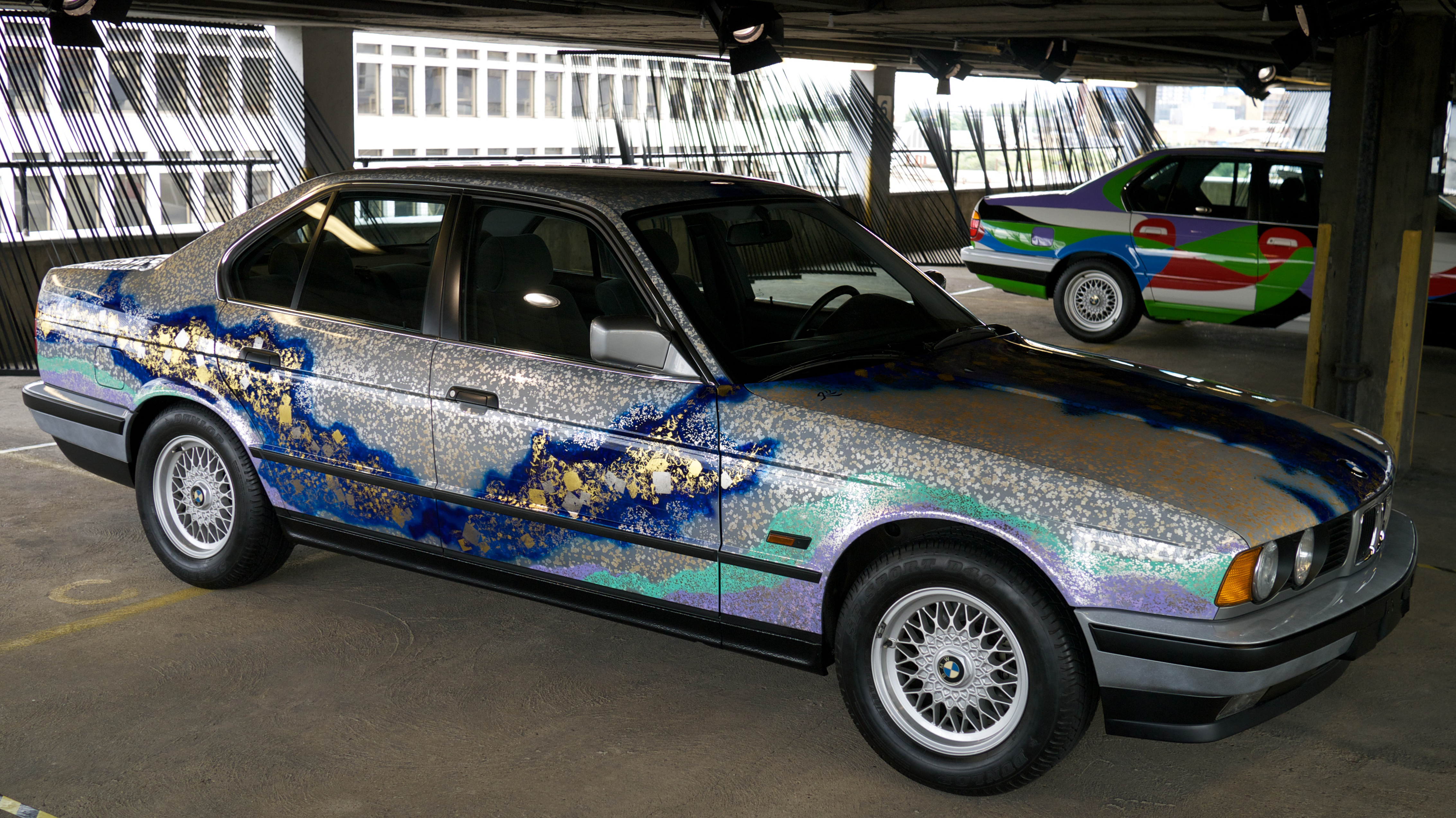
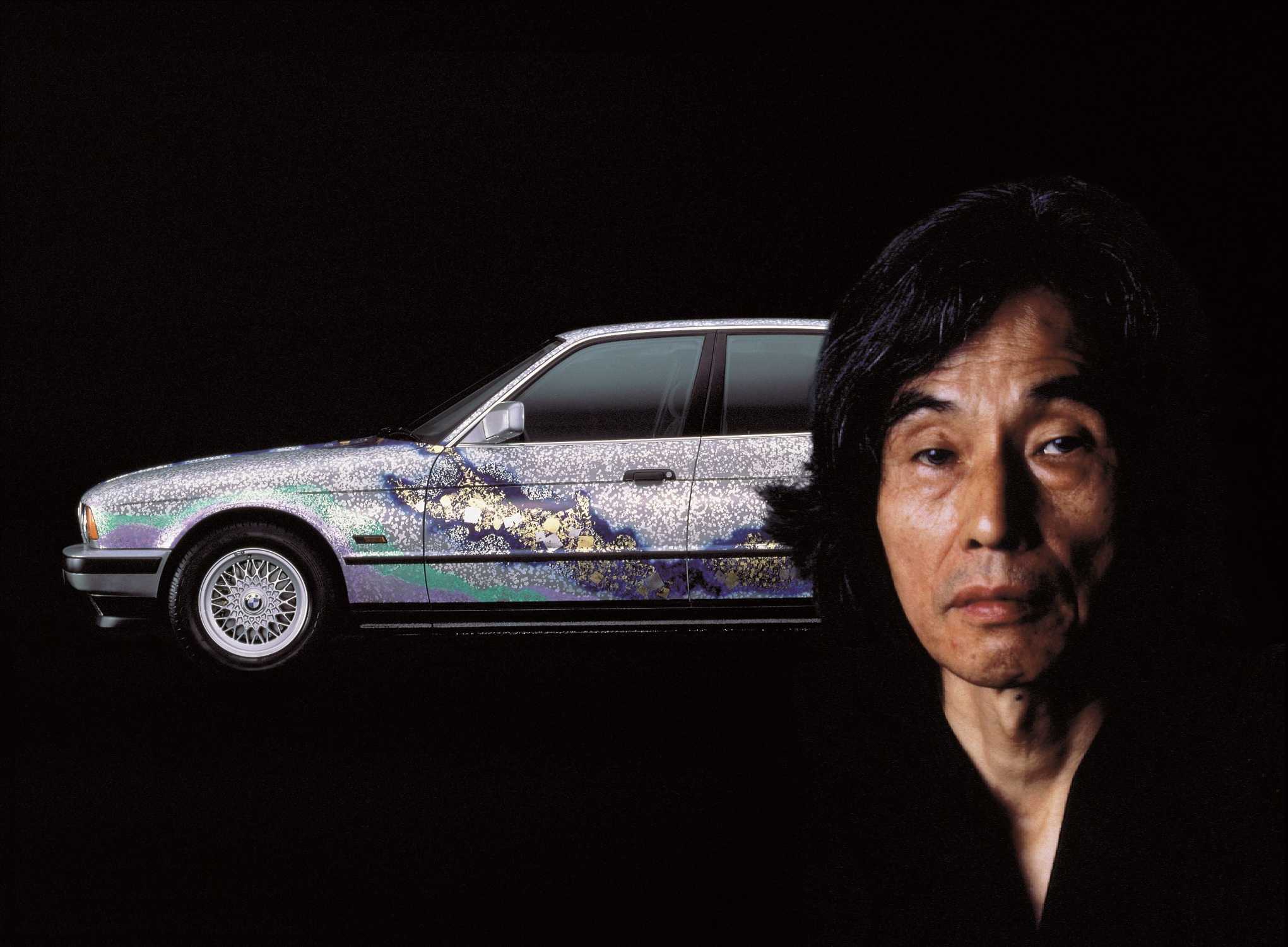
Matazo Kayama created the ninth BMW Art Car in 1990 using a BMW 535i. The work brings together a silver saloon body, fine tonal changes and delicate foil-based techniques. Its visual character differs from the brightly painted racing M3s that immediately preceded it.
Record: BMW-019 · Individual BMW Art Car · Germany · 1990.
Specifications and rarity
| Item | Documented reference and scope |
|---|---|
| Art Car number | 9 |
| Artist / creation year | Matazo Kayama, 1990 |
| Base vehicle | BMW 535i, E34 |
| Artwork theme | Snow, Moon and Flowers |
| Techniques | Airbrush; kirigane metal cutting and arare foil work in BMW’s account |
| Historical engine reference | 3,430 cc inline-six |
| Factory catalogue reference | 211 bhp; 227 km/h |
| Purpose / count | One individual exhibition Art Car |
Matazo Kayama’s BMW 535i brings another material vocabulary to the collection
The workbook names a 635 CSi and dates the work to 1985. The factory catalogue and BMW’s photo archive identify a 535i and 1990. This record retains BMW-019 while correcting the model family to the E34 5 Series and the creation year to the documented date.
Snow, Moon and Flowers on a four-door body
BMW relates the work to Kayama’s Snow, Moon and Flowers theme. The catalogue describes airbrushing and the use of small pieces of silver, gold and aluminum foil through intricate techniques. Those details matter because the surface cannot be explained fully by a list of paint colors.
In the photographs, the car’s broad bonnet and flanks provide room for tonal contrasts and sweeping forms. The metallic body is part of the visual experience, rather than simply a neutral background behind a bold race graphic. The artwork rewards close viewing because small surface elements contribute to the overall effect.
A screen image can show the arrangement, but it cannot reproduce every change in reflection as a viewer moves around the actual car. That limitation is useful to remember when looking at a foil-based work: the photograph documents one view under one lighting arrangement, not every possible appearance of the material.
Why the exhibition purpose matters to the technique
BMW describes the vehicle as chiefly intended for exhibition, connecting that purpose with the delicate foil work. This is a different set of priorities from preparing a car for sustained competition. Surface preservation and visual presentation become central parts of the object’s life.
The profile therefore does not assign a racing result or imply that the decorated car competed in a championship. Its significance comes from the artistic project and the way a familiar saloon form becomes a new kind of display surface.
That shift also helps readers understand the diversity of the Art Car collection. A four-door 5 Series can participate in the same collection as a Group A M3 without sharing its mechanical preparation, use or competition biography.
BMW 535i technical references
The historical catalogue lists a 3,430 cc six-cylinder and publishes 211 bhp and a 227 km/h speed reference. These values describe the base-model technical reference associated with the Art Car. They are not evidence of a performance change caused by the artwork.
The E34 saloon architecture is important to the corrected identity. It has a different body form from the E24 coupé mistakenly named in the workbook, so the correction changes both the engineering context and the way the artwork can be discussed.
The specification table avoids an invented present-day mechanical assessment. A historical model reference and an exhibition object’s current condition are separate questions, particularly where the surface itself is a major part of what must be preserved.
Reading the gallery and the rarity claim
The supplied factory images identify Kayama’s 1990 BMW 535i and preserve the original archive presentation. Their captions distinguish the artwork’s creation year from the later image-publication context. The image supply is credited to BMW, with Kayama named separately for the artwork.
One original individual Art Car is the count scope. The number does not refer to a limited-production 535i model, to foil-decorated customer cars or to reproductions of the artwork. The vehicle’s rarity arises from the particular artistic object rather than the ordinary model family alone.
Useful comparisons include Rauschenberg’s photographic 635 CSi and Manrique’s painted 730i. Each turns a production-based vehicle into an exhibition work, but the material and visual method differs. Those distinctions make the related links informative rather than merely grouping every Art Car under one label.
Frequently asked questions
Did Matazo Kayama paint a 635 CSi?
BMW’s documented Art Car is a 535i based on the E34 5 Series.
What year was it created?
1990, correcting the workbook’s 1985 date.
Which Art Car number is it?
Number 9.
What theme does BMW associate with it?
Snow, Moon and Flowers.
Why is foil work important?
The factory account describes delicate metal and foil techniques as part of the surface, alongside airbrushing.
Was it created for racing?
BMW describes an exhibition purpose, which supported the use of the delicate surface techniques.
Explore related verified BMW profiles
- BMW 635 CSi Art Car — Robert Rauschenberg, 1986
- BMW 730i Art Car — César Manrique, 1990
- BMW 530 MLE E12 — South African Homologation Pioneer
Sources and photo credits
Matazo Kayama’s 1990 BMW 535i Art Car on display in Hackney, London, photographed by Edvvc on 21 July 2012. Photo: Edvvc / Wikimedia Commons · CC BY 2.0. Clean source photograph supplied without local alterations. Photograph licensed CC BY 2.0 by Edvvc; underlying artwork rights are separate. Artwork: Matazo Kayama, 1990.
Matazo Kayama with his BMW 535i Art Car, photographed by Werner Deisenroth; supplied by BMW in March 2025. Photo: Werner Deisenroth / BMW Group PressClub · Press/editorial use only. Clean source photograph supplied without local alterations. © BMW AG. BMW PressClub press/editorial-use terms apply. Artwork: Matazo Kayama, 1990.
Why this machine matters
Useful comparisons include Rauschenberg’s photographic 635 CSi and Manrique’s painted 730i. Each turns a production-based vehicle into an exhibition work, but the material and visual method differs. Those distinctions make the related links informative rather than merely grouping every Art Car under one label.
Built in limited numbers
One individual exhibition Art Car
Gallery
Specifications
Factory specifications may vary by model year, market and configuration.
Identity & production
- Official model
- BMW 535i Art Car — Matazo Kayama, 1990
- Base model
- 5 Series E34
- Worldwide production
- 1
Powertrain & performance
- Engine
- 3,430 cc inline-six