BMW 730i Art Car — César Manrique, 1990
Discover BMW 730i Art Car César Manrique history, specifications and rarity, with sourced details, FAQs and authentic photographs with visible credits.
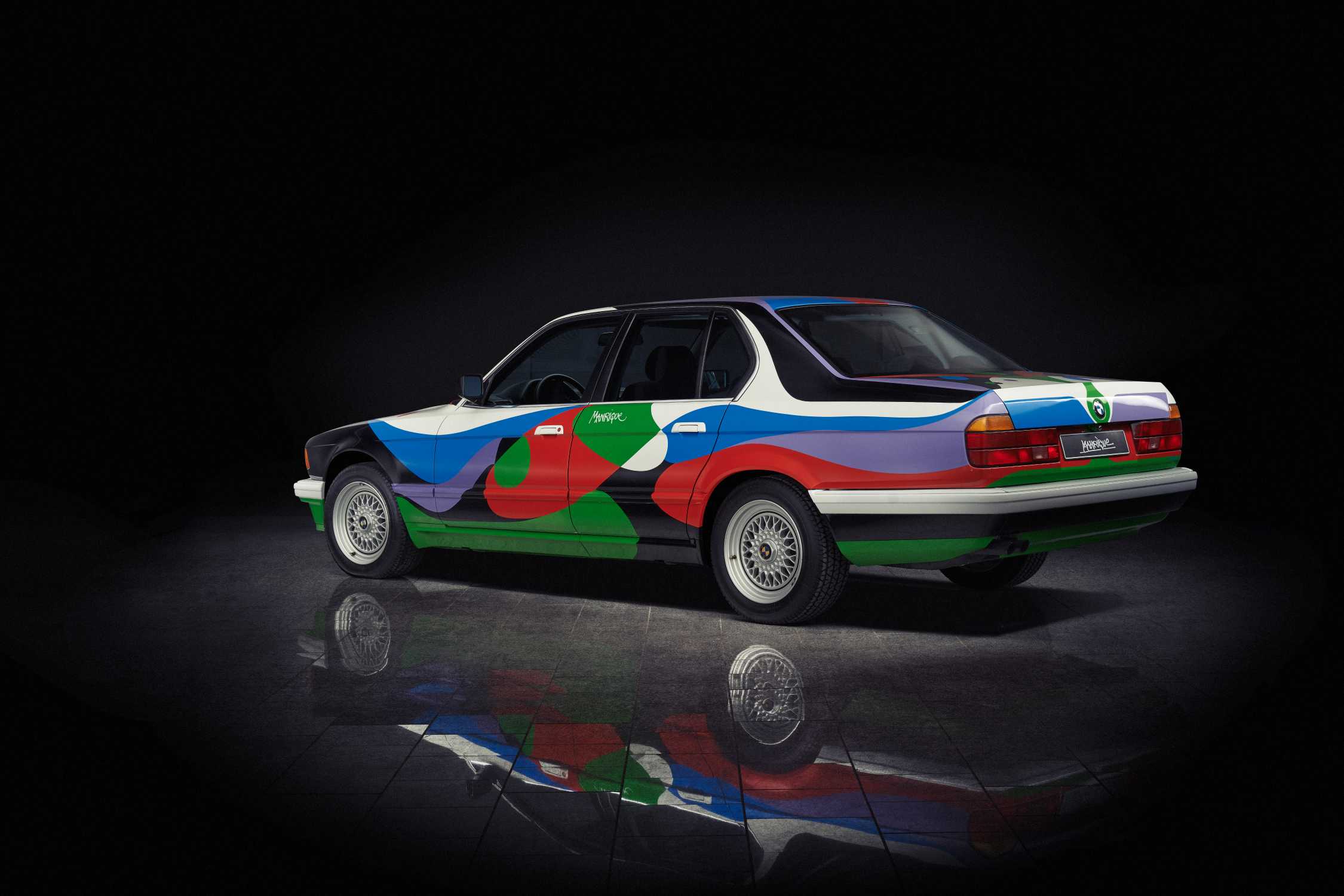
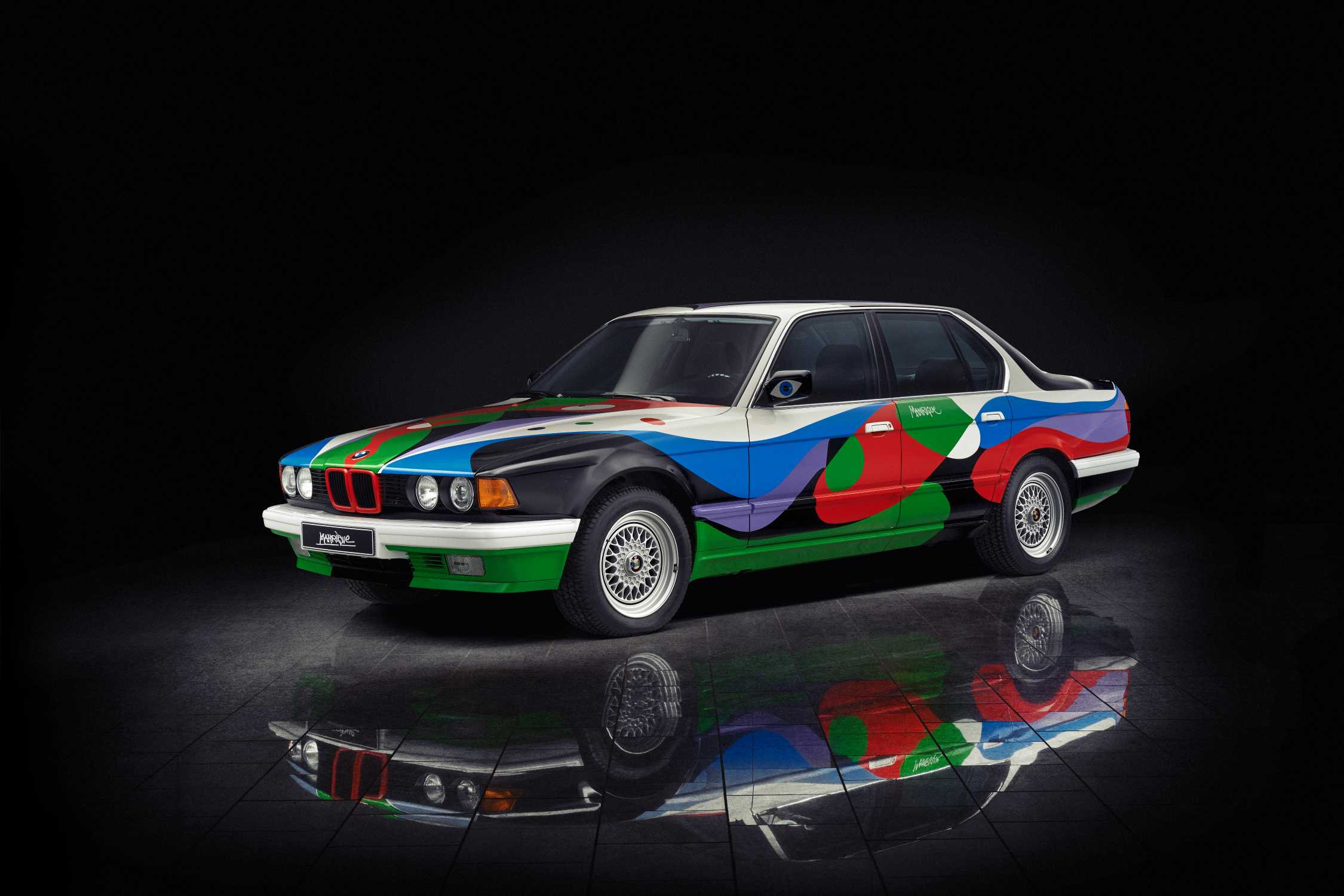
César Manrique’s BMW 730i is the tenth BMW Art Car, created in 1990. Bright colors and sweeping forms work across the E32 saloon’s surfaces to suggest effortless movement. The artwork is associated with a production-based exhibition vehicle, not a competition 635 CSi.
Record: BMW-020 · Individual BMW Art Car · Germany · 1990.
Specifications and rarity
| Item | Documented reference and scope |
|---|---|
| Art Car number | 10 |
| Artist / creation year | César Manrique, 1990 |
| Base vehicle | BMW 730i, E32 |
| Visual approach | Bright color and sweeping forms following the saloon body |
| Historical engine reference | 2,986 cc inline-six |
| Factory catalogue reference | 188 bhp; 222 km/h |
| Purpose | Exhibition artwork |
| Count scope | One original individual Art Car |
César Manrique’s BMW 730i treats a large saloon as a flowing object
The distinction corrects the workbook’s 635 CSi and 1986 entry. BMW’s catalogue and its identified image archive establish the 730i and 1990. Keeping the inventory reference BMW-020 while correcting the displayed identity avoids creating an additional record for what is actually a data-entry error.
Color, contour and the impression of aerodynamic movement
The factory account connects Manrique’s design with speed, aerodynamics and the automobile’s effect on the surrounding visual environment. In the photographs, the painted forms extend along a broad four-door body. The long surfaces let the eye move between areas of color without treating each door as an isolated panel.
This is an artistic impression of flow, not a wind-tunnel claim. The painting may change how the viewer perceives the car’s shape without changing the shape itself. That separation is useful because the vocabulary of movement can otherwise be mistaken for a technical assertion.
For a close visual reading, begin with the side profile and then inspect the nose and rear. Look at how the painted boundaries meet body edges and wheel openings. The interaction between a controlled industrial form and the artist’s sweeping forms is the main feature a complete-car photograph can explain.
The 730i platform changes the scale of the Art Car
A large saloon offers a different support from the compact M3 racers in this batch. The four-door arrangement, long roof and substantial side surfaces change both the scale and the sequence in which the artwork can be viewed. These differences are lost if the vehicle is incorrectly described as a 6 Series coupé.
The corrected E32 family therefore belongs in the technical fields as well as in the title. An Art Car profile should preserve the manufacturer’s vehicle architecture while explaining the artistic intervention. Neither layer needs to replace the other.
The exhibition purpose is also central. The factory catalogue does not give the Manrique car a Le Mans result or Australian championship biography. Those histories belong to other objects, and the profile keeps them out of this vehicle’s story.
Historical catalogue specification
BMW lists a 2,986 cc inline-six and publishes 188 bhp and a 222 km/h reference for the Manrique 730i entry. These are historical base-car figures supplied with the artwork’s catalogue record. They do not constitute a modern test of the exhibit.
The engine reference also guards against a later-model assumption. The 730i name has appeared in different generations and configurations; the badge alone should not lead a reader to assign a later powertrain to the 1990 E32-based object.
The table preserves the catalogue terminology and the vehicle’s exhibition scope. It avoids treating the artwork as a separate performance package or inventing a new specification simply because the car is visually unique.
Image credits, artwork authorship and one-object rarity
The gallery pairs a modern BMW photograph credited to Enes Kucevic with a factory archive view of the original Art Car. Their captions describe the subject and preserve the source, without claiming that the modern photograph was taken when the painting was created.
Manrique receives a separate artwork credit. The photograph records the object, while the painted surface is the artistic contribution that gives it an individual identity. Both roles belong beside the image so the reader can follow the source and authorship directly.
The one-car count applies to that original artwork. It is not a production total for the 730i model, and it does not count replicas, prints or digital representations. Comparisons with Kayama and Rauschenberg help readers explore other production-based Art Cars without confusing their different artists, dates and techniques.
Frequently asked questions
Which model did César Manrique use for his Art Car?
BMW identifies the E32-generation 730i.
When was it created?
1990, correcting the workbook’s 1986 entry.
Which Art Car number is it?
Number 10.
Was it a racing special?
No. BMW describes an exhibition artwork based on the 730i.
Does the artwork prove an aerodynamic improvement?
No. Its suggestion of movement is an artistic effect, not a measured drag reduction.
How many cars does this record cover?
One original individual Art Car, separate from ordinary 730i production.
Explore related verified BMW profiles
- BMW 535i Art Car — Matazo Kayama, 1990
- BMW 635 CSi Art Car — Robert Rauschenberg, 1986
- BMW M1 Art Car — Andy Warhol, 1979
Sources and photo credits
Photo: Enes Kucevic / BMW Group PressClub · Press/editorial use only. BMW-supplied press photograph under BMW PressClub terms. Artwork: César Manrique, 1990. Original supplied photograph retained without local cropping or content alteration.
César Manrique’s 1990 BMW 730i Art Car, photographed by Enes Kucevic for BMW; published in June 2025. Photo: Enes Kucevic / BMW Group PressClub · Press/editorial use only. Clean source photograph supplied without local alterations. © BMW AG. BMW PressClub press/editorial-use terms apply. Artwork: César Manrique, 1990.
Why this machine matters
The one-car count applies to that original artwork. It is not a production total for the 730i model, and it does not count replicas, prints or digital representations. Comparisons with Kayama and Rauschenberg help readers explore other production-based Art Cars without confusing their different artists, dates and techniques.
Built in limited numbers
One original individual Art Car
Gallery
Specifications
Factory specifications may vary by model year, market and configuration.
Identity & production
- Official model
- BMW 730i Art Car — César Manrique, 1990
- Base model
- 7 Series E32
- Worldwide production
- 1
Powertrain & performance
- Engine
- 2,986 cc inline-six