BMW 320i Art Car — Roy Lichtenstein, 1977
Discover Roy Lichtenstein’s 1977 BMW 320i Art Car, its Pop Art design and Le Mans class result, with factory specifications and credited photographs.
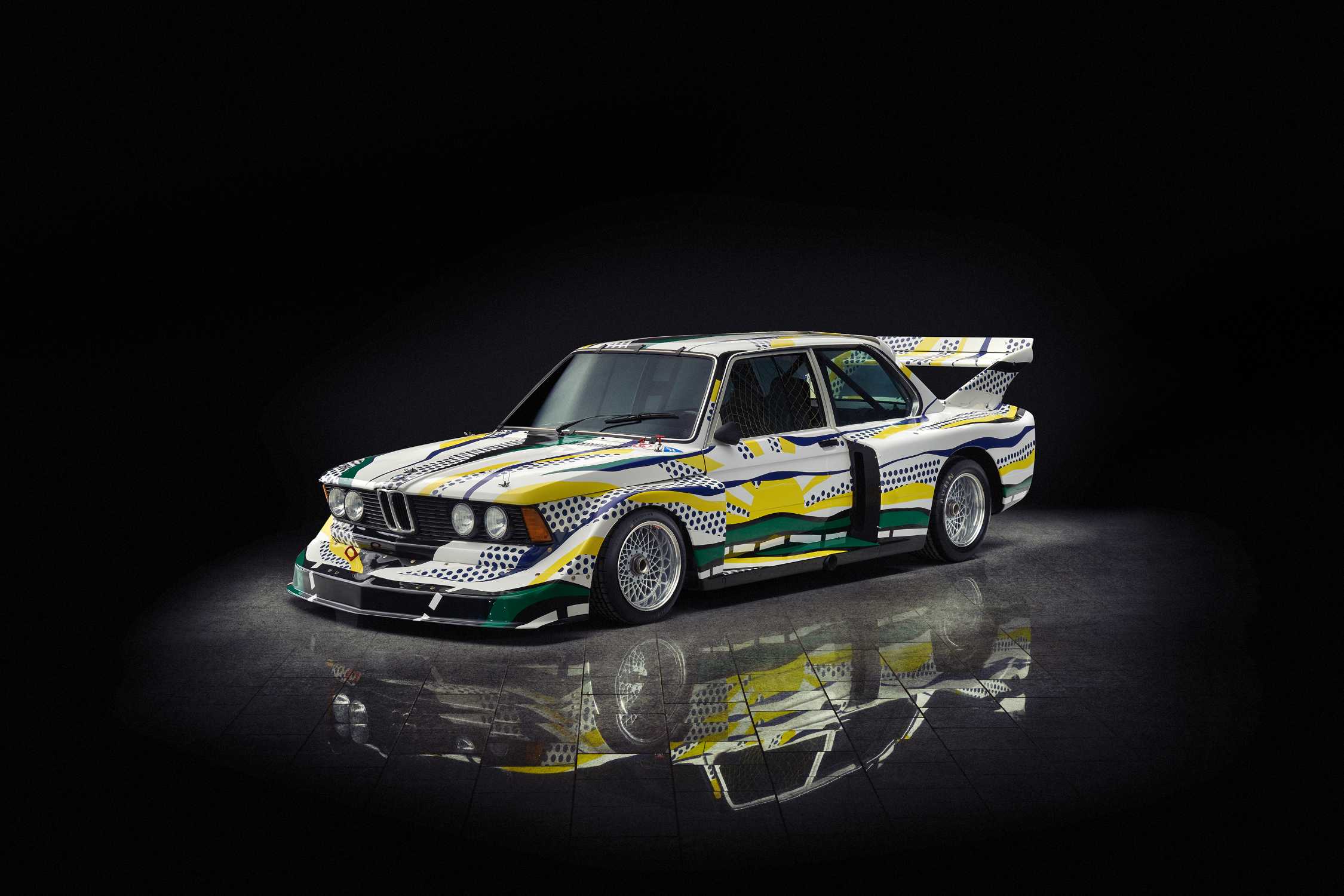
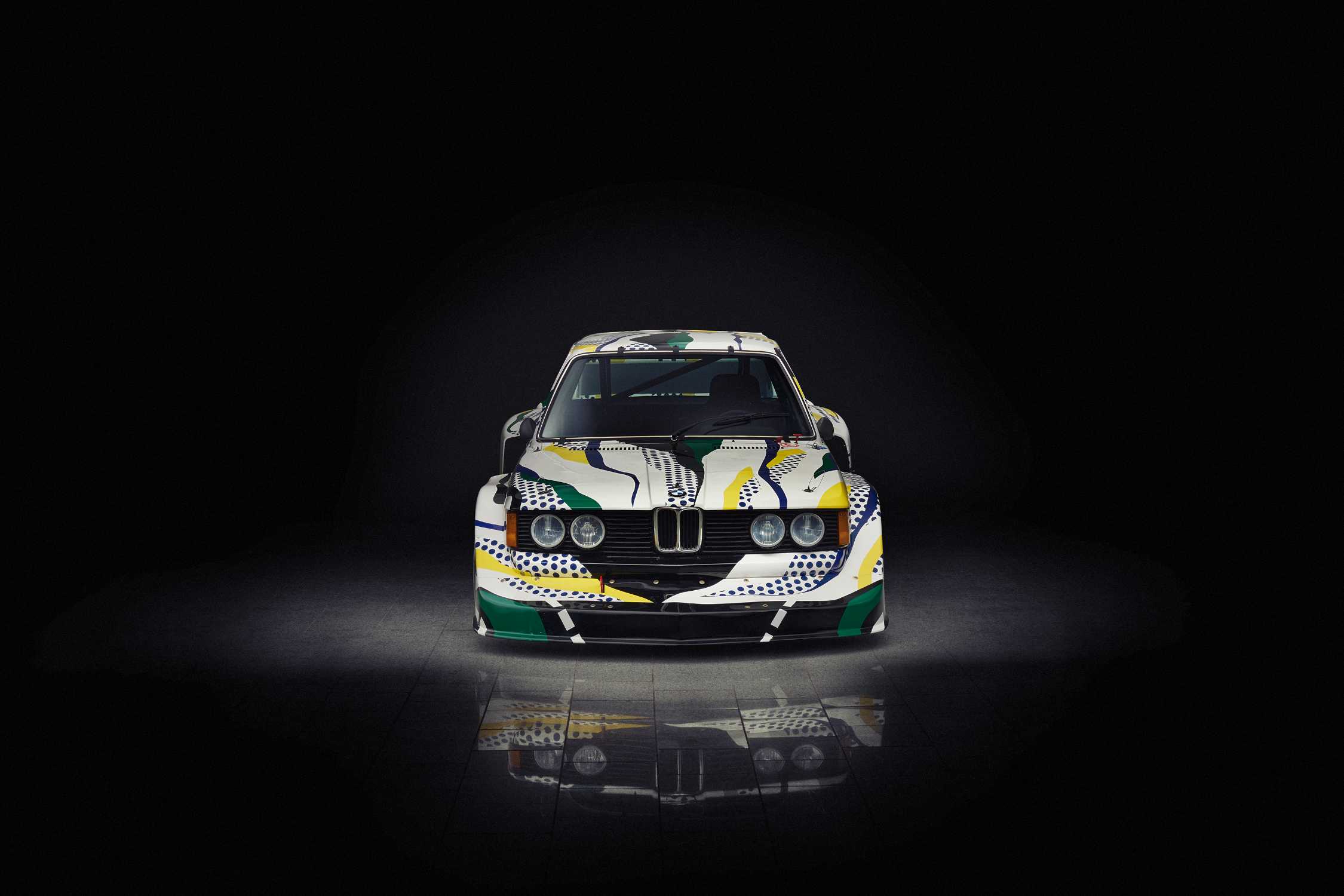
The 1977 BMW 320i Art Car by Roy Lichtenstein is the third vehicle in the Art Car sequence. It moved the programme from the earlier CSL racing coupés to a Group 5 version of the 320i. The artwork and the race-car configuration are both essential to its identity.
Record: BMW-012 · Individual BMW Art Car · Germany · 1977.
BMW 320i Art Car specifications and rarity
| Item | Documented reference and scope |
|---|---|
| Art Car sequence | Third BMW Art Car |
| Artist / year | Roy Lichtenstein, 1977 |
| Vehicle configuration | BMW 320i Group 5 racing version |
| Factory engine reference | 2,000 cc inline-four; four valves per cylinder; twin overhead camshafts |
| Factory output / speed reference | 300 bhp; 257 km/h, as published in the Art Car kit |
| 1977 Le Mans drivers | Hervé Poulain and Marcel Mignot |
| 1977 result | Ninth overall and first in class; race number 50 |
| Count scope | One original individual Art Car; not a 320i customer edition |
Roy Lichtenstein’s BMW 320i brings Pop Art to endurance racing
This is not a standard 320i wearing an optional graphic package. It is an individual competition car transformed by an artist and documented in an endurance-racing setting. The distinction prevents the model badge from hiding the technical and cultural differences between a road E21 and this specific Art Car.
Dots, lines and an imagined journey
The design uses Lichtenstein’s recognizable dots and strong graphic lines. BMW’s account describes a landscape and the experience of travel represented on the body. The car can therefore be read as carrying an image of its own journey, even when it is standing still in a gallery.
In the photographs, follow the artwork along the flanks before focusing on the front. The painted elements interact with the wide racing body and aerodynamic equipment. This gives the work a different visual rhythm from Stella’s grid or Calder’s broad color fields. Comparing the three reveals distinct artistic decisions rather than a repeated factory livery formula.
The Group 5 320i beneath the painting
BMW’s Art Car kit identifies a Group 5 racing version with a two-litre four-cylinder, four valves per cylinder and twin overhead camshafts. It lists 300 bhp and a 257 km/h speed reference. Those are the kit’s historical figures for this competition vehicle, not ordinary 320i showroom data.
Race categories permit substantial development while retaining a recognizable model identity. For a profile reader, the useful habit is to ask which configuration a number describes before comparing it with another vehicle. The 320i badge alone cannot tell the full mechanical story, and the artwork does not make that story less important.
Paris presentation and the 1977 Le Mans result
The factory history places an artistic presentation at the Centre Pompidou in Paris alongside the car’s racing debut at Le Mans in June 1977. Hervé Poulain and Marcel Mignot drove the number 50 car to ninth overall and first in class. The class result is meaningful, but it must not be rewritten as an overall victory.
This combination of exhibition and competition is central to the car’s appeal. One setting encourages deliberate visual study; the other places the object in motion under mechanical stress. The vehicle’s history joins those settings without making either one a substitute for the other.
An individual artwork with a documented competition biography
The one-car count covers the original Lichtenstein Art Car. It is not a production total for every BMW 320i race chassis, and it is not a count of miniature reproductions. A model-level entry for the 3 Series would answer a different question from this individual artwork profile.
The visible credits distinguish BMW’s supplied photography from the rights in Lichtenstein’s artwork. That separation is particularly appropriate here because authorship is the reason the vehicle has its own record. The profile also retains the drivers, race number and result, giving readers a practical set of identifiers for interpreting period images and exhibition descriptions.
BMW 320i Art Car frequently asked questions
Which BMW Art Car is Roy Lichtenstein’s 320i?
BMW identifies it as the third Art Car, created in 1977.
Is it a standard road-going BMW 320i?
No. The factory kit identifies the car as a Group 5 racing version.
What power does BMW publish for it?
The Art Car kit lists 300 bhp for its historical racing specification.
Who drove it at Le Mans?
Hervé Poulain and Marcel Mignot drove the number 50 car in 1977.
Did it win the 1977 Le Mans race overall?
No. BMW records ninth overall and first in class.
Why does it have a separate artwork credit?
The photographs reproduce Lichtenstein’s artwork as well as the vehicle; that authorship and rights interest is distinct from the image supply.
Explore related verified BMW profiles
- BMW 3.0 CSL Art Car — Alexander Calder, 1975
- BMW 3.0 CSL Art Car — Frank Stella, 1976
- BMW M1 E26 — Road Supercar and Procar Foundation
Factory sources and photo credits
Technical references and historical claims are tied to the source scope shown above. The inventory’s Verified label establishes eligibility for this batch; unresolved counts remain labelled.
Images: © BMW AG / BMW Group PressClub. Supplied for press and editorial use under BMW PressClub terms. Artwork: Roy Lichtenstein, BMW Art Car © Estate of Roy Lichtenstein / VG Bild-Kunst, Bonn.
Why this machine matters
The visible credits distinguish BMW’s supplied photography from the rights in Lichtenstein’s artwork. That separation is particularly appropriate here because authorship is the reason the vehicle has its own record. The profile also retains the drivers, race number and result, giving readers a practical set of identifiers for interpreting period images and exhibition descriptions.
Built in limited numbers
One original individual Art Car; not a 320i customer edition
Gallery
Specifications
Factory specifications may vary by model year, market and configuration.
Identity & production
- Official model
- BMW 320i Art Car — Roy Lichtenstein, 1977
- Base model
- 3 Series E21
- Worldwide production
- 1
Powertrain & performance
- Engine
- 2,000 cc inline-four; four valves per cylinder; twin overhead camshafts