BMW 3.0 CSL Art Car — Alexander Calder, 1975
Discover Alexander Calder’s first BMW Art Car: the 1975 racing CSL, Le Mans history and artwork, with BMW photographs and separate artist credits.
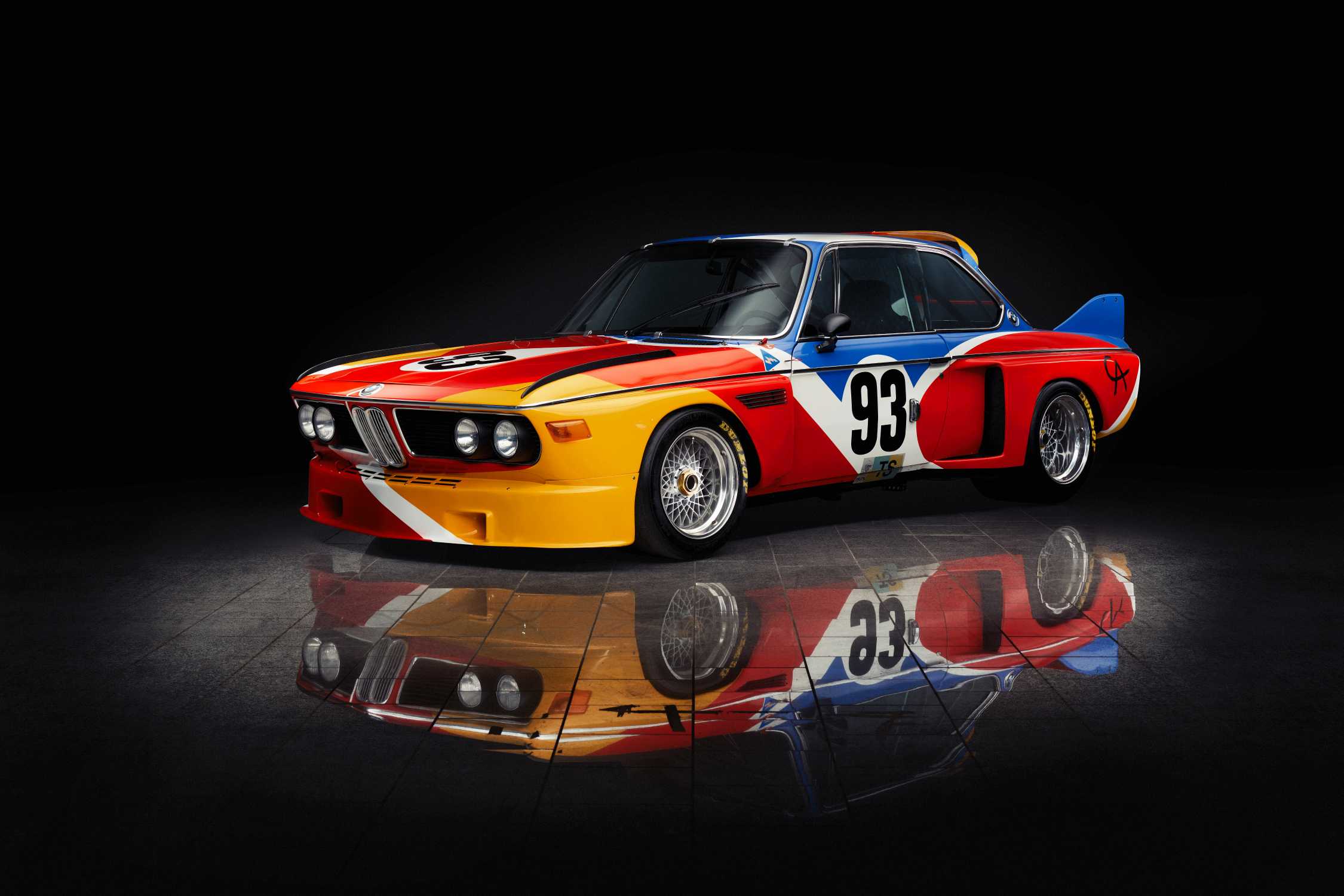
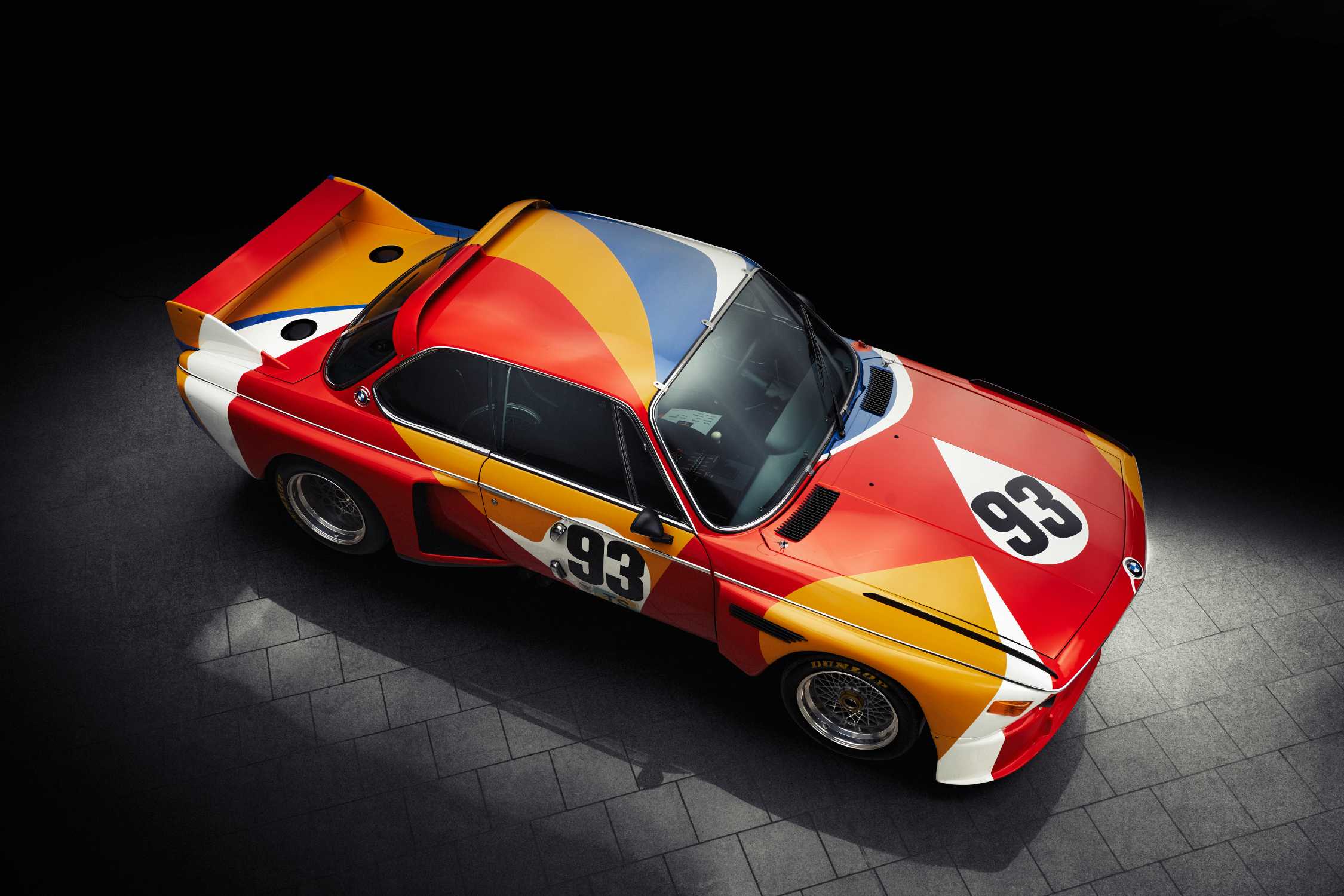
Alexander Calder’s 1975 BMW 3.0 CSL began the BMW Art Car story with an object that could be read in two ways at once: a competition machine and a work of art. Its bright fields of color did not turn it into a showroom special edition. The artwork was applied to an individual racing car with a documented Le Mans appearance.
Record: BMW-010 · Individual BMW Art Car · Germany · 1975.
BMW 3.0 CSL Art Car specifications and rarity
| Item | Documented reference and scope |
|---|---|
| Art Car sequence | First BMW Art Car |
| Artist / year | Alexander Calder, 1975 |
| Vehicle role | BMW 3.0 CSL racing car |
| Factory technical reference | 3,210 cc inline-six; four valves per cylinder; twin overhead camshafts |
| Factory output / speed reference | 480 bhp; 291 km/h, as stated in the Art Car press kit |
| 1975 Le Mans crew | Sam Posey, Jean Guichet and Hervé Poulain |
| Race outcome | Retired after seven hours with a defective prop shaft |
| Count scope | One original individual artwork/car; not a road CSL edition |
The first BMW Art Car was also a racing car
That dual identity is the reason this record stands apart from the model-level E9 CSL profile. The road car explains the platform’s history; the Calder car adds a particular artist, a particular visual treatment and a particular race entry. Those layers belong together, but they should not be mistaken for a run of identically painted customer cars.
Hervé Poulain’s idea and Calder’s contribution
BMW’s Art Car press kit credits Hervé Poulain with the idea of having an artist transform a racing car and identifies Calder as the creator of the first example. The collaboration placed artistic authorship directly into a motorsport setting. The car did not need to stop being a functional racing object to become part of an art collection.
In the supplied views, broad color areas emphasize the bonnet, roof and wings. The shapes interact with the body’s contours rather than behaving like small logos applied to a neutral surface. This is a useful way to approach the car visually: follow where a color field moves over a change in panel direction, then step back to consider the entire silhouette.
What the race specification tells us
The factory Art Car kit lists a 3,210 cc six-cylinder with four valves per cylinder, twin overhead camshafts, 480 bhp and a 291 km/h speed reference. These are race-car figures. They do not describe an ordinary 3.0 CSL road specification, even though the familiar E9-based shape remains recognizable.
Racing preparation changes the purpose of the car. A stripped, developed competition machine belongs to a different technical context from the homologation road model. For this reason, performance comparisons should begin with configuration and use. The profile retains the factory’s published units and avoids translating a historical reference into an independent modern test result.
Le Mans in 1975: appearance and retirement
Sam Posey, Jean Guichet and Hervé Poulain drove the Calder car at the 1975 24 Hours of Le Mans. BMW’s account says it retired after seven hours because of a defective prop shaft. The failure is part of the documented story, rather than an inconvenience to be removed from a celebratory profile.
A racing artwork can be significant without winning. Its appearance brought the art project into a demanding competitive environment, where the car still had to be entered, driven and maintained. The race result therefore clarifies the car’s history. A claim of a Le Mans victory would attach the wrong achievement to the right-looking object.
Original artwork, later representations and image credits
The individual original is the scope of this entry. Scale models, printed reproductions and later authorized representations are separate objects. A photograph of an exhibition car also needs its own source identification; visual similarity alone cannot prove which physical representation is being shown.
The photographs used here are BMW’s historical PressClub images identified as Calder’s 1975 Art Car. Their visible captions include the BMW image credit and a separate Calder artwork credit. These are different rights interests. Keeping both beside the image makes the gallery more informative and preserves the authorship at the heart of the Art Car programme.
BMW 3.0 CSL Art Car frequently asked questions
Which number BMW Art Car is Calder’s CSL?
BMW identifies it as the first Art Car, created in 1975.
Was it a special edition sold to customers?
No. This record covers one original individual artwork applied to a racing car.
Did it compete at Le Mans?
Yes. It raced at the 1975 event with Sam Posey, Jean Guichet and Hervé Poulain.
Did the Calder Art Car win Le Mans?
No. BMW records retirement after seven hours because of a defective prop shaft.
Is its 480 bhp figure a road CSL specification?
No. The figure comes from BMW’s technical description of the individual racing Art Car.
Why are there two kinds of credits below the images?
BMW supplies the photographs, while Calder’s artwork has its own authorship and rights credit.
Explore related verified BMW profiles
- BMW 3.0 CSL E9 — Lightweight Homologation Legend
- BMW 3.0 CSL Art Car — Frank Stella, 1976
- BMW 320i Art Car — Roy Lichtenstein, 1977
Factory sources and photo credits
Technical references and historical claims are tied to the source scope shown above. The inventory’s Verified label establishes eligibility for this batch; unresolved counts remain labelled.
Images: © BMW AG / BMW Group PressClub. Supplied for press and editorial use under BMW PressClub terms. Artwork: Alexander Calder, BMW Art Car © Calder Foundation, New York / Artists Rights Society (ARS), New York.
Why this machine matters
The photographs used here are BMW’s historical PressClub images identified as Calder’s 1975 Art Car. Their visible captions include the BMW image credit and a separate Calder artwork credit. These are different rights interests. Keeping both beside the image makes the gallery more informative and preserves the authorship at the heart of the Art Car programme.
Built in limited numbers
One original individual artwork/car; not a road CSL edition
Gallery
Specifications
Factory specifications may vary by model year, market and configuration.
Identity & production
- Official model
- BMW 3.0 CSL Art Car — Alexander Calder, 1975
- Base model
- E9 Coupé
- Worldwide production
- 1
Powertrain & performance
- Engine
- 3,210 cc inline-six; four valves per cylinder; twin overhead camshafts