Audi urbansphere concept
A large electric passenger-space concept introduced in 2022, exploring comfort and digital services in city travel through a spacious cabin and published PPE-based technical brief.
A large electric passenger-space concept introduced in 2022, exploring comfort and digital services in city travel through a spacious cabin and published PPE-based technical brief.
Audi urbansphere concept at a glance
| Manufacturer | Audi |
|---|---|
| Model / programme | urbansphere |
| Profile scope | Physical concept archive |
| Historical reference year | 2022 |
| Inventory reference | AUDI-083 |
| Engine reference | Published dual-motor electric concept architecture |
| Exact original object count | Unresolved; no numeric production badge populated |
| Manufacturer power reference | 295 kW |
| Manufacturer torque reference | 690 Nm; concept rating where applicable |
| Object scope | Physical concept presentation; complete development-object census unresolved |
A concept for time spent in the city
Audi introduced urbansphere in 2022 as the third sphere study, following the roadster skysphere and luxury-sedan grandsphere. It explores a large passenger environment for urban travel rather than presenting another trim level of a customer SUV. Its historical interest is the way an electric vehicle can be framed as a place to spend time, with comfort and interaction becoming the starting point of the design. The profile follows that documented concept and its physical presentation. Proposed services and automated-driving scenarios remain design intentions rather than claims of validated operation or a vehicle that customers could buy in this form.
Cabin space is the main subject
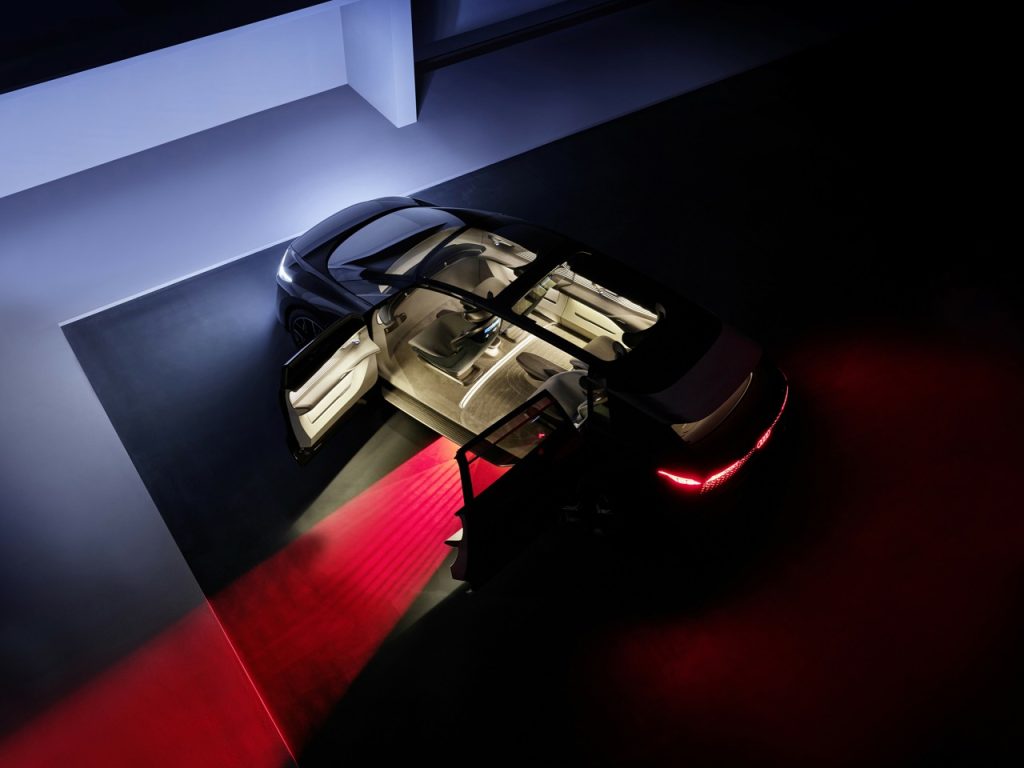
Audi Canada highlights a 3.40-metre wheelbase, swivelling seats and a highly reclined seating scenario. The opposing door arrangement and absence of a B-pillar in the concept presentation make access part of the design argument. These details show why the interior deserves attention in its own right. The supplied official image presents the cabin from above, so it is a deliberate interior illustration rather than a substitute exterior photograph. A reader can use it to investigate seating and the relationship between passengers and the surrounding space while retaining the manufacturer’s caption and the distinction between concept presentation and production validation.
PPE and the published electric reference
Audi’s Technology Portal describes a PPE-based battery-electric layout with a battery around 120 kWh, two motors delivering 295 kW combined and 690 Nm, and 800-volt charging technology. These are concept specifications dated to the 2022 brief. A platform connection does not automatically assign the same values to a later production car. Equally, the figures do not certify the present electrical condition of a display object. For an object-level assessment, identify what hardware was installed, what could operate and what has changed. This preserves the technical ambition without making the public specification table carry claims that only engineering records could support.
Charging and range as a proposed capability
Manufacturer descriptions of concept charging and range help explain the intended use of the architecture. They should be labelled as published expectations or design references rather than independently verified road-test results. Even a precise charging time requires information about starting state, equipment, temperature and the vehicle used to interpret it properly. This profile consequently avoids presenting a promised range as a certified figure for an exhibit. The useful question is how the proposed electrical package supports the cabin and travel scenario. Measured operation, installed battery condition and later customer-model homologation remain distinct pieces of evidence to be added only when their sources establish them.
An urban lounge rather than a conventional cockpit
Urbansphere invites an examination of where occupants sit, what they can reach and how they can share or separate their activities. Look at the cabin as a complete arrangement instead of treating every digital feature as an isolated novelty. The concept’s larger form makes these relationships especially visible, including the trade-off between individual space and the social use of a shared vehicle. These observations are ways of reading the design, not claims that every visitor would prefer it or that the proposed services were fully deployed. A careful archive can explain the experiment while leaving those usability and implementation questions open.
Lighting and access as design evidence
The concept uses large illuminated areas and distinctive access to connect its exterior with the passenger environment. A useful photo sequence would show the car closed, the doors open and the cabin occupied or configured for a demonstration. Each view answers a different question. An interior-only photograph cannot establish every exterior proportion, and a dramatic night view can conceal details that a daylight image makes obvious. Preserve captions and dates so the reader understands the display state. That approach is particularly helpful with concepts, where graphics and presentation settings can change between events without establishing a new object or a new commercial specification.
How to describe its rarity accurately
Urbansphere is included as a physical concept archive subject. The cited public material does not provide a complete census of development vehicles, display bodies and running demonstrators, so no exact production number is populated. A small collection of photographs is not a count of physical builds, and repeated appearances should not be treated as additional cars automatically. The history would become more precise with factory project identifiers and dated custody records. Until then, the archive can establish the named study and its documented presentation without turning a concept’s special status into an invented “one of one” production certificate.
Comparing the sphere family
Read urbansphere next to grandsphere and skysphere to see how a common occupant-focused theme is adapted to different purposes. The roadster, low sedan and larger passenger vehicle offer distinct proportions and cabin scenarios. Comparing them by those choices is more revealing than ranking their published power outputs. Keep each study’s technical figures and functions attached to the correct name. A variable-wheelbase proposal in skysphere, for example, must not migrate into urbansphere’s record through the shared family label. The related profiles are intended to clarify that relationship while preserving the individuality of each physical concept.
Questions for a factory archive or custodian
For the specific exhibit, ask for project identification, the build and display timeline, custody records and a description of functioning systems. Clarify whether seats, doors, lighting and electronic demonstrations operate as shown, and whether the installed electrical architecture corresponds to the published brief. Preserve repairs and updates as dated changes. An event image can support appearance and presence, but cannot establish ownership, sale availability, road approval or safe operating procedures. A serious object file needs the responsible custodian’s evidence for those questions. This separation makes a public profile more trustworthy without diminishing the historical interest of the concept itself.
Why urbansphere belongs beside Audi’s older concepts
The study captures a particular moment in Audi’s thinking about electric architecture, passenger time and digital comfort. Comparing it with older concept cars can show a shift in the questions being asked, even when a later production vehicle follows a different path. Its contribution to the archive is a documented design proposition and a physical form that readers can examine. Avoid treating it as a guaranteed future model or assigning a speculative market value to an object not offered as a customer car. A clear historical account remains useful because it explains what Audi presented in 2022, how it fits the sphere discussion and what further evidence would deepen the object’s record.
Frequently asked questions
When was urbansphere introduced?
Audi presented the concept in 2022 as the third sphere study, following skysphere and grandsphere.
What electrical figures did Audi publish?
The 2022 concept brief specifies roughly 120 kWh, combined motor output of 295 kW and system torque of 690 Nm. These are published concept references.
Is the supplied photograph an exterior view?
It is an official interior photograph of the actual urbansphere concept, captioned accordingly. It is not a generic production-car image.
Was urbansphere available as a production model?
The cited manufacturer records describe a concept. No customer production series or complete development-object census is established here.
Explore related vehicle profiles
Sources
- Audi Technology Portal — urbansphere Premium Platform Electric
- Audi Canada — urbansphere concept design
- Audi Japan — urbansphere concept, April 2022
History and published specifications follow the linked manufacturer records. Visual comparisons, documentation questions and inspection priorities are editorial analysis. Photographs retain their original subject descriptions and separate rights records.
Photography and credit
Audi urbansphere concept interior; official photograph A221583. Photo: AUDI AG / Audi Media Center · Audi Media Center: editorial use free of charge. Resized without cropping or color alteration.
Why this machine matters
A large electric passenger-space concept introduced in 2022, exploring comfort and digital services in city travel through a spacious cabin and published PPE-based technical brief.
Built in limited numbers
Urbansphere is included as a physical concept archive subject. The cited public material does not provide a complete census of development vehicles, display bodies and running demonstrators, so no exact production number is populated. A small collection of photographs is not a count of physical builds, and repeated appearances should not be treated as additional cars automatically. The history would become more precise with factory project identifiers and dated custody records. Until then, the archive can establish the named study and its documented presentation without turning a concept’s special status into an invented “one of one” production certificate.
Gallery
Specifications
Factory specifications may vary by model year, market and configuration.
Identity & production
- Official model
- Audi urbansphere concept
- Base model
- urbansphere
Powertrain & performance
- Engine
- Published dual-motor electric concept architecture