Audi RSQ
The Audi RSQ is the physical concept Audi created for the 2004 film I, Robot. It is an archive subject connecting automotive design with cinema, rather than a customer car or an R8 race prototype. Its visible movie-world features must be interpreted as fictional design elements, with the real exhibit’s identity and condition documented independently.
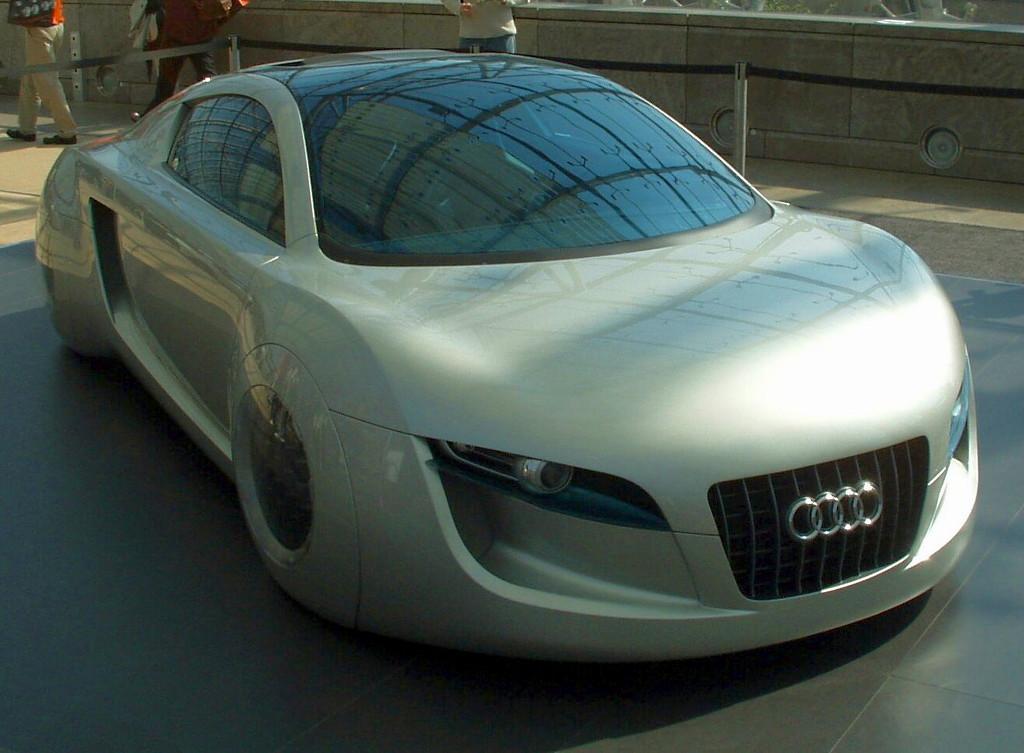
The Audi RSQ is the physical concept Audi created for the 2004 film I, Robot. It is an archive subject connecting automotive design with cinema, rather than a customer car or an R8 race prototype. Its visible movie-world features must be interpreted as fictional design elements, with the real exhibit’s identity and condition documented independently.
Audi RSQ at a glance
| Manufacturer | Audi |
|---|---|
| Model / programme | RSQ |
| Profile scope | Physical film-concept archive |
| Historical reference year | 2004 |
| Inventory reference | AUDI-028 |
| Engine reference | Physical object powertrain not established in reviewed factory records |
| Exact original object count | Unresolved; no numeric production badge populated |
| Object scope | RSQ film concept, separate from fictional capabilities |
What is the Audi RSQ?
Audi’s R8 retrospective identifies RSQ as the concept designed for I, Robot by its design team under Walter de Silva. The factory photo archive also dates the RSQ show-car subject to 2004. Those records support a real physical design object and a specific film connection. They do not establish a customer production edition. The RSQ therefore belongs in a film-concept archive, where a reader can study the object and its on-screen role without expecting the specifications or ownership history of an ordinary road car.
The real object and the fictional car
A movie vehicle operates on two levels: the physical object built or displayed and the fictional machine represented on screen. Keep those levels separate. Apparent autonomous behavior, unusual wheel concepts or futuristic interfaces can belong to the story rather than a tested mechanical system. This guide does not convert a scene into proof of real operating capability. A film still might illustrate the fictional role, while a licensed exhibition photograph illustrates the physical study. They answer different questions and carry different rights.
Why it is not simply an R8 edition
The factory retrospective places RSQ alongside the R8’s cinematic history, but that does not make the concept a customer R8 variant. Similarities in appearance can be explored as design analysis, while production identity requires a separate record. A reader searching for the car driven in I, Robot should find RSQ, not a standard road R8 with a substituted caption. The distinction also protects the rarity fields: a road model’s build count cannot be used as the film object’s count, and a concept label cannot certify a particular movie prop.
Designing for a story rather than a showroom
A film brief can ask a car to communicate a future setting immediately. Designers may emphasize recognizable brand cues while making the object unfamiliar enough to belong in the fictional world. That is an editorial interpretation of the design problem, not a quotation of an unreviewed production brief. For RSQ, the interesting question is how a viewer recognizes an Audi while accepting a machine that is not part of the retail lineup. A good archive profile can explore that tension without inventing technical capabilities.
What can be learned from an exhibition view
The supplied image is source-identified as Audi RSQ and shows the physical concept. It helps readers examine body form and presentation. It does not identify a particular on-screen scene or prove the object’s role in filming. A promotional display object, a filming prop and a full-size design study can have overlapping appearances without identical histories. Before assigning a more precise description, request an object identifier and production documentation. A source title is useful evidence of the subject, but it should not be expanded into an unsupported filming certificate.
One-off language needs a defined object
The workbook lists one car. The reviewed Audi records establish RSQ’s physical concept identity but do not enumerate every possible filming, design or display object. This guide leaves the exact count empty. Movie programmes can involve more than one type of object, so “one-off” should be defined carefully. A unique design does not automatically mean one physical construction was used for every purpose. Future evidence should specify whether it counts a concept, prop, duplicate or model rather than treating all of them as interchangeable vehicles.
How to handle fictional specifications
If a guide discusses the imagined car, label those details as part of the film setting and separate them from the real object’s technical fields. An archive record should identify working mechanisms only when supported by documentation or examination. Do not infer a road-legal drivetrain, crash certification or autonomous system from the design’s appearance. This is an evidence distinction, not a criticism of the film. Fiction gives the design freedom to suggest possibilities, while the physical artifact deserves an accurate description of what it actually is.
The right documentation for a film-concept file
Retain the factory design account, object identifier, dated exhibition images and any confirmed film-production connection. If the object was used on set, preserve that evidence separately from publicity appearances. Conservation records should explain any repairs, replacements or display adaptations. These are suggested research steps; no specific intervention is claimed here. The file should also record which mechanisms can operate and under what controlled conditions. That lets a curator explain the exhibit to visitors without turning a demonstration arrangement into a claim about fictional performance.
Image rights and visible attribution
The bundled photo has its own photographer, source and license links. Those permissions apply to the image supplied, not to screenshots from I, Robot or other press photographs. A future gallery should check each image individually. The caption describes the real exhibition subject and avoids attaching a fictional speed or power figure. Keeping the credit visible helps readers trace the photograph and its context. It also makes the profile usable when the site’s featured-image layout does not show a Media Library caption.
How RSQ connects to the wider archive
Le Mans quattro offers a contemporary road-oriented sports-car proposal, while Avus and Rosemeyer explore earlier historical themes. Putting RSQ beside those concepts lets readers compare different kinds of design brief: production preview, heritage statement and cinematic future. The comparisons are more useful than calling every object a supercar. RSQ’s distinct place is the relationship between a physical Audi design and a fictional setting. That makes it a worthwhile vehicle-history subject even with exact object counts and working mechanics left unconfirmed.
Frequently asked questions
Which film features the Audi RSQ?
Audi identifies it with the 2004 science-fiction film I, Robot.
Was the RSQ offered to customers?
No customer production series is claimed in the reviewed factory material.
Do the film scenes prove real autonomous or futuristic wheel capability?
No. Fictional on-screen behavior must be separated from the documented equipment of the physical object.
Is this an Audi R8 limited edition?
No. RSQ is a distinct film concept, even though Audi discusses it in the wider sports-car and movie history.
Explore related vehicle profiles
Sources
- Audi Tradition — RSQ film-concept archive record
- Audi — R8 retrospective, Le Mans quattro and RSQ histories
History and published specifications follow the linked manufacturer records. Visual comparisons, documentation questions and inspection priorities are editorial analysis. Photographs retain their original subject descriptions and separate rights records.
Photography and credit
Source-identified physical Audi RSQ film concept. Real exhibition object; fictional on-screen capabilities are not vehicle specifications. Photo: Thomas doerfer / Wikimedia Commons · CC BY-SA 3.0. Original image supplied without visual changes.
Why this machine matters
The Audi RSQ is the physical concept Audi created for the 2004 film I, Robot. It is an archive subject connecting automotive design with cinema, rather than a customer car or an R8 race prototype. Its visible movie-world features must be interpreted as fictional design elements, with the real exhibit’s identity and condition documented independently.
Built in limited numbers
Factory 2004 film-concept identity supported. Exact filming/display object census and operating mechanics unset. Fictional capabilities excluded from specification fields.
Gallery
Specifications
Factory specifications may vary by model year, market and configuration.
Identity & production
- Official model
- Audi RSQ
- Base model
- RSQ
Powertrain & performance
- Engine
- Physical object powertrain not established in reviewed factory records