Audi R8 Green Hell Edition
A numbered 50-car R8 V10 performance quattro Coupe edition celebrating Audi’s Nürburgring endurance-racing success, with distinctive factory graphics and a naturally aspirated V10.
A numbered 50-car R8 V10 performance quattro Coupe edition celebrating Audi’s Nürburgring endurance-racing success, with distinctive factory graphics and a naturally aspirated V10.
Audi R8 Green Hell Edition at a glance
| Manufacturer | Audi |
|---|---|
| Model / programme | R8 |
| Profile scope | Limited road edition |
| Historical reference year | 2020 |
| Inventory reference | AUDI-066 |
| Engine reference | Naturally aspirated V10 petrol |
| Published edition limit | 50 — Green Hell Edition worldwide; Coupe only |
| Manufacturer power reference | 456 kW |
| Manufacturer power reference | 620 PS; concept rating where applicable |
The Green Hell Edition story
The name gives this R8 a specific historical anchor: Audi’s success at the Nürburgring 24 Hours. Audi introduced the edition in 2020 after five overall victories by the R8 LMS between 2012 and 2019. The road car is a commemorative Coupe based on the V10 performance quattro, rather than a customer GT3 chassis. That distinction makes the profile useful to readers comparing photographs, auction descriptions and factory specifications. Its interest lies in the way a limited road edition translates an established competition story into a recognisable specification that can be documented independently of any individual owner’s claims.
How rare is the R8 Green Hell Edition?
Audi published a worldwide limit of 50 numbered examples. Treat 50 as the factory edition allocation, not a newly audited register of every completed or surviving car. The population is the named Green Hell Edition; the larger R8 range, a green Audi exclusive commission and a similarly decorated racing car do not automatically belong to it. For an individual car, the useful evidence is a factory identification record tied to its VIN, together with its original specification and delivery paperwork. A small allocation provides a clear reason to investigate authenticity, but it does not itself prove a particular car’s originality or establish a market value.
Factory appearance and colours
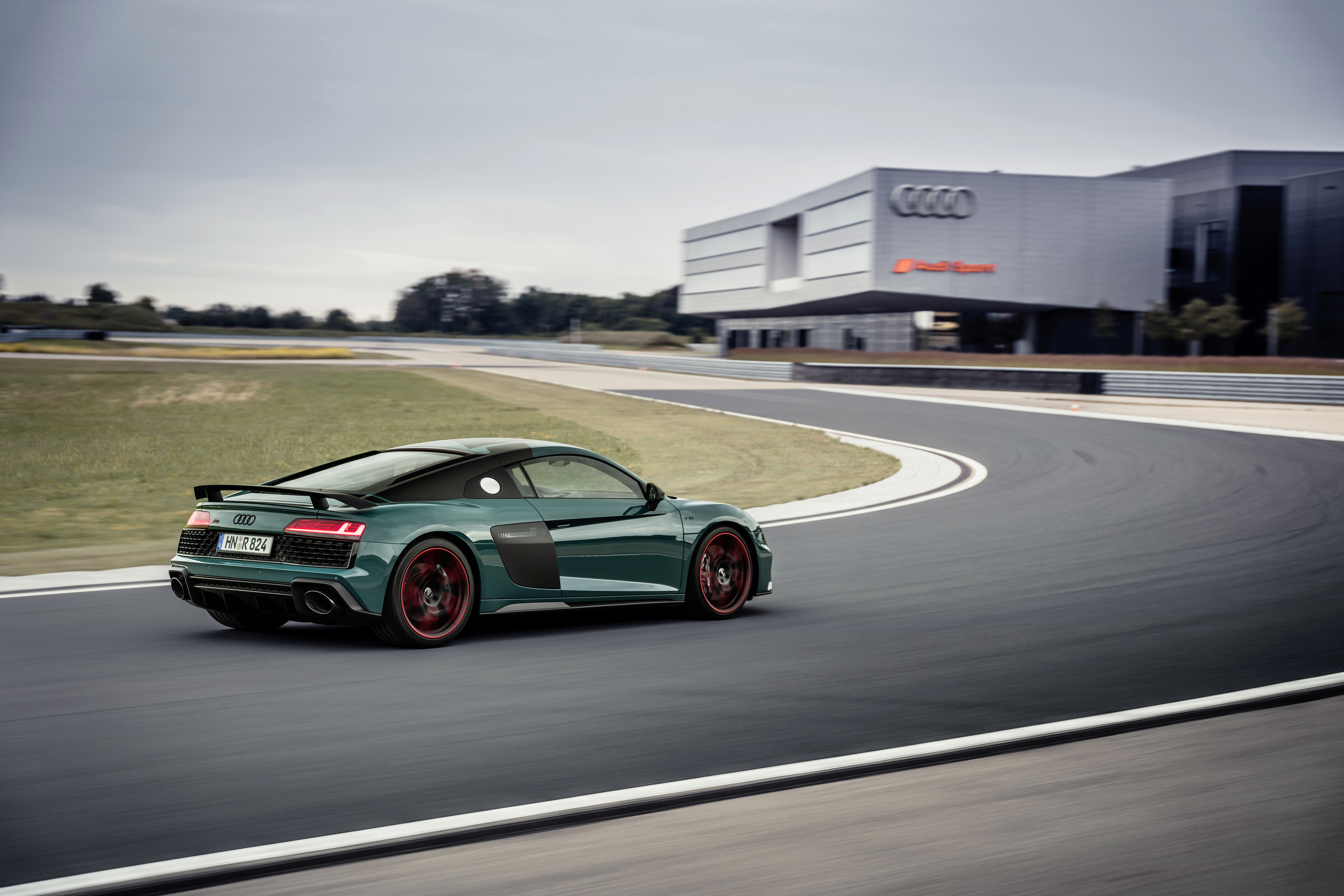
Tioman green was the signature launch colour, with ibis white, Daytona grey and mythos black also offered. Audi described matt-black foil, large edition-number graphics on the doors, Green Hell branding, black styling elements and red wheel accents. Inside, Alcantara and blue-green stitching connect the edition’s cabin to its exterior identity. These details provide a comparison framework rather than a shortcut to authentication. Paint, vinyl, wheels and trim can be replaced, so a convincing photograph should lead to a check of the factory order. An example in another officially offered colour should not be rejected simply because it differs from the green launch car.
V10 performance quattro: the published specification
Audi’s launch reference gives 456 kW, a seven-speed S tronic transmission and quattro all-wheel drive, with manufacturer figures of 3.1 seconds from 0–100 km/h and 331 km/h maximum speed. Those are published model specifications, not measurements of the photographed example. The naturally aspirated V10 is central to the edition’s appeal because its mechanical character is part of the R8 story, while the commemorative changes make this particular specification distinguishable. When comparing listings, keep kW, metric PS and mechanical horsepower labelled consistently. Mixing power units can create a false impression that two cars have different engine outputs.
Why the Nürburgring tribute matters
The road edition and the competition programme tell different parts of the same story. The race results establish the reason for the tribute; the factory order establishes membership of the road-car edition. A road car does not inherit a racing chassis’s podiums, drivers or competition provenance merely through its graphics. For readers interested in Audi’s motorsport history, that separation creates a more useful route through the archive: first understand what the R8 LMS achieved, then examine how Audi represented that achievement in a customer car. It also avoids confusing a celebratory name with a homologation requirement or a separate race-car classification.
Green Hell versus Decennium, RWS and GT
Compare these editions by their purpose before comparing their rarity numbers. Decennium centres on the V10 anniversary, the original RWS programme foregrounds rear-wheel drive, and GT editions have their own specification and generation identities. Green Hell gives a quattro Coupe a Nürburgring tribute identity. A search result saying “limited R8” is therefore not enough to identify which car is being discussed. The best comparison keeps generation, drivetrain, body style, launch year and allocation scope in view together. This is particularly helpful when a listing uses GT, performance or exclusive as descriptive words rather than as the exact factory model designation.
Authenticating a candidate car
Start with the VIN and a manufacturer or authorised-dealer record that explicitly supports the edition identity. Match the recorded colour, trim and original equipment to dated delivery photographs and invoices, then inspect the present car against that baseline. The door-number graphics are useful corroboration, but removable decoration should never be the only evidence. Ask whether any original graphics, seats, wheels or cabin parts have been replaced and whether the corresponding receipts remain. Build a timeline that distinguishes factory delivery, later personalisation and restoration. That approach can acknowledge a properly repaired example without quietly presenting every visible component as untouched original equipment.
Condition and preservation priorities
A specialist assessment should examine the whole car as well as the scarce trim. Request service history, diagnostic findings, evidence of accident repair and an explanation of any drivetrain or suspension changes. Pay close attention to the quality of graphic replacement, paint finish around foil edges, cabin wear and the provenance of edition-specific parts. Carbon-ceramic brake condition needs competent inspection; a photograph cannot establish remaining service life. These are inspection questions rather than claims of universal faults. Keeping original components, workshop records and dated photographs together gives future reviewers a stronger basis for understanding the car than an unsupported assertion that it has always been perfect.
Reading photographs and sales descriptions
The bundled photograph is an official Audi Sport image of the actual Green Hell Edition, supplied through Audi Denmark’s media bank. It is suitable for explaining the factory edition, but it does not certify the VIN, ownership history or current condition of a car advertised elsewhere. Look for sales descriptions that separate a model’s published specifications from the history of the vehicle being offered. Claims such as “one of 50”, “factory original” and “race inspired” answer different questions and need different evidence. A well-documented description makes those distinctions easy to follow instead of relying on rarity language to cover gaps in the file.
Collector significance
The Green Hell Edition offers a focused way to collect the late V10 R8 story: a named race tribute, a small factory allocation and a specification that can be checked against contemporary records. Its significance is historical and mechanical before it is financial. A comparison with other rare R8s should weigh the quality of documentation, condition and completeness alongside the edition’s headline limit. Keep dated transaction records separate from asking prices if researching the market, and avoid assuming that a lower allocation guarantees a premium. The most informative collection file explains why this edition exists, what makes the example belong to it and how its present condition developed.
Frequently asked questions
How many Audi R8 Green Hell Editions were announced?
Audi specified 50 numbered examples worldwide. This profile records the factory limit separately from an independently audited completed-production or survivor census.
Is the Green Hell Edition an R8 LMS race car?
No. It is a road-going R8 V10 performance quattro Coupe edition paying tribute to the R8 LMS’s Nürburgring success. Race-car results do not become individual road-car provenance.
Were all Green Hell Editions green?
No. Audi’s announcement also offered ibis white, Daytona grey and mythos black. Tioman green was the signature launch finish.
How can a Green Hell Edition be authenticated?
Use a VIN-linked factory specification and edition record, supported by delivery paperwork and dated photographs. Graphics and colour are useful supporting clues, but are not sufficient alone.
Explore related vehicle profiles
Sources
- Audi Denmark — 2020 R8 green hell announcement
- Audi Australia — Green Hell, 24 September 2020
- Audi — The R8: a captivating legend
History and published specifications follow the linked manufacturer records. Visual comparisons, documentation questions and inspection priorities are editorial analysis. Photographs retain their original subject descriptions and separate rights records.
Photography and credit
Audi R8 Green Hell Edition in Tioman green, photographed for the 2020 launch. Official image credited to Audi Sport through Audi Denmark. Photo: Audi Sport / Audi Denmark / Mynewsdesk · Audi Denmark / Mynewsdesk media-use license. Original download preserved byte-for-byte; no crop, resize, colour change or overlay.
Why this machine matters
A numbered 50-car R8 V10 performance quattro Coupe edition celebrating Audi’s Nürburgring endurance-racing success, with distinctive factory graphics and a naturally aspirated V10.
Built in limited numbers
50 is a worldwide factory edition cap, not an audited completed/surviving census. Original Audi Sport media-bank photo preserved unedited and in full; credit and editorial-only terms must remain visible.
Gallery
Specifications
Factory specifications may vary by model year, market and configuration.
Identity & production
- Official model
- Audi R8 Green Hell Edition
- Base model
- R8
Powertrain & performance
- Engine
- Naturally aspirated V10 petrol