Audi R8 V10 Decennium Coupé
The Audi R8 V10 Decennium Coupe is the 222-car anniversary edition announced in 2019 to mark ten years of the R8’s V10 engine. Audi specified a 456 kW naturally aspirated V10 and distinctive bronze details. Its numbered factory identity separates the Decennium from an ordinary R8 wearing similar wheels or an anniversary-themed finish.
The Audi R8 V10 Decennium Coupe is the 222-car anniversary edition announced in 2019 to mark ten years of the R8’s V10 engine. Audi specified a 456 kW naturally aspirated V10 and distinctive bronze details. Its numbered factory identity separates the Decennium from an ordinary R8 wearing similar wheels or an anniversary-themed finish.
Audi R8 V10 Decennium Coupé at a glance
| Manufacturer | Audi |
|---|---|
| Model / programme | R8 |
| Profile scope | Limited road edition |
| Historical reference year | 2019 |
| Inventory reference | AUDI-061 |
| Engine reference | 5.2-litre naturally aspirated V10 FSI |
| Published edition limit | 222 — This named edition; exact completed-production census not certified here |
| Manufacturer power reference | 456 kW |
| Manufacturer power reference | 620 PS; concept rating where applicable |
| Manufacturer torque reference | 580 Nm; concept rating where applicable |
An anniversary centred on the R8 V10
Audi’s February 2019 launch marks ten years since the V10 joined the R8 and assigns the Decennium a 222-car Coupe allocation. The published 5.2-litre engine rating is 456 kW or 620 PS and 580 Nm, with 3.1 seconds from zero to 100 km/h and a 331 km/h maximum. Those are factory references for the announced edition, not measurements of the photographed show car. The anniversary brief provides a clear historical reason for the model. It is a celebration of a particular engine chapter within the R8 family, rather than a general anniversary badge applied across unrelated cars.
Rarity: 222 numbered Coupes
The factory describes 222 individually numbered Coupes. This profile records that as the announced edition limit and does not claim an independently checked register of all completed chassis. The allocation does not establish current survival, a colour split or the number remaining in any country. Nor should an unsupported open Decennium claim be included in the same population. For an individual car, match its numbered edition details with factory build data and delivery records. The cap falls below the site’s 7,500-car requirement, but the actual object offered still needs an identity and condition file of its own.
Bronze details and the complete factory presentation
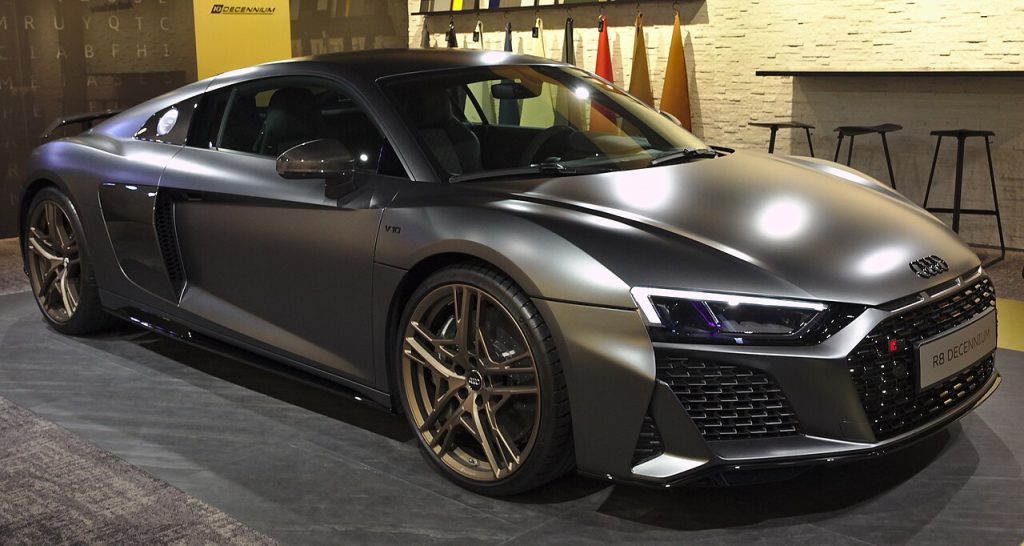
Audi’s launch describes bronze-finished wheels and intake detailing, black exterior elements, carbon components and copper-coloured cabin stitching. It also identifies a matte Daytona Grey presentation while allowing other exterior colours. Do not assume the launch colour is the only authentic paint choice. The visible finish is useful for recognising the edition, but factory documentation should establish a particular car’s original specification. A wheel can be refinished and a decorative part replaced. The complete package, numbered identity and recorded build history are more persuasive than one recognisable colour or a set of bronze-painted wheels.
What the anniversary means and what it does not
The Decennium name provides a way to explore the V10’s place in the road-going R8 story. It does not prove that the edition uses an unchanged engine specification from the first V10 car, nor does it mean the whole R8 programme began ten years before. In a collection display, identify the anniversary’s subject explicitly. That helps visitors understand why the model sits beside earlier GT and LMX editions without mistaking them for consecutive versions of one limited series. Each factory programme has its own purpose and allocation; a shared engine format does not merge their populations.
Identifying a genuine Decennium
Begin with the VIN-linked build record and the manufacturer’s edition designation. Compare the numbered details, original delivery specification and current body and cabin with that evidence. Retain invoices for refinished wheels, paint work, replaced trim and mechanical changes. A plaque can corroborate identity but cannot establish the entire history on its own. If paperwork is incomplete, describe the uncertainty directly instead of allowing the appearance to make the decision. These are suggested authentication priorities rather than findings about the photographed car. A precise description protects the historical value of the edition as well as the usefulness of the archive.
Matte finishes need a documented history
Where a car has a matte finish, record the original paint specification and any later repairs or refinishing. Appearance under motor-show lighting can differ substantially from appearance outdoors, so judge the physical surface directly with an appropriate specialist. Do not diagnose originality from a single photograph or assume that a neat finish proves factory paint. Preserve invoices and images from before and after work. The aim is to establish what a particular car carries today and how it arrived at that state. A collection file can acknowledge good repair work while keeping the original specification visible.
Engine history and ownership evidence
Keep the factory rating separate from the installed engine’s current condition, rebuild history and any modifications. A low mileage statement does not replace a service chronology or specialist assessment. Record maintenance intervals as documented for the actual car, along with invoices, storage history and major component changes. When a seller makes a stronger performance claim, ask for the tested configuration and method rather than treating it as a revised factory specification. The anniversary story explains why the model exists; the individual evidence explains what is being offered. Both deserve space in a serious collector record.
The Geneva photograph and its rights record
The bundled image is source-identified as an R8 Decennium at the 2019 Geneva motor show. It supplies a period physical reference for the edition’s presentation. The photograph should be used to explain the visible car, not authenticate an individual retail chassis or certify that every pictured component is original. Its visible credit preserves the photographer, Commons source and Creative Commons licence. A future owner-supplied image can complement it if permission and subject identity are documented. Prefer a varied gallery of exterior, cabin and edition details over several almost identical angles that add little information.
Decennium versus RWS, GT and LMX
These R8 subjects offer different collector questions. The RWS turns the discussion towards drivetrain layout and a shared body-style allocation. The original GT focuses attention on a factory lightweight package, while the LMX gives lighting technology a prominent role. The Decennium’s identity is an anniversary programme with its own numbered presentation. Compare each using the relevant manufacturer record and the condition of the particular car. Do not decide rarity by adding their limits together or ranking the badge names. Related profiles are most useful when they make those distinctions visible and encourage a reader to follow the separate histories.
Why the Decennium deserves a detailed profile
The edition gives an archive a concrete way to explain how a major powertrain chapter was commemorated within the R8 range. Its interest rests on the documented anniversary brief, limited allocation and complete factory presentation. An individual example becomes more informative when its numbered identity, delivery configuration and later history can be followed. That is a stronger collector narrative than assuming bronze detailing guarantees authenticity or predicts future value. The Decennium can be appreciated as a specific historical programme while still assessing every offered car on the quality of its evidence and condition.
Frequently asked questions
How many R8 Decennium cars were allocated?
Audi announced 222 individually numbered Coupes. The profile stores the edition cap and does not certify a current survival count.
What anniversary did the Decennium mark?
It marked ten years since the V10 engine joined the road-going Audi R8, rather than the start of the entire R8 programme.
What output did Audi specify?
The published 5.2-litre V10 rating is 456 kW or 620 PS and 580 Nm for the Decennium edition.
Was every Decennium matte Daytona Grey?
The launch presented that finish but also allowed other exterior colours. Verify a particular car’s original paint through factory documentation.
Explore related vehicle profiles
Sources
History and published specifications follow the linked manufacturer records. Visual comparisons, documentation questions and inspection priorities are editorial analysis. Photographs retain their original subject descriptions and separate rights records.
Photography and credit
Audi R8 V10 Decennium photographed at the 2019 Geneva International Motor Show. Model identified in the original photograph record; no individual edition number certified. Photo: Alexander Migl / Wikimedia Commons · CC BY-SA 4.0. Wikimedia thumbnail resized from original; no cropping or color changes.
Why this machine matters
The Audi R8 V10 Decennium Coupe is the 222-car anniversary edition announced in 2019 to mark ten years of the R8’s V10 engine. Audi specified a 456 kW naturally aspirated V10 and distinctive bronze details. Its numbered factory identity separates the Decennium from an ordinary R8 wearing similar wheels or an anniversary-themed finish.
Built in limited numbers
The factory describes 222 individually numbered Coupes. This profile records that as the announced edition limit and does not claim an independently checked register of all completed chassis. The allocation does not establish current survival, a colour split or the number remaining in any country. Nor should an unsupported open Decennium claim be included in the same population. For an individual car, match its numbered edition details with factory build data and delivery records. The cap falls below the site’s 7,500-car requirement, but the actual object offered still needs an identity and condition file of its own.
Gallery
Specifications
Factory specifications may vary by model year, market and configuration.
Identity & production
- Official model
- Audi R8 V10 Decennium Coupé
- Base model
- R8
Powertrain & performance
- Engine
- 5.2-litre naturally aspirated V10 FSI