Audi R8 GT Coupé — Type 42
The original Audi R8 GT Coupe is the first-generation Type 42 lightweight V10 edition announced in 2010 with a 333-car limit. Its published 412 kW rating and weight-reduction programme distinguish the factory GT from an ordinary R8 fitted with extra carbon trim. This is the original quattro GT, separate from the later rear-drive GT.
The original Audi R8 GT Coupe is the first-generation Type 42 lightweight V10 edition announced in 2010 with a 333-car limit. Its published 412 kW rating and weight-reduction programme distinguish the factory GT from an ordinary R8 fitted with extra carbon trim. This is the original quattro GT, separate from the later rear-drive GT.
Audi R8 GT Coupé — Type 42 at a glance
| Manufacturer | Audi |
|---|---|
| Model / programme | R8 |
| Profile scope | Limited road edition |
| Historical reference year | 2010 |
| Inventory reference | AUDI-037 |
| Engine reference | 5.2-litre naturally aspirated V10 FSI |
| Published edition limit | 333 — This named edition; exact completed-production census not certified here |
| Manufacturer power reference | 412 kW |
| Manufacturer power reference | 560 PS; concept rating where applicable |
The original lightweight R8 GT
The period factory announcement presents the R8 GT as a limited edition with a 5.2-litre V10 rated at 412 kW or 560 PS and a 100 kg reduction against its stated comparison model. It gives a 3.6-second zero-to-100 km/h reference and a 320 km/h maximum. Those are factory specifications rather than measurements of the pictured car. The GT idea is interesting because the car’s identity depends on a coordinated package: engine, transmission, construction, appearance and edition documentation. Looking only at a wing or badge misses that integration and makes identification unnecessarily vulnerable to later cosmetic changes.
Rarity: the 333-car Coupe allocation
The factory capped the original GT Coupe series at 333 and identified cars with an individual number at the gear selector. The later GT Spyder has its own 333-car allocation. This profile stores the Coupe’s published limit separately from a completed-production census; it does not claim a register of every delivered chassis. Nor does it divide the number by paint colour or market without supporting records. The cap falls below the site’s 7,500-car requirement. An individual car’s status within that edition still depends on factory identification, not merely the presence of a detachable numbered part.
The Type 42 distinction matters
A modern R8 carrying the GT name can lead a reader towards the wrong generation. Use Type 42 and the 2010 announcement when searching for the original Coupe. Audi’s later retrospective treats the first-generation GT and the final rear-drive GT as distinct stages of the R8 story. Their production limits should not be combined into a new total, and their drivetrain descriptions are not interchangeable. A profile title that identifies the generation saves readers from making those mistakes before they reach the specification table. The same discipline helps when comparing auction descriptions or workshop parts lists.
R tronic and the factory configuration
Audi’s period Netherlands record identifies the GT’s six-speed R tronic transmission. Keep that distinct from the later dual-clutch S tronic, even though both can be discussed loosely as automatic gearboxes. For a particular car, record the original transmission identity and any subsequent modifications. A conversion may suit an owner’s preferences, but the resulting car should be described accurately rather than presented as an untouched factory example. Inspectors should compare the mechanical installation with the build documentation. A photograph of the gear selector provides a useful clue, yet cannot establish the complete transmission history.
Understanding the weight-reduction claim
A quoted weight saving is meaningful only with the comparison car and measuring convention attached. It should not become a promise that any GT on a scale today will differ from any other R8 by exactly the same amount. Fuel, equipment, repairs and later modifications can affect an individual reading. For a collection file, record factory specifications separately from a dated measured weight. The more interesting editorial question is what the lightweight programme communicates about the edition’s priorities. A coherent factory package carries a different historical meaning from a standard car made lighter by removing selected items later.
Exterior recognition and its limits
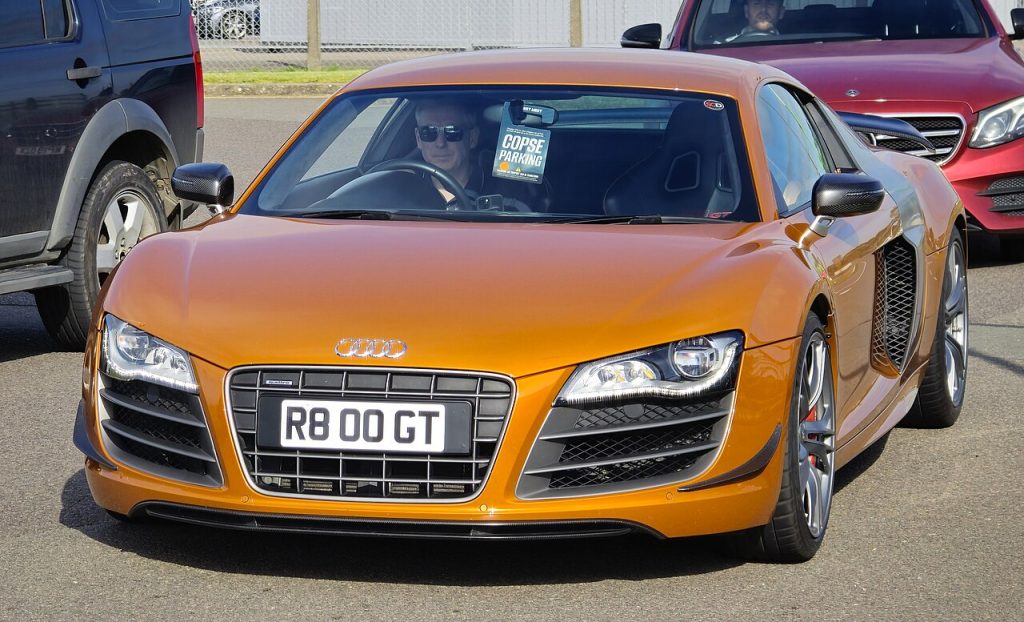
Compare the source-identified GT photograph with the period launch imagery, then use body details as prompts for inspection. Carbon pieces, wheel finishes and spoilers can be repaired, changed or fitted to other cars. Their presence is therefore useful but insufficient. Check whether the surrounding fittings, interior and identification records tell the same story. A convincing exterior with incomplete paperwork deserves a narrower description than a documented factory car. When preparing the gallery, include the cabin and identification details if the owner permits them, while avoiding unnecessary public exposure of sensitive ownership records or full personal documents.
What to check before treating a car as an original GT
Begin with the VIN and factory build data, then match the edition identity, original specification and delivery record. Add service invoices and dated photographs to explain subsequent changes. Ask a specialist to assess structural condition, component authenticity and the quality of previous repairs. A serial plaque can corroborate a record but should not replace it. Describe replacement panels and refinished trim plainly. These are inspection priorities rather than known defects of the model. The object being evaluated is an individual car, and no general article can establish its condition from a single image or a familiar edition name.
The Coupe and Spyder offer different collection stories
The open GT is a separate subject with different published weight and performance references. Its roof mechanism and weather sealing add questions that are less relevant to the fixed-roof Coupe. Neither body style needs to be portrayed as categorically more desirable to explain its place in a collection. A collector can instead compare intended use, personal preference, documentation and the integrity of the specific example. The important count distinction is that their original factory allocations are separate. A claimed production number should identify which body style and generation it describes, rather than relying on the abbreviated R8 GT name.
Reading the photograph and preserving its credit
The bundled image is source-identified as a 2011 R8 GT photographed at SCD Secret Meet in 2024. Its later exposure date does not change the model’s 2010 announcement year. It shows the subject’s current visible presentation, not its condition at initial delivery. The photographer and Creative Commons licence remain linked in the visible credit. If a sharper or more complete owner-supplied photograph replaces it, retain a written permission record and a precise caption. A good photo set should help readers understand the car; it should not be asked to certify a numbered factory history it cannot reveal.
Why the first R8 GT has lasting historical interest
The original GT provides a focused way to study Audi’s approach to a limited performance edition within the first R8 generation. The collector story becomes strongest when the factory specification and an individual car’s history remain connected. Its relationship with the GT Spyder, the later LMX and the R8 LMS gives a useful route through the archive. Each emphasises a different aspect of performance-car development, from a lightweight road package to lighting technology or competition use. That variety is more informative than a ranking based only on power or an unsupported claim about future prices.
Frequently asked questions
How many original R8 GT Coupes were allocated?
Audi announced a 333-car limit for the original Type 42 GT Coupe. The GT Spyder received a separate 333-car allocation.
What is the original R8 GT power rating?
The period factory specification is 412 kW or 560 PS from a 5.2-litre V10. Keep those units distinct from mechanical horsepower.
Is the Type 42 GT the later GT RWD?
No. The original first-generation GT used quattro; the later GT RWD is a different generation and edition.
Does the numbered selector prove authenticity?
It helps corroborate the car, but factory build data, VIN and documented history should establish the edition identity.
Explore related vehicle profiles
Sources
- Audi Denmark dealer archive — factory R8 GT announcement, May 2010
- Audi Netherlands — first-generation R8 GT specifications and R tronic
- Audi — R8 historical retrospective, November 2024
History and published specifications follow the linked manufacturer records. Visual comparisons, documentation questions and inspection priorities are editorial analysis. Photographs retain their original subject descriptions and separate rights records.
Photography and credit
Source-identified first-generation 2011 Audi R8 GT Coupe at SCD Secret Meet 2024. Photograph does not authenticate VIN or individual edition number. Photo: MrWalkr / Wikimedia Commons · CC BY-SA 4.0. Wikimedia thumbnail resized from original; no cropping or color changes.
Why this machine matters
The original Audi R8 GT Coupe is the first-generation Type 42 lightweight V10 edition announced in 2010 with a 333-car limit. Its published 412 kW rating and weight-reduction programme distinguish the factory GT from an ordinary R8 fitted with extra carbon trim. This is the original quattro GT, separate from the later rear-drive GT.
Built in limited numbers
The factory capped the original GT Coupe series at 333 and identified cars with an individual number at the gear selector. The later GT Spyder has its own 333-car allocation. This profile stores the Coupe’s published limit separately from a completed-production census; it does not claim a register of every delivered chassis. Nor does it divide the number by paint colour or market without supporting records. The cap falls below the site’s 7,500-car requirement. An individual car’s status within that edition still depends on factory identification, not merely the presence of a detachable numbered part.
Gallery
Specifications
Factory specifications may vary by model year, market and configuration.
Identity & production
- Official model
- Audi R8 GT Coupé — Type 42
- Base model
- R8
Powertrain & performance
- Engine
- 5.2-litre naturally aspirated V10 FSI