Audi quattro Spyder
The Audi quattro Spyder is the physical mid-engine sports-car concept presented at Frankfurt in 1991. It remained a prototype, making it an archive subject rather than a limited retail series. This guide corrects the inventory’s 1989 reference, preserves the distinction from Avus and later R8 Spyders, and leaves an exact original-object count unresolved where factory documentation does not settle it.
The Audi quattro Spyder is the physical mid-engine sports-car concept presented at Frankfurt in 1991. It remained a prototype, making it an archive subject rather than a limited retail series. This guide corrects the inventory’s 1989 reference, preserves the distinction from Avus and later R8 Spyders, and leaves an exact original-object count unresolved where factory documentation does not settle it.
Audi quattro Spyder at a glance
| Manufacturer | Audi |
|---|---|
| Archive connection | Audi |
| Model / programme | quattro Spyder concept |
| Profile scope | Physical design-concept heritage archive |
| Historical reference year | 1991 |
| Inventory reference | AUDI-013 |
| Historical engine reference | Transversely mounted mid-engine V6 |
| Exact original build total | Unresolved; no certified production number populated |
| Object scope | Named 1991 physical concept; exact original build census unresolved |
The concept behind the familiar name
The quattro Spyder name can easily lead a reader toward a later Audi R8, but this guide concerns the 1991 concept. Its identity is a specific design study, not a version of the original quattro coupe or a generic convertible carrying all-wheel drive. Keeping concept in the model-family description makes the scope clear. The archive should explain what Audi built and presented, while avoiding the assumption that its appearance or name guarantees a retail specification, customer deliveries or the same capabilities as a later production sports car.
Correcting the workbook’s 1989 year
Both Audi’s 2026 museum exhibition list and its 2016 French retrospective identify the quattro Spyder with 1991. The French release places the public presentation at Frankfurt. The guide therefore uses 1991 as its historical reference and retains a note that the workbook says 1989. This is a source correction rather than a hidden rewrite of the supplied inventory. Exact construction stages are not inferred from the show date; a concept’s design, assembly, presentation and later appearances can each have a different chronology.
A physical prototype rather than an unbuilt proposal
The factory exhibition material describes the car as a prototype and records its display history. That supports a physical concept archive subject rather than a rendering or speculative project. It does not establish that every detail displayed at a show was production-ready or approved for retail use. A concept record should distinguish physical construction from projected customer specification. The guide keeps that boundary visible so readers can appreciate the built study without interpreting its presence in a museum as proof of a never-launched production programme.
Rarity: one named concept is not a complete census
The inventory lists one car, but the retrieved primary material does not supply a reconciled original-object build census. This guide leaves the verified production-total field unset and describes the named physical concept. Different colour presentations do not automatically prove separate chassis, and the present location of one display car does not prove that no other prototype or body existed. A stronger numerical claim would need a factory object or project record. Keeping the count open is more accurate than repeating one-of-one simply because it is familiar.
The mid-engine V6 as a documented feature
Audi’s design-magazine image caption identifies a V6 mounted transversely at the rear. The guide uses that manufacturer statement as the engine-layout reference rather than importing a detailed output or gearbox specification from an unverified summary. The orientation is useful because it explains the concept’s packaging, but a static photograph cannot establish current running condition. A technical expansion should add an original concept specification or object record. Until then, unpopulated numeric fields are preferable to a complete-looking specification assembled from conflicting conversions.
Aluminium and the prototype brief
Audi France describes an aluminium structure and a weight of 1,100 kilograms for the prototype. That is a factory historical reference, not a measured current mass for a displayed car. It explains the lightweight ambition behind the study without certifying every later repair material or component. For a curator, the construction and conservation record can show how the object has changed since presentation. For a reader, separating a published concept figure from present measurement keeps the engineering idea understandable without overstating what a photograph or exhibition announcement proves.
Why it remained a prototype
The French factory retrospective says the intended price could not be achieved and the car remained a prototype. That provides a supported explanation for the absence of a retail series. It should not be expanded into a detailed commercial forecast or a guaranteed launch date that the cited record does not supply. Reported interest in the concept is also different from fulfilled customer deliveries. The guide treats the abandoned production ambition as part of the concept history rather than counting speculative orders as completed rare cars.
quattro Spyder and Avus are distinct studies
Audi’s exhibition material lists the quattro Spyder and Avus quattro separately as 1991 concepts. The French account discusses their different briefs and presentations. A related comparison can explain that they belong to the same period of Audi design exploration without merging engines, bodies or counts. The supplied Spyder photo is not substituted with the more dramatic polished Avus image. Separate archive entries are the right place to examine the two objects, each with its own confirmed construction and technical scope.
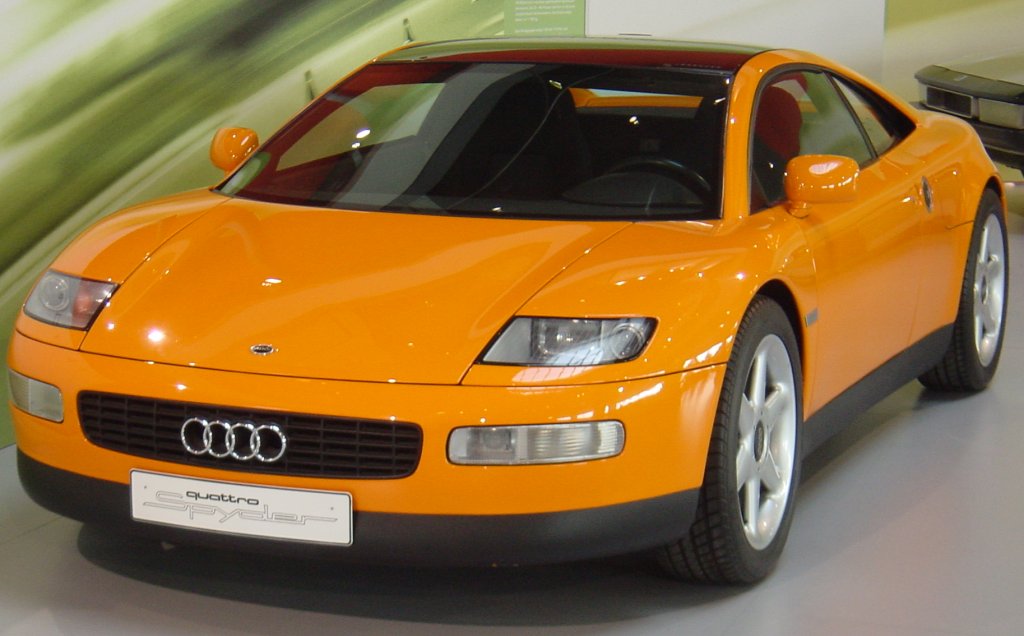
The licensed orange concept photograph
The selected photograph is source-identified as the quattro Spyder prototype and dates the concept to 1991 in its description. It shows the appropriate physical design rather than an R8 production car. The image’s photographer release is retained through the linked Commons licensing record. The caption does not infer a separate orange-car chassis, a current owner or running condition. Colour can help identify a presentation, but it cannot resolve whether another photographed finish belongs to a second object or a later phase of the same study.
A concept’s later museum life
Audi’s Design Legends release lists the Spyder among museum exhibits, providing a dated confirmation of its continuing role in the company’s heritage presentation. That record should not be treated as a permanent promise of public display. Exhibition dates and locations can change, so a visitor should consult the current museum information when planning a visit. In the vehicle profile, the useful historical fact is the documented appearance and its date. The conservation, transport and later presentation history belongs in a fuller record of the physical concept.
What a serious object file should contain
A concept file should include project identity, factory build documentation, presentation photographs and records of subsequent changes. Distinguish a full vehicle from clay models, body studies and display components. If several colourways or interiors appear in photographs, date them before concluding that they represent multiple completed cars. Maintenance or conservation records can also clarify whether a study is currently operable. These questions are different from checking an ordinary road-car service book because the object was made for a design brief rather than a regular customer production process.
Why it belongs beside the competition heritage
The quattro Spyder offers a different kind of rarity from a championship racing car: a built design experiment whose production ambition was not fulfilled. Linking it with the Sport quattro and later circuit machinery helps readers compare purpose, not simply horsepower. The concept deserves a careful guide because its physical identity and factory presentation are documented. Its appeal does not depend on a falsely precise build count or a projected specification presented as a delivered car. The open questions are part of the archive record, not reasons to invent certainty.
Frequently asked questions
Was the quattro Spyder unveiled in 1989?
The retrieved manufacturer sources place its presentation in 1991; the guide corrects the workbook year.
Did it enter a retail limited-production series?
No. Audi’s retrospective says it remained a prototype.
Is it the same car as Avus or an R8 Spyder?
No. Those are separate model and concept identities.
Is the inventory’s one-car count fully certified here?
No. The physical concept is supported, but an exact original-object census is not reconciled from the retrieved primary records.
Explore related vehicle profiles
Sources
- Audi — Design Legends museum exhibition
- Audi France — Rare prototypes at Techno-Classica, 2016
- Audi — Design anniversary magazine, Spyder transverse V6
Programme history and specifications follow the linked manufacturer and heritage records. Where figures or dates differ, their source contexts are retained. Collector-file and inspection guidance is editorial analysis; exact physical-car identity requires its own evidence.
Photography and credit
Source-identified Audi quattro Spyder prototype, dated 1991 in the image description. Concept illustration only; appearance does not establish a separate chassis count or current running condition. Photo: Ottonormal / Wikimedia Commons · Public domain (photographer release recorded on Commons). Original image supplied without visual changes.
Why this machine matters
The Audi quattro Spyder is the physical mid-engine sports-car concept presented at Frankfurt in 1991. It remained a prototype, making it an archive subject rather than a limited retail series. This guide corrects the inventory’s 1989 reference, preserves the distinction from Avus and later R8 Spyders, and leaves an exact original-object count unresolved where factory documentation does not settle it.
Built in limited numbers
The inventory lists one car, but the retrieved primary material does not supply a reconciled original-object build census. This guide leaves the verified production-total field unset and describes the named physical concept. Different colour presentations do not automatically prove separate chassis, and the present location of one display car does not prove that no other prototype or body existed. A stronger numerical claim would need a factory object or project record. Keeping the count open is more accurate than repeating one-of-one simply because it is familiar.
Gallery
Specifications
Factory specifications may vary by model year, market and configuration.
Identity & production
- Official model
- Audi quattro Spyder
- Base model
- quattro Spyder concept
Powertrain & performance
- Engine
- Transversely mounted mid-engine V6