Audi 90 quattro IMSA GTO
The Audi 90 quattro IMSA GTO is the company’s 1989 American competition programme, remembered for its dramatic racing body and turbocharged five-cylinder engine. It is separate from the earlier Audi 200 Trans-Am and from later road cars wearing heritage-inspired graphics. The guide connects the factory-supported history with a credited modern demonstration photograph without inventing chassis or production totals.
The Audi 90 quattro IMSA GTO is the company’s 1989 American competition programme, remembered for its dramatic racing body and turbocharged five-cylinder engine. It is separate from the earlier Audi 200 Trans-Am and from later road cars wearing heritage-inspired graphics. The guide connects the factory-supported history with a credited modern demonstration photograph without inventing chassis or production totals.
Audi 90 quattro IMSA GTO at a glance
| Manufacturer | Audi |
|---|---|
| Archive connection | Audi |
| Model / programme | 90 quattro IMSA GTO |
| Profile scope | Factory IMSA GTO competition archive |
| Historical reference year | 1989 |
| Inventory reference | AUDI-012 |
| Historical engine reference | Turbocharged inline five-cylinder; factory retrospective says just over two litres |
| Exact original build total | Unresolved; no certified production number populated |
The IMSA GTO identity comes first
The profile’s complete name identifies a racing programme rather than an ordinary Audi 90 road car. Retaining that name in the title, image caption and source notes prevents an important rarity error. Normal road-model production is not the series being counted, and a modified street car is not authenticated through similar graphics. The manufacturer-supported programme is the archive subject. A particular competition chassis requires a more detailed physical and documentary record, especially where later bodywork, engine changes or demonstration presentation are part of its history.
The 1989 programme in the American sequence
Audi’s retrospective places the IMSA GTO activity in 1989, following its 1988 Trans-Am campaign. The chronology helps readers understand a change of programme without treating the cars as identical. It also gives the guide a reliable historical reference year. Later museum and festival appearances belong to a separate timeline and do not redefine when the competition programme began. An individual vehicle’s construction and first race should be documented independently if a collector profile goes beyond the model-level archive into one specific object.
The five-cylinder’s stated racing output
Audi’s five-cylinder account gives 530 kW and 720 PS for the 1989 IMSA GTO, with displacement described as just over two litres. Those units are preserved rather than relabelling the same number as bhp. The guide does not assign a more precise displacement field from an unrelated summary, nor does it certify a surviving engine’s present output. For a particular car, configuration, rebuild and test records can refine the specification. The programme rating remains an historical reference, distinct from a current mechanical measurement.
Why the Trans-Am comparison needs care
The earlier Audi 200 Trans-Am has its own model identity and a different manufacturer-stated engine rating. Their relationship is a useful explanation of Audi’s American circuit-racing development, not permission to exchange technical figures between them. A guide should compare like with like: programme year, stated engine and documented competition use. Where one source describes only part of the machinery, leave the remainder unresolved. That makes the comparison clearer than a blended specification claiming every five-cylinder racing Audi had the same layout, output or chassis.
Rarity: no fabricated original build number
The primary material supports this specific works-racing programme but does not provide a reconciled original IMSA GTO chassis census. Exact production metadata remains unset. Counts of cars photographed together or preserved today cannot be converted into an original total without inclusion rules. A register would need to address development frames, replacements and later recreation status. The archive can explain the programme’s narrow purpose and rare surviving-object context while keeping an exact numerical claim open for further evidence rather than repeating an estimate as certified fact.
The wide racing body as a visual record
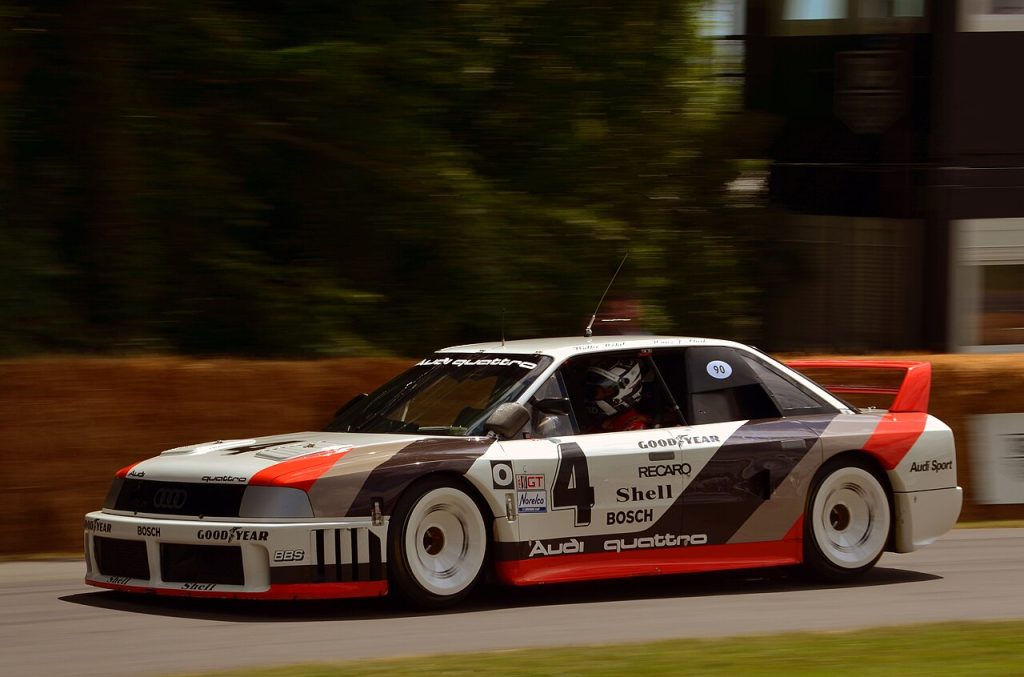
The IMSA GTO’s broad body and conspicuous competition presentation are useful visual identifiers. They are also a reason to inspect body history carefully, because a finished exterior can conceal later repairs or replacement panels. A gallery should show the whole car and relevant details, with each photograph dated and linked to its source. The guide does not infer hidden construction or originality from the visible shape alone. A recognizable racing silhouette is the beginning of an object description, not a substitute for a frame and component record.
Heritage graphics on later Audi road cars
Audi explicitly identifies the IMSA GTO as inspiration for the apprentice RS 6 GTO project and the later RS 6 Avant GT. This is a documented design relationship, not a claim that those road cars are original IMSA competition vehicles. It helps explain why modern readers may recognize the graphics even before learning the 1989 story. Keeping the distinction visible gives each programme its own count and identity. A heritage-inspired road edition can be interesting in its own right without borrowing the original racing car’s chassis history.
Programme reputation and actual results
A racing car’s reputation is best supported by dated results rather than an undefined statement that it won everything. This guide does not transfer the Trans-Am title to IMSA or invent a championship outcome from the car’s dramatic appearance. A future season-history expansion should use official standings and race records, then identify which vehicles participated where. At model level, the manufacturer’s account establishes the programme and its significance. At object level, each claimed result still needs a connection between entry, driver and chassis.
What the Goodwood photograph records
The supplied image identifies an IMSA GTO demonstration at Goodwood in 2014. Its photo source names Andre Lotterer as the demonstration driver. That later appearance is retained as a photograph-specific fact, not a 1989 driver attribution. The caption does not identify a race-period chassis number or present owner. It provides a traceable image of the correct competition programme, with photographer and licence links visible. A period racing picture would offer another kind of evidence, but should carry its own event and rights record.
Building a chassis-level collector history
A specific IMSA GTO file should connect the physical frame and major components with construction and team documentation. Record competition entries, later storage, restoration and demonstrations as separate phases. If an identity was assigned during a rebuild, explain the evidence and the parts used. This is especially important when period numbers were changed or graphics were reapplied. The aim is a chain that another researcher can follow. Familiar colour and a famous programme name should not bridge a gap in physical provenance by themselves.
Present condition and historical specification
A racing-engine rating tells readers what the factory described in period, but does not establish current output or serviceability. A specialist examination should cover the installed engine, drivetrain and structure, together with maintenance records and later adaptations. An operating heritage car may be prepared for demonstrations differently from its competition configuration. Documenting that choice helps an owner understand the object accurately and allows an editor to describe it without implying that modern running proves all original components or full period performance remain intact.
Its role in a useful rare-Audi collection
The IMSA GTO is a strong related subject for Sport quattro, Trans-Am and V8 DTM because each represents a distinct use of Audi’s performance engineering. The connections are useful when they answer specific historical questions rather than simply repeat the quattro name. The guide’s value comes from separating the works programme, its later visual influence and the particular photographed car. That precision lets readers appreciate the spectacle while leaving exact counts, condition and individual race attribution attached to evidence that can genuinely establish them.
Frequently asked questions
What year identifies the Audi 90 IMSA GTO?
Audi’s manufacturer accounts place the American programme in 1989.
What output does Audi state?
The retrospective states 530 kW, or 720 PS; this is a programme rating, not a current test of the pictured car.
Is the RS 6 Avant GT an original IMSA GTO?
No. Audi identifies a heritage design connection, while the road edition remains a separate programme.
Was the photo taken in the 1989 season?
No. It records a Goodwood demonstration in 2014, with the source naming Andre Lotterer as the demonstration driver.
Explore related vehicle profiles
Sources
- Audi — Fifty years of the five-cylinder
- Audi — quattro on the racetrack
- Audi — RS 6 Avant GT and IMSA GTO inspiration
- Audi — Company history
Programme history and specifications follow the linked manufacturer and heritage records. Where figures or dates differ, their source contexts are retained. Collector-file and inspection guidance is editorial analysis; exact physical-car identity requires its own evidence.
Photography and credit
Source-identified Audi 90 quattro IMSA GTO at Goodwood 2014, with Andre Lotterer identified as the demonstration driver in the photo source. This is not a photograph of the 1989 race season. Photo: Nic Redhead / Wikimedia Commons · CC BY-SA 2.0. Wikimedia thumbnail resized from original; no cropping or color changes.
Why this machine matters
The Audi 90 quattro IMSA GTO is the company’s 1989 American competition programme, remembered for its dramatic racing body and turbocharged five-cylinder engine. It is separate from the earlier Audi 200 Trans-Am and from later road cars wearing heritage-inspired graphics. The guide connects the factory-supported history with a credited modern demonstration photograph without inventing chassis or production totals.
Built in limited numbers
The primary material supports this specific works-racing programme but does not provide a reconciled original IMSA GTO chassis census. Exact production metadata remains unset. Counts of cars photographed together or preserved today cannot be converted into an original total without inclusion rules. A register would need to address development frames, replacements and later recreation status. The archive can explain the programme’s narrow purpose and rare surviving-object context while keeping an exact numerical claim open for further evidence rather than repeating an estimate as certified fact.
Gallery
Specifications
Factory specifications may vary by model year, market and configuration.
Identity & production
- Official model
- Audi 90 quattro IMSA GTO
- Base model
- 90 quattro IMSA GTO
Powertrain & performance
- Engine
- Turbocharged inline five-cylinder; factory retrospective says just over two litres