Alpine M65
The Alpine M65 is the small-engined endurance prototype that turned efficiency into a serious racing weapon. Its appeal lies in the balance between aerodynamic ambition, compact Renault-Gordini power and a competition history that must be read one chassis at a time.
The Alpine M65 is the small-engined endurance prototype that turned efficiency into a serious racing weapon. Its appeal lies in the balance between aerodynamic ambition, compact Renault-Gordini power and a competition history that must be read one chassis at a time.
Alpine M65 at a glance
| Manufacturer | Alpine |
|---|---|
| Model family | M65 |
| Profile scope | Competition archive |
| Inventory reference | ALP-019 |
| Engine reference | Renault-Gordini four-cylinder, 1300-class competition specification |
Why the Alpine M65 matters
For a collection built around engineering ideas, the M65 offers a different story from a large-engined flagship. Its compact powertrain and long, low body invite questions about what an endurance car is trying to achieve. Maximum output is only one part of that answer. Drag, stability, mechanical endurance and the rules of the event all shape the final machine. That makes the M65 valuable as an example of a design philosophy, whether it is displayed beside an early Berlinette or another sports prototype.
1965: efficiency and outright ambition
Alpine’s own heritage account describes a 1300-class Gordini engine, approximately 130 bhp and a quoted weight of 669 kg. It records a class success at Reims and an outright Nürburgring 500 km victory in 1965. These figures describe the manufacturer’s historical presentation of the M65; they are not a measured specification for every surviving configuration. The Renault Group retrospective also identifies Lucien and Mauro Bianchi with the Nürburgring win. The M65 therefore belongs to more than a list of cars that appeared at Le Mans.
Understanding the indices
Endurance racing could reward different achievements within one event. An outright finish, a displacement-class result, an Index of Performance and an energy-efficiency award answer different questions. Alpine places the M65 within that efficiency-driven period of prototype development. When reading a race report, retain the title of the award rather than shortening every success to a race win. A result can be historically important without implying that a small Alpine beat every larger car in the general classification.
Design: reading the body as engineering
The finned tail is one of the M65’s most recognizable visual features. For a collector, it is a reason to study period photographs from several angles rather than rely on a single modern image. Look at the relationship between roof, rear body, engine cover and fins. Record which body configuration is being represented and the evidence behind it. A restoration intended to evoke one particular race may differ from a later development state of the same car. Neither should be described vaguely as the only correct M65 appearance.
A prototype is a sequence of configurations
Competition machinery changes. An engine can be rebuilt, capacity altered, bodywork replaced or a cooling arrangement revised without erasing the identity of the underlying vehicle. The useful task is to describe those changes coherently. A chassis dossier should separate the original construction, period development, post-period alterations and present restoration. Keep photographs dated wherever possible. If a component was made recently, identify it as a replacement rather than allowing the overall period appearance to imply that every part survives from 1965.
Production and rarity
The inventory labels the M65 “Very limited,” but the reviewed evidence does not establish a complete manufacturing total. Race entries are not a substitute: a single car may compete repeatedly, while a spare or development car may never appear in a result list. This profile therefore leaves the numeric production field blank. It is an Archive competition record, with model identity verified separately from total production and present survivors. A claim of one of a specific number requires a traceable chassis census with a clear definition of what was counted.
What a collector should inspect
Begin with the history file, then inspect the car against it. Request close photographs of identification markings, the supporting structure, suspension attachments and the engine installation. A specialist should explain how the visible construction relates to the proposed identity. Inspect repair seams and replacement sections alongside restoration photographs. Ask which parts were retained, reproduced or sourced from another car. A highly finished body may be attractive, but it cannot establish the identity of what lies beneath it.
Mechanical condition and preparation
For a running M65, provenance and mechanical readiness require separate assessments. Review the engine build record, running hours if recorded, oil-system work, cooling checks and gearbox maintenance. Ask how the brakes, bearings and fuel system were evaluated after storage. Check the suitability of the current tires and safety equipment for the intended use. A demonstration run, a concours display and an endurance race place different demands on a historic prototype. Plan the inspection around the actual activity rather than assuming that a car which starts is ready for sustained track work.
Conservation or reconstruction?
Before commissioning work, decide what the car is intended to preserve. Old paint, repair traces and period fabrication details can help explain its career. Replacing them may improve presentation while removing evidence. Conversely, structural deterioration can make preservation alone unsuitable for a running car. Photograph each stage and retain removed material where practical. A good conservation file explains decisions, including where safety or mechanical reliability required a new component. That file becomes part of the car’s history, not just a receipt folder.
Where it fits in the Alpine story
Read the M65 beside the preceding M64 and the later A210. The comparison is useful because it shows how a competition programme develops through distinct models rather than through a single uninterrupted specification. The roadgoing A110 belongs to the same marque but answers another use case. A collection that includes both can tell a richer story about Alpine than a display organized only by engine size. Keep the prototype’s own results and provenance attached to its own identity.
Frequently asked questions
Was the M65 an outright Le Mans winner?
No. This profile does not assign Alpine’s later overall Le Mans victory to the M65. Different events and awards must retain their own names.
How many M65s were produced?
A complete model production total is not established by the reviewed evidence, so no exact number is entered.
Is the quoted weight a specification for the pictured car?
No. It is a manufacturer heritage figure; the photograph does not verify the present configuration of an individual chassis.
What matters most when authenticating an M65?
A coherent connection between the identified chassis, dated competition evidence and the history of repairs or replacement components.
Explore related Alpine profiles
Sources
- Alpine: Celebrating 60 years of Alpine
- Renault Group: A424 preview and Alpine endurance chronology
- ACO: Alpine participation record at the 24 Hours of Le Mans
Historical statements follow the linked manufacturer, club, homologation and vehicle records. Inspection and collecting guidance is editorial analysis. Individual catalogue claims remain attributed to the relevant car and source.
Photography and credit
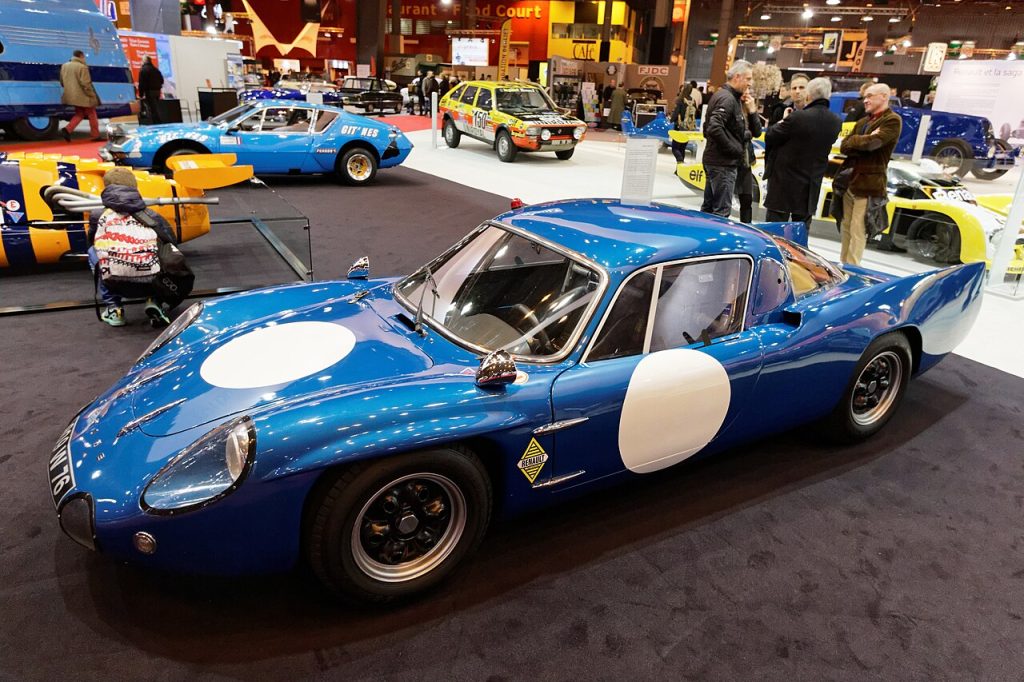
An Alpine M65 displayed at Rétromobile 2016. Modern display photograph; no individual chassis identification is asserted. Photo: Thesupermat / Wikimedia Commons · CC BY-SA 4.0. Wikimedia display copy; no content retouching. WordPress may resize further and website layouts may crop the image.
Why this machine matters
The Alpine M65 is the small-engined endurance prototype that turned efficiency into a serious racing weapon. Its appeal lies in the balance between aerodynamic ambition, compact Renault-Gordini power and a competition history that must be read one chassis at a time.
Built in limited numbers
The inventory labels the M65 “Very limited,” but the reviewed evidence does not establish a complete manufacturing total. Race entries are not a substitute: a single car may compete repeatedly, while a spare or development car may never appear in a result list. This profile therefore leaves the numeric production field blank. It is an Archive competition record, with model identity verified separately from total production and present survivors. A claim of one of a specific number requires a traceable chassis census with a clear definition of what was counted.
Gallery
Specifications
Factory specifications may vary by model year, market and configuration.
Identity & production
- Official model
- Alpine M65
- Base model
- M65
- Country of manufacture
- France
Powertrain & performance
- Engine
- Renault-Gordini four-cylinder, 1300-class competition specification