Alpine A106 competition cars
The A106 competition story belongs to Alpine’s formative years, when a light car and careful preparation could matter as much as outright engine size. This archive groups the early competition application of the A106; it does not imply that every competing chassis was built to one identical specification.
The A106 competition story belongs to Alpine’s formative years, when a light car and careful preparation could matter as much as outright engine size. This archive groups the early competition application of the A106; it does not imply that every competing chassis was built to one identical specification.
History and documented identity
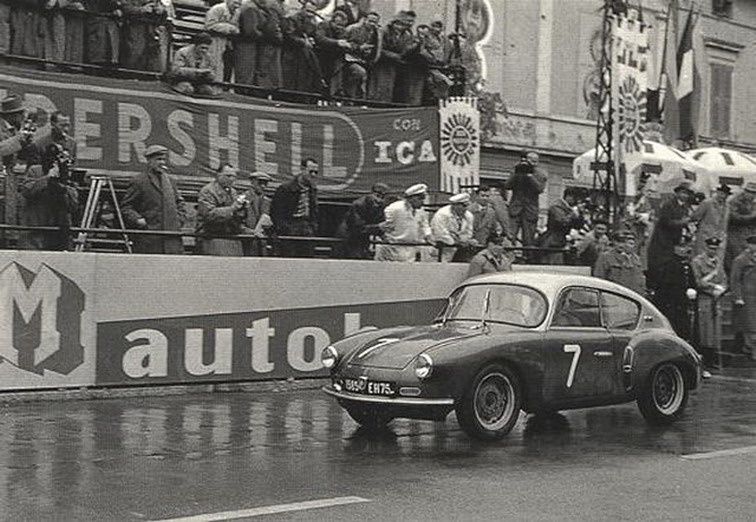
Alpine describes the A106 as originally intended for racing, with differing preparation and equipment choices. The complete A106 family numbered 251 in its account. The selected historical photograph identifies Maurice Michy in an A106 at the 1956 Mille Miglia. Alpine — Celebrating 60 years of Alpine.
Design and collector significance
Competition history should be read through the individual machine. A racing number, event photograph and owner’s recollection may each contribute, but they do not automatically describe the same chassis. Establish who entered the car, which event it attended, what configuration it used and what evidence joins those records together. The result is more useful than a broad claim that an A106 is a race winner.
How to identify the right specification
A road A106 converted for historic competition, an original period competition car and a reconstructed competition-style car are three different descriptions. A modern technical passport can establish suitability for a particular event; it should not be treated as a substitute for the car’s history. Record the date and basis of a conversion so later changes do not disappear into the phrase factory specification.
Production, rarity and counting scope
There is no verified separate competition-production total in the sources used for this record. The 251-car family reference includes the parent series and must not be copied into a competition-only production field. A count of entries at one race would not establish the number of vehicles manufactured. This record therefore remains an Archive draft rather than a finite-edition production claim.
What to inspect before buying
Build a timeline containing dated entries, photographs, registrations, ownership transfers and restoration work. Compare engine and gearbox identification against that timeline. Ask the specialist inspecting the car to distinguish period alterations from later work and to explain any replacement structural sections. For competition use, seek current event-specific advice about safety equipment and acceptance instead of assuming historical participation guarantees modern eligibility.
Where it fits in an Alpine collection
The A106 Coach explains the road-model family behind these cars. The M63 takes the Alpine archive into purpose-built endurance prototypes. Keeping these profiles separate prevents a rally or road-racing story from being mistaken for the later Le Mans prototype programme.
Collector documentation checklist
- Separate the original build description from the car’s current specification.
- Keep chassis, engine and ownership evidence together in a dated file.
- Record which claims come from factory material, club research, an auction catalogue or the present owner.
- Retain photographs of restoration and significant component replacements.
- Keep completed production, regional allocation and known survivors in separate fields.
Frequently asked questions
Is this a single limited edition?
No. It is an archive of competition use and preparation within the A106 family.
Does 251 mean 251 racing A106s?
No. It is the parent A106 figure, not a competition-only count.
Does a historic racing passport prove period provenance?
Treat technical eligibility and historical identity as separate questions requiring separate evidence.
Explore related Alpine profiles
Sources and research scope
Historical facts follow the linked records; inspection guidance and collection comparisons are editorial analysis. Where sources use different counting scopes or a subtype remains broad, those limits are stated rather than resolved with an invented number.
Photography and credit
Maurice Michy competing in an Alpine A106 at the 1956 Mille Miglia; historical competition photograph. Photo: Unknown photographer / Wikimedia Commons · Public domain — PD-Italy / PD-1996 as recorded by Commons. Original file imported without content retouching. WordPress may resize display copies; the website layout may crop them.
Why this machine matters
The A106 competition story belongs to Alpine’s formative years, when a light car and careful preparation could matter as much as outright engine size. This archive groups the early competition application of the A106; it does not imply that every competing chassis was built to one identical specification.
Built in limited numbers
There is no verified separate competition-production total in the sources used for this record. The 251-car family reference includes the parent series and must not be copied into a competition-only production field. A count of entries at one race would not establish the number of vehicles manufactured. This record therefore remains an Archive draft rather than a finite-edition production claim.
Gallery
Specifications
Factory specifications may vary by model year, market and configuration.
Identity & production
- Official model
- Alpine A106 competition cars
- Base model
- A106
- Country of manufacture
- France