Alpine A106 Coach
The Alpine A106 Coach is the beginning of Alpine as a vehicle manufacturer: a small French coupe whose importance lies in the idea it made tangible. For a collector, it offers a direct route to the marque’s founding philosophy, before the better-known Berlinettes shaped Alpine’s international reputation.
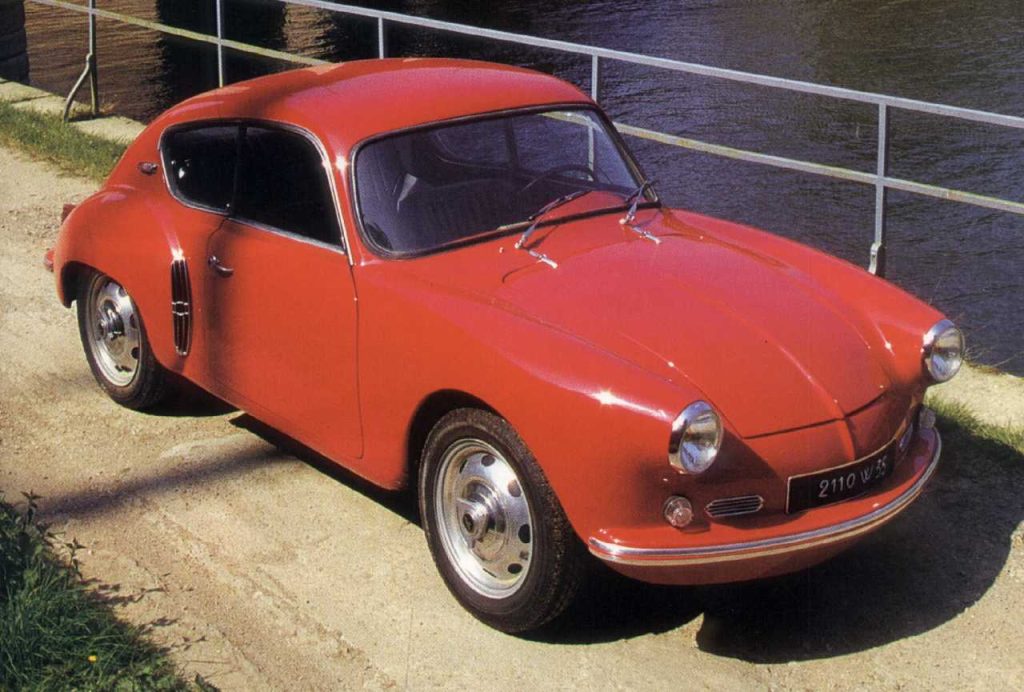
The Alpine A106 Coach is the beginning of Alpine as a vehicle manufacturer: a small French coupe whose importance lies in the idea it made tangible. For a collector, it offers a direct route to the marque’s founding philosophy, before the better-known Berlinettes shaped Alpine’s international reputation.
History and documented identity
Alpine’s own heritage account records 251 A106s built from 1955 to 1959. That is an A106 family figure, not a separate Coach-only or 1955-only total. The manufacturer identifies Renault 4CV foundations and a lightweight glassfibre body. Alpine — Celebrating 60 years of Alpine.
Design and collector significance
Read the A106 as an exercise in using available mechanical parts to support a distinct vehicle identity. Its appeal is not dependent on having the most powerful engine in an Alpine collection. A modest early specification can explain the origin of the brand more clearly than a heavily upgraded car. Preserving the connection between chassis, body and paperwork therefore matters more than recreating the appearance of a later competition derivative.
How to identify the right specification
Coach is a body designation. A106 is the model family. Neither proves that a particular car is a Mille Miles competition specification, and an attractive restored body does not prove the engine beneath it is original. Treat those as separate questions when reading a sales description. A chassis carrying later parts can still have historical interest, but its present specification and original specification should be described separately.
Production, rarity and counting scope
The documented 251-car parent series places the A106 family below the site’s 7,500-unit ceiling. Do not add this profile’s family reference to a separate competition record as if it represented another 251 cars. The number does not describe survivors, roadworthy examples, right-hand-drive production or a factory-numbered limited edition.
What to inspect before buying
Ask for the chassis identity, registration history, engine identification and restoration photographs before drawing conclusions from paint or trim. On a glassfibre-bodied historic car, an inspection should cover the underlying steel structure as well as the visible finish. Have a specialist explain structural repairs, body mounting and any changes to the original mechanical layout. Photographs taken before paint can answer questions that a polished exterior cannot.
Where it fits in an Alpine collection
Choose the A106 Coach if the collecting theme is Alpine’s origin. The A108 Coach explores the next mechanical step; the A108 Berlinette shows the changing body concept. These are connected historical subjects, but they should retain separate identities in a collection and in its documentation.
Collector documentation checklist
- Separate the original build description from the car’s current specification.
- Keep chassis, engine and ownership evidence together in a dated file.
- Record which claims come from factory material, club research, an auction catalogue or the present owner.
- Retain photographs of restoration and significant component replacements.
- Keep completed production, regional allocation and known survivors in separate fields.
Frequently asked questions
Was the A106 Coach the first Alpine?
Alpine identifies the A106 Coach as its foundational 1955 model.
How many A106s were built?
Alpine records 251 in the family between 1955 and 1959. A separate Coach-only total is not established here.
Is every A106 a Mille Miles?
No. Do not transfer a competition specification or a named derivative’s identity to every Coach without chassis-level evidence.
Explore related Alpine profiles
Sources and research scope
Historical facts follow the linked records; inspection guidance and collection comparisons are editorial analysis. Where sources use different counting scopes or a subtype remains broad, those limits are stated rather than resolved with an invented number.
Photography and credit
Alpine A106 Coach-family example; the source also identifies it as a 1959 Mille Miglia specification. It illustrates the family, rather than a particular 1955 chassis. Photo: X-Ray91270 / Wikimedia Commons · Public domain — released by photographer. Original file imported without content retouching. WordPress may resize display copies; the website layout may crop them.
Why this machine matters
The Alpine A106 Coach is the beginning of Alpine as a vehicle manufacturer: a small French coupe whose importance lies in the idea it made tangible. For a collector, it offers a direct route to the marque’s founding philosophy, before the better-known Berlinettes shaped Alpine’s international reputation.
Built in limited numbers
The documented 251-car parent series places the A106 family below the site’s 7,500-unit ceiling. Do not add this profile’s family reference to a separate competition record as if it represented another 251 cars. The number does not describe survivors, roadworthy examples, right-hand-drive production or a factory-numbered limited edition.
Gallery
Specifications
Factory specifications may vary by model year, market and configuration.
Identity & production
- Official model
- Alpine A106 Coach
- Base model
- A106
- Country of manufacture
- France