2012 Peugeot Onyx Concept
Explore the Onyx Concept: history, verified identity, specification references, rarity evidence and real credited photos.
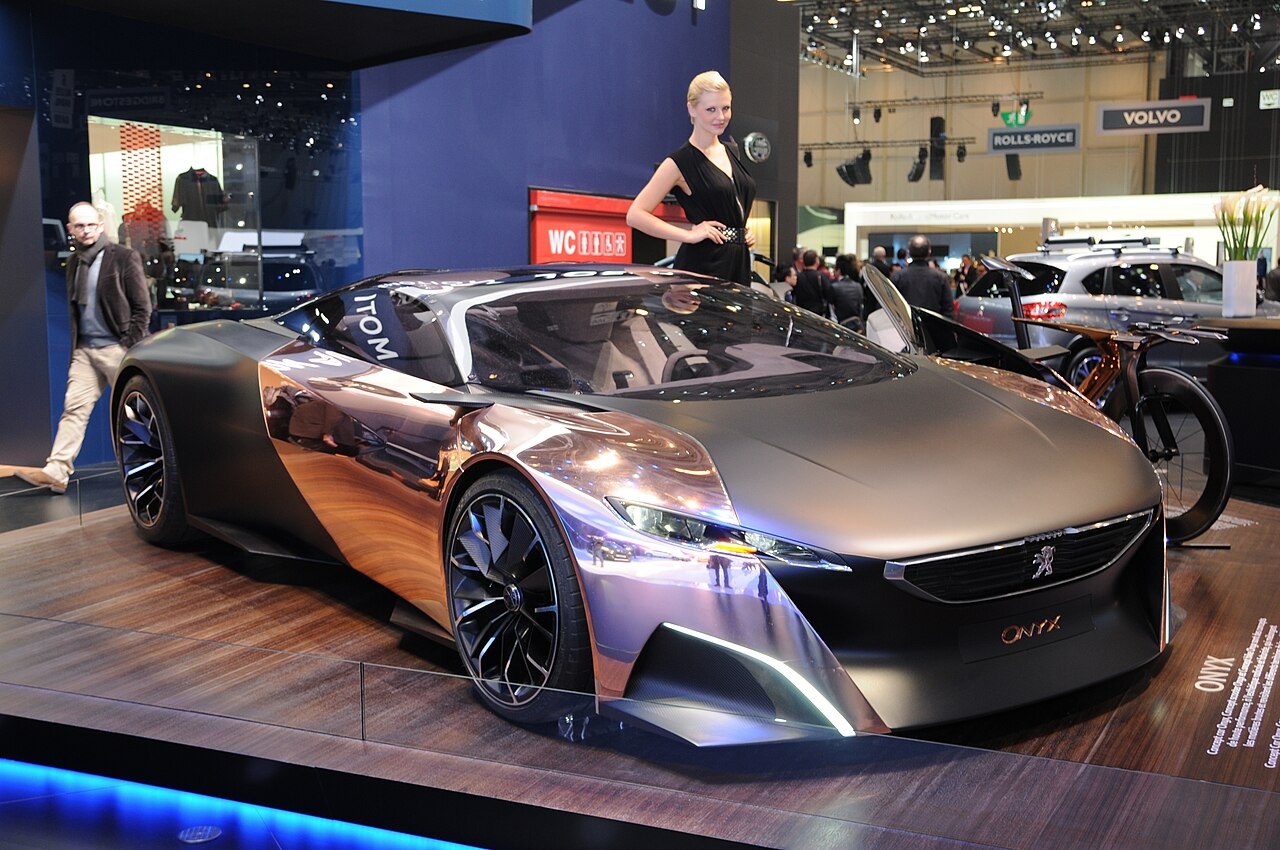
Copper panels and a dark carbon body made the Peugeot Onyx one of the brand’s most recognisable concept cars. Revealed in 2012, it joined a race-derived V8 diesel-hybrid proposal with an unusually tactile approach to cabin materials. Onyx is more than a dramatic silhouette: it asks how a high-performance object can make its material construction visible. This profile covers the automobile, keeping the related bicycle and scooter studies outside its vehicle count.
A supercar built around material contrast
The original dossier identifies handcrafted copper wings and doors alongside carbon-fibre bodywork. Unlike a uniform paint scheme, the contrast asks viewers to notice what the surfaces are made from. That distinction is central to reading the design. Reflections, lighting and the condition of the copper can change its appearance between photographs, so a different colour tone at a later exhibition does not automatically establish another vehicle or a separate numbered edition.
Peugeot: original Onyx materials and powertrain dossier
The racing connection beneath the shape
Peugeot described a mid-mounted 3.7-litre V8 HDi FAP engine developed with Peugeot Sport experience, with 600 bhp transmitted through a six-speed sequential gearbox. The concept’s HYbrid4 energy recovery added a stated 80 bhp boost. These are period manufacturer references. The technical relationship to endurance racing does not make Onyx a 908 competition chassis or give it the 908’s race results; its identity remains a separate supercar concept.
Felt and Newspaper Wood in the cabin
The manufacturer’s material narrative extends inside through felt and a compressed-paper material called Newspaper Wood. These choices invite a different reading of luxury from polished conventional trim. Their value in a design history lies in the deliberate use of texture and visible construction, rather than in an unsupported claim that every material would be practical in series manufacture. A display photograph can show the surfaces but cannot establish their current durability or production economics.
Peugeot: original Onyx materials and powertrain dossier
One design family, several kinds of mobility
The launch presentation also included an Onyx bicycle and a three-wheel scooter concept. They shared a design vocabulary, but they were separate objects with different purposes. Keeping this profile focused on the automobile avoids turning the presentation’s family name into a misleading car-production total. It also makes future cross-references clearer: a bicycle caption or scooter specification belongs to its own subject and should never be silently incorporated into the supercar’s data.
Peugeot: Onyx in the history of concept-car development
How to identify an Onyx photograph
Look for the distinctive copper side panels, low enclosed cockpit and dramatic contrast with the dark body. Retain the photographer’s event date, especially when a later motor-show appearance illustrates the 2012 introduction. A photograph of the physical exhibit supports its design identity; it does not authenticate current drivetrain operation. Any claim that a particular object performed a demonstration run should be supported by the corresponding event record rather than by a static display image alone.
Specifications and identity reference
| Revealed | 2012 |
|---|---|
| Body theme | Copper panels and carbon-fibre construction |
| Engine reference | Mid-mounted 3.7-litre V8 HDi FAP |
| Combustion output | Manufacturer concept reference: 600 bhp |
| Electric boost | Manufacturer reference: additional 80 bhp |
| Transmission | Six-speed sequential |
| Cabin materials | Felt and Newspaper Wood |
| Profile boundary | Onyx automobile; bicycle and scooter excluded |
Rarity and production scope
Verified physical Onyx automobile concept. Related Onyx bicycle and scooter projects are not added to its automobile count. No audited total of all styling, development and running examples is assigned.
This is an Archive record. Concepts, restored heritage vehicles, works cars and competition programmes are not added to customer road-production totals. A programme profile does not establish how many physical chassis were made, and repeated exhibition appearances do not create additional vehicles.
What the photograph represents
Peugeot Onyx at the Geneva motor show in 2013. Later exhibition appearance of the 2012 concept; the photograph is not proof of its current output, battery function or an exclusive single-build census.
Related Peugeot heritage profiles
Frequently asked questions
Is Onyx a customer production supercar?
The sources document a concept, rather than a retail production series.
Are the Onyx scooter and bicycle included in this profile’s count?
No. The shared name describes a design family, not a single automobile production run.
What is the production-count boundary for this profile?
Verified physical Onyx automobile concept. Related Onyx bicycle and scooter projects are not added to its automobile count. No audited total of all styling, development and running examples is assigned.
Sources and further reading
- Peugeot: original Onyx materials and powertrain dossier
- Peugeot: Onyx in the history of concept-car development
Research checked 16 October 2026. Linked factory, heritage and specialist-register records support the specifically attributed claims. Photographic descriptions identify the illustrated subject. Design analysis and suggested authentication steps are editorial interpretation.
Built in limited numbers
Verified physical Onyx automobile concept. Related Onyx bicycle and scooter projects are not added to its automobile count. No audited total of all styling, development and running examples is assigned.
Gallery
Specifications
Factory specifications may vary by model year, market and configuration.
Identity & production
- Official model
- Peugeot Onyx Concept
Sources and verification
Source citations are being prepared for this profile.