2011 Peugeot HX1 Concept
Explore the HX1 Concept: history, verified identity, specification references, rarity evidence and real credited photos.
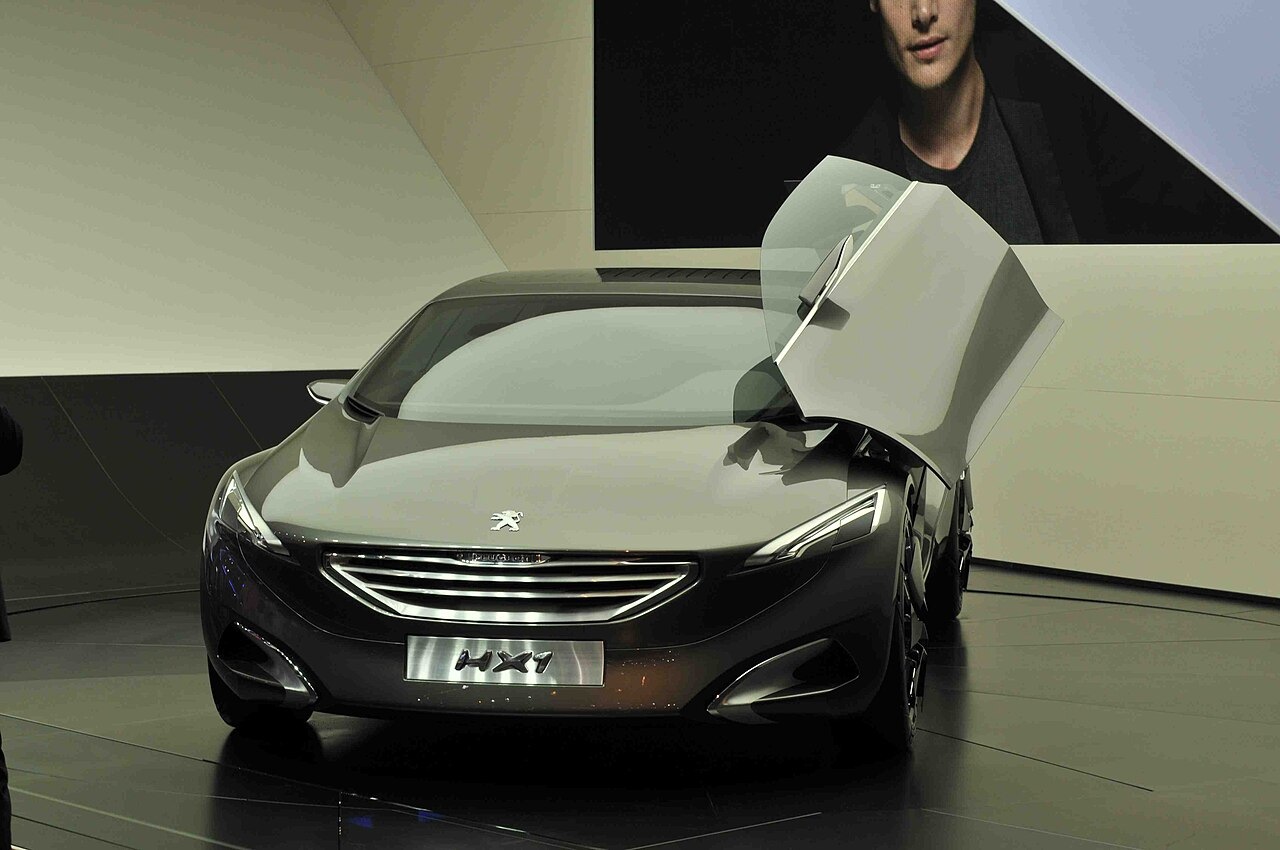
The Peugeot HX1 approached luxury travel through adaptable space rather than a conventional limousine shape. Presented in 2011, the low, broad concept combined provision for six occupants with a diesel-electric plug-in HYbrid4 proposal. Its active aerodynamic details made transformation part of the design story. The HX1 is recorded here as a physical concept programme, with its proposed systems distinguished from the specification and production history of later Peugeot people carriers.
Metamorphosis as the organising idea
Peugeot’s August 2011 dossier used metamorphosis as the HX1’s central theme. The brief connected packaging, aerodynamics, materials and powertrain rather than presenting them as unrelated show features. That makes the car interesting as a design argument: it asks how a large passenger vehicle might adapt to different uses while maintaining a low visual profile. The concept’s identity should therefore be retained instead of reducing it to a speculative future production model.
Peugeot: HX1 Metamorphose factory dossier
Six places without a conventional van profile
The manufacturer describes capacity for up to six people in a body measuring approximately 4.95 metres long and only 1.37 metres high. Additional seats were incorporated into a reconfigurable interior. These are useful packaging references, but the dimensions alone do not describe ease of access or real passenger comfort. A careful visual account should identify the display configuration being shown and distinguish the proposed seating arrangement from an independently assessed production seating system.
Diesel-electric propulsion with an external charge
The published HYbrid4 package combines a 2.2-litre HDi FAP diesel rated at 204 PS with a 95 PS electric motor, for a stated combined 299 PS. Peugeot described plug-in charging as part of the concept. The important connection is between the spacious body and the proposed energy system. Contemporary concept figures remain period manufacturer references; they are not a current battery-health report or evidence that an exhibited vehicle retains every original operating function.
Peugeot: HX1 Metamorphose factory dossier
Aerodynamics and the wider design presentation
The dossier describes speed-dependent aerodynamic elements, while Peugeot’s separate Pierre Hardy collaboration account places the HX1 at Frankfurt in 2011 and discusses its relationship with a concept shoe. These different references reveal the breadth of the presentation: an engineering proposal and a design collaboration occupied the same stage. Neither should be used to imply that the shoe project was another automobile or that each exhibition appearance represents another constructed HX1.
Peugeot: HX1 at Frankfurt and Pierre Hardy collaboration
Keeping the concept’s record coherent
Use the factory name, the 2011 introduction and photographs of the actual low-roof exhibit as the identity anchors. An image of a later MPV may illustrate a broad styling relationship, but it cannot verify this concept’s interior or active body features. If documenting a particular displayed object, retain exhibition dates and collection captions. A claim about an exclusive surviving example requires a construction and custody record beyond the concept’s original promotional description.
Specifications and identity reference
| Introduction | 2011; Frankfurt show context |
|---|---|
| Vehicle proposal | Low luxury MPV concept; up to six occupants |
| Length / height | Factory reference: 4.954 m / 1.373 m |
| Diesel engine | 2.2-litre HDi FAP; 204 PS |
| Electric motor | Manufacturer reference: 95 PS |
| Combined output | Manufacturer concept reference: 299 PS |
| Energy strategy | Plug-in HYbrid4 |
| Count boundary | Concept programme; no audited all-build total |
Rarity and production scope
Verified physical HX1 concept programme. Six-place packaging and the plug-in hybrid specification are factory design references, not customer production totals. No exclusive one-built claim is assigned.
This is an Archive record. Concepts, restored heritage vehicles, works cars and competition programmes are not added to customer road-production totals. A programme profile does not establish how many physical chassis were made, and repeated exhibition appearances do not create additional vehicles.
What the photograph represents
Peugeot HX1 at the Frankfurt motor show in 2011. Physical concept reference, not a production MPV or an audit of every prototype built.
Related Peugeot heritage profiles
Frequently asked questions
Was HX1 an ordinary production MPV?
No. It was presented as an experimental concept with adaptable packaging and proposed hybrid systems.
Does six seats mean six examples were built?
No. Seating capacity and the number of constructed vehicles are unrelated measures.
What is the production-count boundary for this profile?
Verified physical HX1 concept programme. Six-place packaging and the plug-in hybrid specification are factory design references, not customer production totals. No exclusive one-built claim is assigned.
Sources and further reading
Research checked 16 October 2026. Linked factory, heritage and specialist-register records support the specifically attributed claims. Photographic descriptions identify the illustrated subject. Design analysis and suggested authentication steps are editorial interpretation.
Built in limited numbers
Verified physical HX1 concept programme. Six-place packaging and the plug-in hybrid specification are factory design references, not customer production totals. No exclusive one-built claim is assigned.
Gallery
Specifications
Factory specifications may vary by model year, market and configuration.
Identity & production
- Official model
- Peugeot HX1 Concept
Sources and verification
Source citations are being prepared for this profile.