1966 Prince R380A-I Japan Grand Prix Winner
Explore the Prince R380A-I Japan Grand Prix Winner: history, verified identity, specification references, rarity evidence and real credited photos.
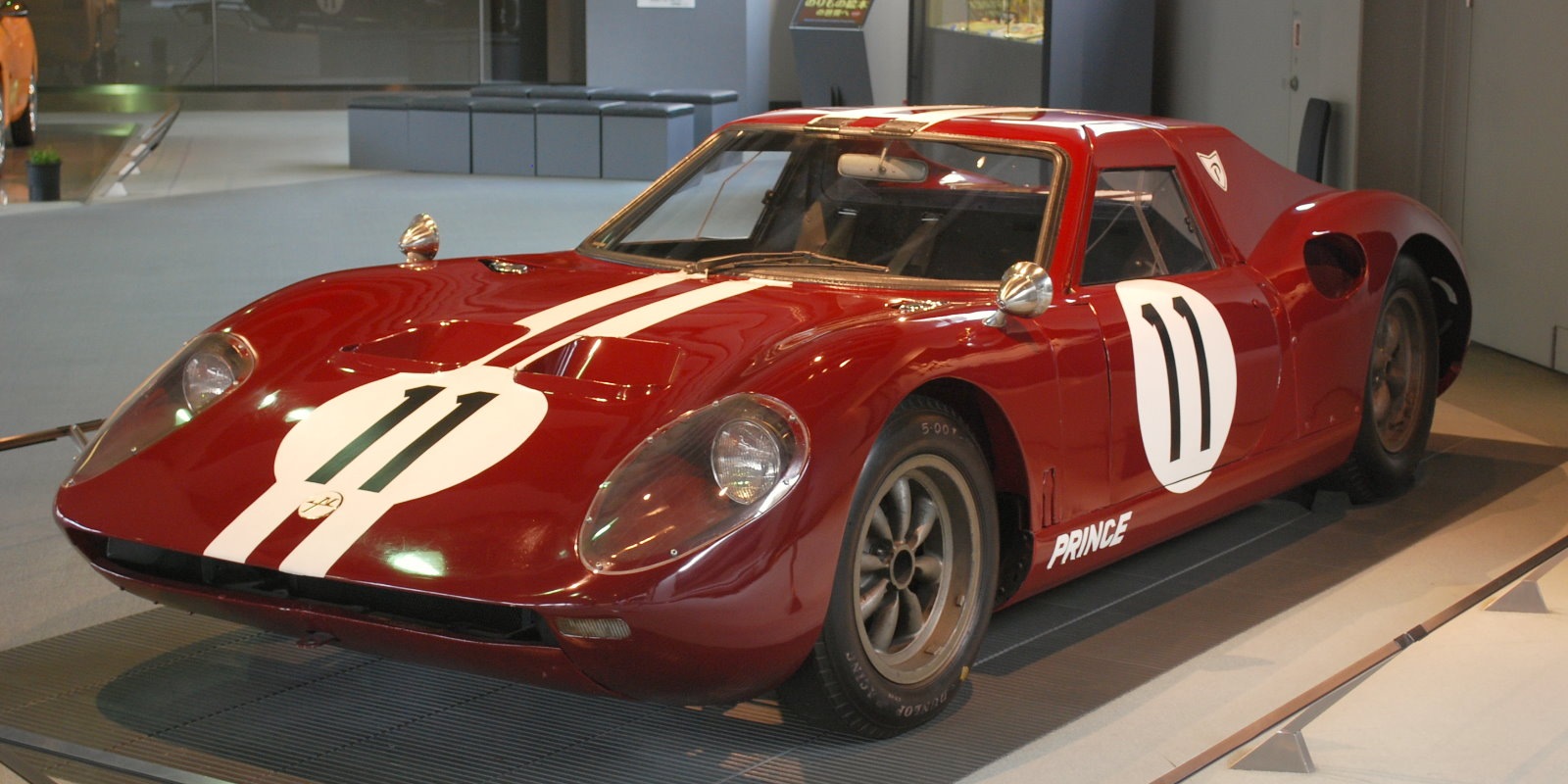
The Prince R380A-I turned a difficult encounter with Porsche into a purpose-built sports prototype. Nissan's Heritage Collection identifies the preserved No.11 as Yoshikazu Sunako's overall winner at the 1966 Japan Grand Prix. Its mid-mounted GR8 engine and lightweight body place it in a different category from the Skyline that inspired the challenge. This archive profile follows that documented winning vehicle and design, with restoration history kept visible and no speculative production count.
A prototype rather than another modified saloon
Prince developed the R380 after the 1964 Japan Grand Prix demonstrated the challenge posed by Porsche's sports-racing machinery. Nissan credits Shinichiro Sakurai as chief engineer. The resulting car used an aluminium body and a chassis arrangement related to the Brabham BT8, with the engine mounted behind the cockpit. This was a change in approach: instead of asking a passenger-car shell to do more, Prince built around the requirements of prototype competition.
Nissan Heritage: Prince R380A-I
The GR8 engine at the centre of the design
Nissan describes the GR8 as a newly developed four-valve DOHC straight-six derived from the G7's lineage. The collection specification lists 1,996 cc and more than 200 PS, with a curb-weight reference of 620 kg. Those are historical racing specifications. They explain the project's ambition without needing a modern acceleration estimate. The engine's architecture also helps illuminate the later S20 story, while remaining a separate competition engine with its own preparation and operating demands.
The 1966 Fuji victory
The collection identifies this as the actual No.11 driven by Sunako to victory at the third Japan Grand Prix at Fuji Speedway. That is a stronger vehicle-level claim than a general statement that an R380 once won. The result also came before Prince merged with Nissan in 1966. Retaining the Prince name in the title respects the car's contemporary identity, while its place in Nissan's archive records the subsequent corporate and engineering continuity.
Nissan Heritage: Prince R380A-I
Restoration is part of its provenance
NISMO fully restored the car in 2013, according to Nissan, and it was later repainted red to match its 1966 appearance in 2018. Consequently, photographs made at different times may show different presentation states without depicting separate editions. Colour alone cannot settle a chassis question. A good archive record keeps dates, restoration documentation and exhibition captions together so that a later appearance does not silently replace the vehicle's earlier competition history.
Nissan Heritage: Prince R380A-I
Reading the R380 family
The A-I winner should be compared with the A-II record car as related developments, not merged with it. The later body and engine specification reflect a new phase of work. Nor should the number of restored museum examples be treated as a reliable total of original chassis built. The useful distinction is between a verified event identity, an engineering generation and a production census. This profile has strong evidence for the first two and leaves the third unassigned.
Specifications and identity reference
| Reference identity | No.11; 1966 Japan Grand Prix winner |
|---|---|
| Driver | Yoshikazu Sunako |
| Engine | GR8 inline six, four-valve DOHC |
| Displacement | 1,996 cc |
| Listed output | More than 200 PS at 8,400 rpm |
| Listed curb weight | 620 kg |
| Wheelbase | 2,360 mm |
| Restoration | NISMO 2013; period red presentation restored in 2018 |
Rarity and production scope
One documented winning competition vehicle within the R380A-I programme. No worldwide chassis-build count is assigned, and the later R380A-II is a separate development. Competition machinery belongs in Archive and is excluded from customer road-production totals.
This is an Archive record. Concepts, restored heritage vehicles, works cars and competition programmes are not added to customer road-production totals. A programme profile does not establish how many physical chassis were made, and repeated exhibition appearances do not create additional vehicles.
What the photograph represents
Preserved Prince R380A-I photographed in its displayed restoration state; the image is not a period 1966 photograph.
Related Nissan heritage profiles
Frequently asked questions
Is this a road-car homologation edition?
No. The R380A-I is a purpose-built competition prototype.
Why do photographs show different colours?
Nissan documents restoration in 2013 and repainting to the 1966 red appearance in 2018; image dates matter.
What is the production-count boundary for this profile?
One documented winning competition vehicle within the R380A-I programme. No worldwide chassis-build count is assigned, and the later R380A-II is a separate development. Competition machinery belongs in Archive and is excluded from customer road-production totals.
Sources and further reading
Research checked 16 October 2026. Manufacturer records support identity and the specifically attributed historical figures. Photographic descriptions identify the illustrated subject. Design analysis and suggested authentication steps are editorial interpretation.
Built in limited numbers
One documented winning competition vehicle within the R380A-I programme. No worldwide chassis-build count is assigned, and the later R380A-II is a separate development. Competition machinery belongs in Archive and is excluded from customer road-production totals.
Gallery
Specifications
Factory specifications may vary by model year, market and configuration.
Identity & production
- Official model
- Prince R380A-I Japan Grand Prix Winner
Sources and verification
Source citations are being prepared for this profile.