1967 Nissan R380A-II International Record Car
Explore the R380A-II International Record Car: history, verified identity, specification references, rarity evidence and real credited photos.
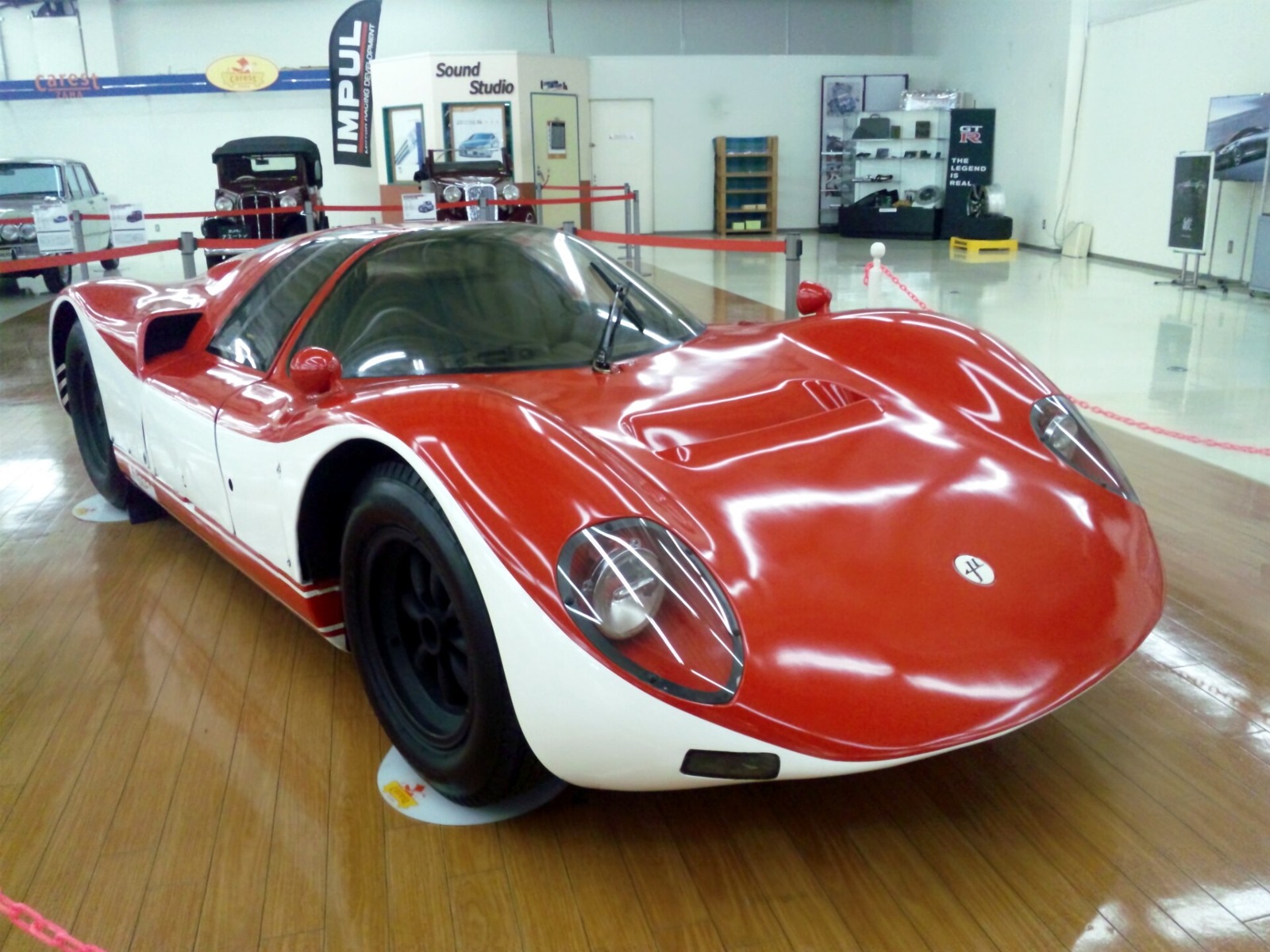
The Nissan R380A-II record car shows how racing development can be redirected toward sustained speed. Nissan identifies the preserved machine as the actual car driven by Tatsu Yokoyama during the 8 October 1967 international-record attempt. Its extended cowl distinguishes that purpose from a normal race appearance. This is an archive record of a documented competition vehicle and achievement, separate from Prince's 1966 Grand Prix-winning A-I.
From circuit competition to measured distance
The R380 programme pursued both race results and speed records. Nissan's account separates a 1965 attempt from the internationally recognised 1967 achievement. In 1965 the car exceeded international figures in four categories, but certification remained domestic because the Yatabe course was not then FIA-authorised. That distinction is essential. A faster measured performance and an internationally certified record are related claims, but they are not the same documentary result.
Nissan Heritage: R380A-II record car
The October 1967 programme
Nissan credits Yokoyama with records over 50 kilometres, 50 miles, 100 kilometres, 100 miles, 200 kilometres, 200 miles and one hour. These are multiple categories from a programme, not seven unique cars. Preserving the distance units also avoids confusing 50 miles with 50 kilometres. The profile records the categories without inventing an average-speed figure where the chosen source does not provide one in its account.
A body shaped for the task
The museum describes the record car's cowl as 80 mm longer than the racing version to increase maximum speed. That is a useful identification detail because it ties a visible change to an engineering purpose. It also warns against using every R380A-II photograph interchangeably. A race configuration can illustrate the family, while the record configuration needs the longer body and its corresponding event history to support a chassis-specific caption.
Nissan Heritage: R380A-II record car
Reading the collection specification
The collection lists a 1,996 cc GR8 straight-six, four-valve DOHC, with output above 220 PS and a 590 kg curb-weight reference. Its dimensions are 4,060 mm long, 1,685 mm wide and 985 mm high. These figures describe the documented heritage entry. They should not be combined with the A-I's weight or a later prototype's output to create a fictional best-of-R380 specification. Keeping each generation's figures together is especially important in a searchable vehicle database.
Nissan Heritage: R380A-II record car
What makes the record car collectible
Its significance comes from the conjunction of physical vehicle, driver, date and certified achievement. A later exhibition appearance is supporting provenance, not a new production event. For a museum or collector file, the most useful additions would be event timing records, period body photographs and a restoration chronology. That material could refine component originality or configuration, while the manufacturer entry already establishes why this particular R380 belongs in the archive.
Specifications and identity reference
| Documented attempt | 8 October 1967 |
|---|---|
| Driver | Tatsu Yokoyama |
| Engine | GR8; 1,996 cc inline six |
| Listed output | More than 220 PS at 8,400 rpm |
| Listed curb weight | 590 kg |
| Record-body distinction | Cowl 80 mm longer than racing version |
| Record categories | 50 km, 50 miles, 100 km, 100 miles, 200 km, 200 miles, one hour |
| Use | Competition / record programme |
Rarity and production scope
Documented actual 1967 international-record vehicle. Seven record categories do not imply seven separate chassis. No R380A-II production total is assigned. The car is separate from the 1966 R380A-I winner and is not road production.
This is an Archive record. Concepts, restored heritage vehicles, works cars and competition programmes are not added to customer road-production totals. A programme profile does not establish how many physical chassis were made, and repeated exhibition appearances do not create additional vehicles.
What the photograph represents
Nissan R380A-II heritage vehicle photographed at a later display. Model reference; the photograph alone does not authenticate the exact 1967 record-body configuration.
Related Nissan heritage profiles
Frequently asked questions
Were the 1965 results international records?
Nissan says they were certified domestically because the course lacked the required FIA authorisation.
Does each record distance represent another car?
No. The seven categories belong to the documented 1967 record programme.
What is the production-count boundary for this profile?
Documented actual 1967 international-record vehicle. Seven record categories do not imply seven separate chassis. No R380A-II production total is assigned. The car is separate from the 1966 R380A-I winner and is not road production.
Sources and further reading
Research checked 16 October 2026. Manufacturer records support identity and the specifically attributed historical figures. Photographic descriptions identify the illustrated subject. Design analysis and suggested authentication steps are editorial interpretation.
Built in limited numbers
Documented actual 1967 international-record vehicle. Seven record categories do not imply seven separate chassis. No R380A-II production total is assigned. The car is separate from the 1966 R380A-I winner and is not road production.
Gallery
Specifications
Factory specifications may vary by model year, market and configuration.
Identity & production
- Official model
- Nissan R380A-II International Record Car
Sources and verification
Source citations are being prepared for this profile.