Alpine A110 Pikes Peak
The Alpine A110 Pikes Peak is the dedicated 2023 hill-climb special developed with Signatech. Driven by Raphaël Astier, it completed the ascent in 9:17.412, finishing third overall and second in Pikes Peak Open.
The Alpine A110 Pikes Peak is the dedicated 2023 hill-climb special developed with Signatech. Driven by Raphaël Astier, it completed the ascent in 9:17.412, finishing third overall and second in Pikes Peak Open.
Alpine A110 Pikes Peak at a glance
| Manufacturer | Alpine |
|---|---|
| Model family | A110 II |
| Profile scope | Competition archive |
| Inventory reference | ALP-082 |
| Programme scope | Manufacturer-described one-off competition model; spare-structure census unconfirmed |
| Engine reference | GT4 Evo-derived turbocharged competition four-cylinder — Pikes Peak specification |
A car designed for one mountain challenge
Alpine and Signatech developed the A110 Pikes Peak for the 2023 Pikes Peak International Hill Climb. The May reveal describes a dedicated one-off model, with visual and engineering changes beyond an ordinary customer A110. This is a competition archive subject with an identifiable event purpose. It should not be listed as a road-car special edition merely because the name includes A110. The model’s collecting story centers on its development, preparation and documented ascent, all of which need to remain distinct from a generic modified road coupé.
The GT4 Evo connection
Alpine’s result account identifies the A110 GT4 Evo as the basis for the hill-climb project. That connection explains the competition architecture, but does not make the completed Pikes Peak special an ordinary GT4 eligible for every later circuit series. Its dedicated aerodynamic and engine work belong to the hill-climb configuration. A catalogue should state which period specification is represented and what was altered after the event. The base-car relationship is useful context, while eligibility and current equipment require their own documentation.
The introductory engineering reference
The manufacturer describes almost 500 horsepower and a reported weight of 950 kg, with extensive aerodynamic additions and work directed at performance at altitude. These are programme references, not an independent measurement of a later display object. Use the qualifier almost with the power statement rather than converting it into an exact universal output. A specific surviving car’s current assemblies and settings need to be documented. The specification should remain attached to the competition project and date, without migrating into an A110 road-edition comparison as customer-car equipment.
Planned class and actual entered class
The May reveal discussed retaining proportions for Time Attack 1 eligibility. The final June result account identifies the actual entry as Pikes Peak Open. This is a meaningful development in the project record, and the completed event history should use the entered class. An introductory intention is not a substitute for the final result. Keeping both dates visible explains why different contemporary sources can show different category language without forcing the earlier proposal to describe the car’s eventual classification.
The result needs both overall and class positions
Raphaël Astier completed the 2023 ascent in 9:17.412. Alpine records third overall and second in Pikes Peak Open. Those positions should be stated together rather than shortened to a claim of overall victory or a class win. The time was quicker than the pre-event category benchmark cited by Alpine, but another competitor finished ahead in the class. A precisely described result is still an impressive milestone. Any individual-object claim should link the physical chassis with the event through team records, rather than relying only on the familiar livery.
Production and the one-off programme scope
The May manufacturer account calls the Pikes Peak model a one-off. This profile retains that official programme description while leaving an unqualified worldwide completed-production field empty. The release does not separately inventory spare bodies, replacement structures or exhibition assemblies. A one-off special and a complete physical-parts census answer different questions. Future object records should identify the competition structure and follow it through repairs, replacements and display preparation. This preserves the documented unique project without pretending that every associated component has already been counted.
Development before the timed ascent
The manufacturer’s development records describe running in France before the American event, including altitude preparation. This helps explain that the Pikes Peak appearance was the culmination of a programme rather than a single unveiling followed immediately by a timed run. Preserve test dates and configurations when compiling a chassis file. Testing footage and race footage should be captioned separately. A collector can then understand how the car arrived at its event specification and identify whether later parts represent continued development or restoration of the recorded competition state.
Aerodynamic identity and careful presentation
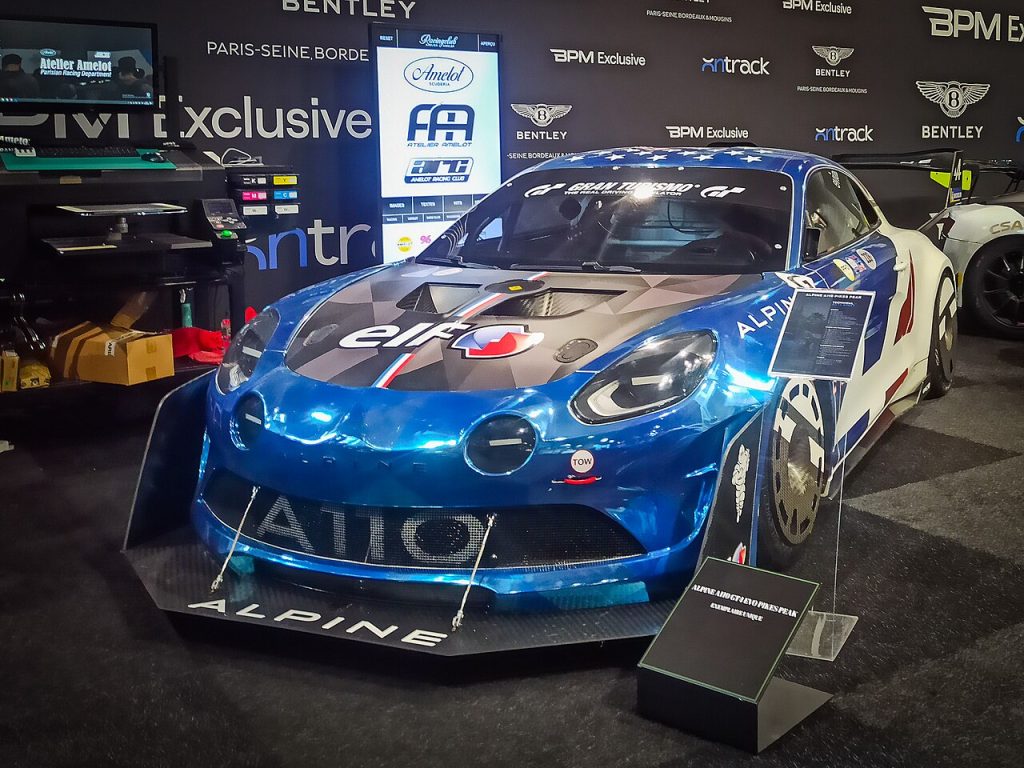
The prominent wing, splitters and body changes give the car its visual identity. A public image shows their form but does not quantify their function or prove that all surfaces retain the race configuration. Document mounts, repairs and component changes before conservation work. If the car is prepared as a static display, explain which specification it represents. A restoration should have a defined historical reference, particularly where an object’s appearance became more familiar through later exhibitions than through the original event photographs.
Building a convincing chassis file
Collect constructor identification, team custody material, preparation records, event documentation, repair history and dated photographs. Connect the timed result to the physical car through those records. Ask how major replaced assemblies were tracked and which parts remain from the hill-climb appearance. A result certificate and a livery photograph are useful, but their relationship to the object must be established. The strongest archive explains the chain of identity and any gaps, allowing an independent reader to follow the car from development through competition and later custody.
Current condition and intended activity
Have specialists assess the structure, suspension, brakes, engine, transmission and operating records against the installed configuration. A stationary exhibition, controlled demonstration and another competition entry require different preparation. The famous timed ascent does not certify readiness at a later date. Establish the intended activity before discussing service work or eligibility, and keep the resulting documentation with the car. Mechanical capability and historical identity are both important, but evidence for one should not be used to substitute for evidence of the other.
Comparison within Alpine’s competition family
Cup, GT4, Rally R-GT and Pikes Peak demonstrate different adaptations of the modern A110. The hill-climb special is particularly tied to a specific challenge and a recorded result, while the customer racers have wider programme histories. Their specifications and counts should remain separate. In a collection, compare purpose, construction and documentary depth rather than merely arranging them by advertised power. A complete development and event file can make a one-off special more informative than a visually similar car whose actual configuration and identity remain uncertain.
The later Paris display photograph
The supplied licensed image shows A110 Pikes Peak at the 2024 Paris Motor Show. It is a later display view, not a photograph of the 2023 ascent. The caption retains that date and context so that the event result is not visually assigned to the wrong moment. Photographer, source and licence are linked visibly. A detailed individual feature should supplement the display image with dated competition and identification views supported by the team file. The model illustration and the chassis evidence serve complementary purposes.
Frequently asked questions
What was the 2023 Pikes Peak result?
Alpine records 9:17.412, third overall and second in Pikes Peak Open with Raphaël Astier.
Was the final entry in Time Attack 1?
The May reveal discussed that intended eligibility, but the final result account identifies Pikes Peak Open as the entered class.
Was it an ordinary road A110?
No. Alpine describes a dedicated competition special, with the result account identifying a GT4 Evo basis.
What does one-off mean in this profile?
It preserves Alpine’s description of the dedicated programme model. It does not claim a reconciled census of all spare, replacement or display structures.
Explore related Alpine profiles
Sources
- Alpine: A110 Pikes Peak reveal, May 2023
- Alpine: A110 Pikes Peak development running, May 2023
- Alpine: 2023 Pikes Peak result and final class
Historical statements follow the linked manufacturer and competition-programme records. Inspection and collecting guidance is editorial analysis. Individual catalogue claims remain attributed to the relevant car and source.
Photography and credit
Alpine A110 Pikes Peak displayed at the 2024 Paris Motor Show; a later exhibition view, not the 2023 timed ascent. Photo: WikiGenesis / Wikimedia Commons · CC BY 4.0. Wikimedia thumbnail resized from the original; no cropping or colour changes.
Why this machine matters
The Alpine A110 Pikes Peak is the dedicated 2023 hill-climb special developed with Signatech. Driven by Raphaël Astier, it completed the ascent in 9:17.412, finishing third overall and second in Pikes Peak Open.
Built in limited numbers
The May manufacturer account calls the Pikes Peak model a one-off. This profile retains that official programme description while leaving an unqualified worldwide completed-production field empty. The release does not separately inventory spare bodies, replacement structures or exhibition assemblies. A one-off special and a complete physical-parts census answer different questions. Future object records should identify the competition structure and follow it through repairs, replacements and display preparation. This preserves the documented unique project without pretending that every associated component has already been counted.
Gallery
Specifications
Factory specifications may vary by model year, market and configuration.
Identity & production
- Official model
- Alpine A110 Pikes Peak
- Base model
- A110 II
Powertrain & performance
- Engine
- GT4 Evo-derived turbocharged competition four-cylinder — Pikes Peak specification