Alpine A443
The Alpine A443 was Renault-Alpine’s final and most powerful development of its 1970s endurance prototypes. It led the 1978 Le Mans race before retiring, leaving a compelling engineering story distinct from the A442B that ultimately won.
The Alpine A443 was Renault-Alpine’s final and most powerful development of its 1970s endurance prototypes. It led the 1978 Le Mans race before retiring, leaving a compelling engineering story distinct from the A442B that ultimately won.
Alpine A443 at a glance
| Manufacturer | Alpine |
|---|---|
| Model family | A443 |
| Profile scope | Competition archive |
| Inventory reference | ALP-040 |
| Engine reference | Turbocharged competition V6 — 2.2-litre manufacturer reference |
The final yellow-period prototype
Alpine’s 2014 Le Mans Classic release describes the A443 as the final evolution of the A442 and A442B lineage during the marque’s yellow-liveried endurance period. This places it at the ambitious end of the development sequence. The A443 belongs in the same historical conversation as the 1978 winner, but it has its own result and driver pairing. A collection catalogue should give it that separate identity. Calling every yellow Renault-Alpine an A442B hides the more advanced car and obscures why the team brought different machinery to the race.
More capacity and a longer body
The Dieppe club describes the A443 with bodywork 15 cm longer than the A442 and a 2,138 cc engine. Alpine’s manufacturer account rounds its engine description to 2.2 litres and quotes 550 horsepower. Those references provide a clear development distinction without requiring the rounded capacity to be treated as an exact measurement. This profile uses 2,138 cc only as the club’s reported specification and leaves a measured displacement claim for a specific car to its engine documentation. The longer-body description likewise does not automatically establish an exact wheelbase change.
Jabouille and Depailler at Le Mans
Jean-Pierre Jabouille and Patrick Depailler drove the A443 at Le Mans in 1978. Alpine records front-row qualification, an early vibration-related problem and a move into the lead during the seventh hour. The car’s race should be understood as more than its retirement: it demonstrated the performance the programme had pursued. At the same time, a front-running performance is not an overall victory. Keep qualifying position, hours led and final classification as separate facts when describing the car’s competition significance or comparing it with the A442B.
How the lead ended
The manufacturer’s Le Mans Classic narrative records the team reducing boost while the A443 was ahead and describes its eventual retirement with a seized engine. The A442B inherited the lead and won. The lesson for a historical profile is the importance of endurance under race conditions. Avoid turning this sequence into an unsupported technical diagnosis of one isolated component. The source explains the race outcome, but a detailed failure analysis would need period engineering records. A collector can acknowledge both the A443’s pace and the limit that ended its challenge.
Production and rarity
The A443 is treated here as a rare competition development, with no complete manufacturing total entered. The sources establish the model and its 1978 Le Mans role but do not provide a reconciled build and conversion census. A single entry at one race does not demonstrate that only one physical car or spare structure existed across the programme. This matters when writing one-off claims. Preserve the inventory’s very-limited classification while leaving exact production, surviving-car and running-car totals separate. Each requires its own evidence and a clearly defined counting method.
A443 versus the winning A442B
The A443’s larger engine and longer body make it a useful comparison with the A442B. One represents the final development ambition; the other carries the winning result. Neither should absorb the other’s specifications. A display can explain the distinction using engine reference, driver names and race outcome rather than presenting one as a cosmetic alternative. This is also useful for photo selection: a similar yellow and black livery is not enough to identify the model. Check the source description and visible body details before attaching a caption.
Following the chassis after racing
A complete history should connect the 1978 appearance with later ownership or institutional retention, restoration and demonstration activity. Alpine’s 2014 account documents an A443 entered for Jean Ragnotti and Alain Serpaggi at Le Mans Classic, showing the model’s continued heritage role. That modern appearance is not evidence that every mechanical component remained unchanged from 1978. Record restoration and operating work alongside the race history. Where the evidence concerns a named institution’s car, avoid transferring its continuity to another purported A443 without a documented link.
Inspection starts with configuration
Establish which period configuration a car currently represents before judging details. Compare the structure, bodywork, cockpit, engine and cooling installation with dated records. Ask which components were replaced for preservation or running purposes. The presence of a suitable engine type may support the intended presentation without establishing its original race identity. For reproduced bodywork, retain dimensions, patterns and photographs used in construction. Those records make a restoration understandable and allow future researchers to separate original fabrication from later interpretation.
A mechanical assessment for demonstrations
The A443’s historic performance figures should not become an operating target for a decades-old machine. A preparer must assess the installed engine, boost arrangement, lubrication, cooling and drivetrain for the intended outing. Check brakes, tires, fuel containment and safety equipment as part of that plan. Establish clear running limits and record the work done after each event. A sympathetic demonstration can communicate the car’s character without attempting to recreate a period maximum-speed run. The appropriate preparation depends on the actual car and the custodian’s preservation objective.
Conservation of an unsuccessful challenger
A competition car does not need a winning result to deserve careful conservation. The A443 records a technical direction and a near-success that help explain the whole 1978 campaign. Evidence of development and repair may therefore be as informative as a immaculate final presentation. Photograph material before replacing it and keep the reasoning behind each intervention. A good conservation account avoids implying that every new component is period original while explaining why replacement was necessary. That transparency improves the historical usefulness of the car for both enthusiasts and researchers.
Photography and historical interpretation
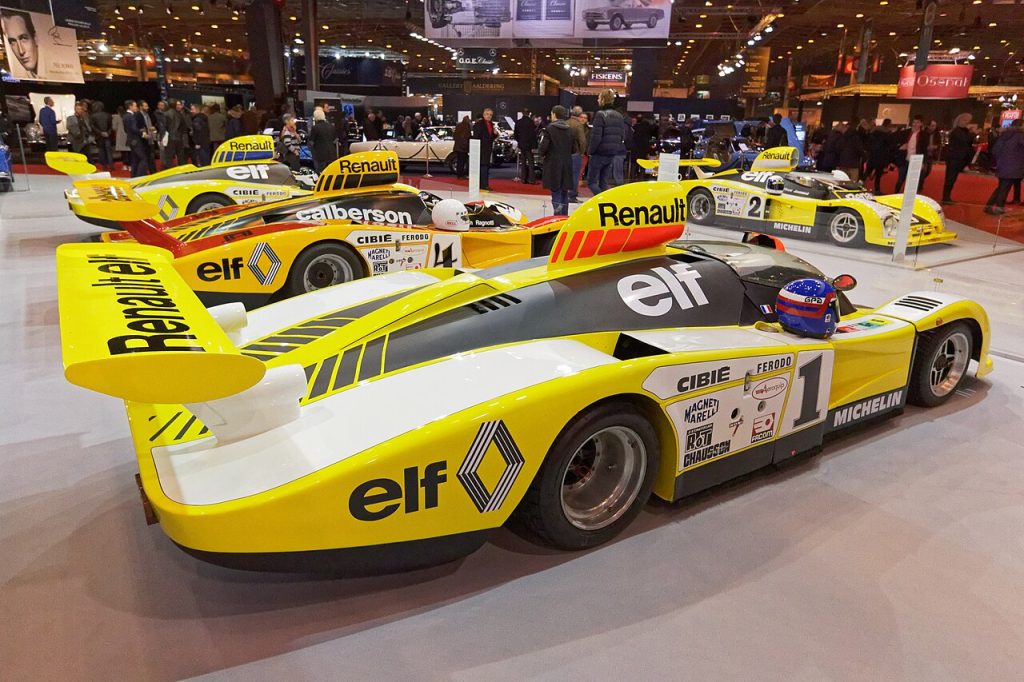
The supplied A443 image was taken at Rétromobile in 2018 and illustrates an exhibition configuration. It is separate from the 1978 race and the manufacturer’s 2014 Le Mans Classic appearance. A dated modern photograph is useful because it shows how the car was presented at that moment; it cannot alone authenticate the engine or demonstrate the continuity of all its parts. The caption names the model and exhibition rather than adding a stronger claim. Further chassis photographs and institutional records would be needed for a detailed provenance feature.
Frequently asked questions
Did the A443 win the 1978 Le Mans race?
No. It led but retired with engine failure. The A442B of Jaussaud and Pironi won overall.
Who drove the A443 in 1978?
Jean-Pierre Jabouille and Patrick Depailler were the A443 driver pairing in Alpine’s cited Le Mans account.
Is 2.2 litres an exact displacement?
Alpine uses that rounded description. Club Alpine Dieppe reports 2,138 cc; a particular engine’s exact specification needs its own documentation.
How many A443s were manufactured?
A complete build and conversion census has not been established here. Race-entry numbers are not substituted for completed production.
Explore related Alpine profiles
Sources
- Alpine: heritage in action at Le Mans Classic, 2014
- Club Alpine Dieppe: prototype model history
- The Originals Renault Museum: Alpine A442 B
Historical statements follow the linked manufacturer, club, register and game-project records. Inspection and collecting guidance is editorial analysis. Individual catalogue claims remain attributed to the relevant car and source.
Photography and credit
Renault-Alpine A443 displayed at Rétromobile 2018; photograph of the historic prototype in exhibition configuration. Photo: Thesupermat / Wikimedia Commons · CC BY-SA 4.0. Wikimedia thumbnail resized from the original; no cropping or colour changes.
Why this machine matters
The Alpine A443 was Renault-Alpine’s final and most powerful development of its 1970s endurance prototypes. It led the 1978 Le Mans race before retiring, leaving a compelling engineering story distinct from the A442B that ultimately won.
Built in limited numbers
The A443 is treated here as a rare competition development, with no complete manufacturing total entered. The sources establish the model and its 1978 Le Mans role but do not provide a reconciled build and conversion census. A single entry at one race does not demonstrate that only one physical car or spare structure existed across the programme. This matters when writing one-off claims. Preserve the inventory’s very-limited classification while leaving exact production, surviving-car and running-car totals separate. Each requires its own evidence and a clearly defined counting method.
Gallery
Specifications
Factory specifications may vary by model year, market and configuration.
Identity & production
- Official model
- Alpine A443
- Base model
- A443
- Country of manufacture
- France
Powertrain & performance
- Engine
- Turbocharged competition V6 — 2.2-litre manufacturer reference